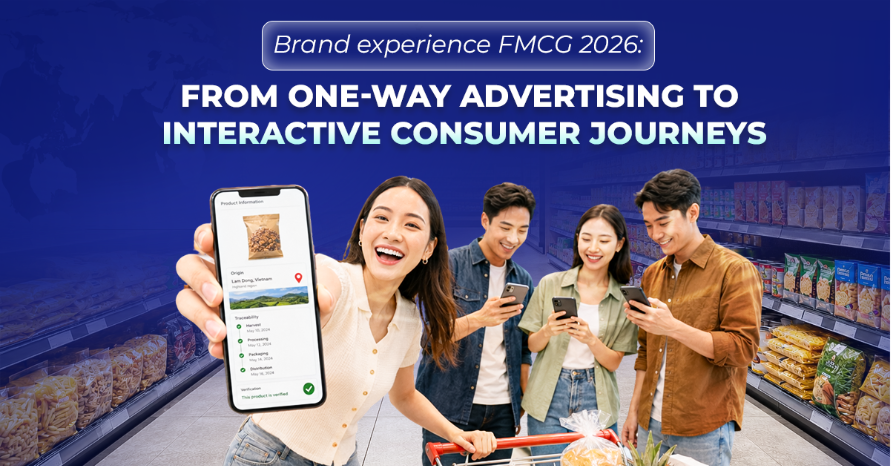
In 2026, the FMCG sector is facing more cautious consumer behavior, increasingly fragmented shopping journeys, and declining effectiveness of mass advertising. Brand Experience is therefore emerging as a solution that helps brands increase engagement, connect touchpoints, and drive conversion. This article outlines key ways FMCG brands can apply Brand Experience through Novaon Digital’s S-C-T model.
1. FMCG 2026: When Advertising Reach Is No Longer Enough to Drive Growth
For years, FMCG growth has been closely tied to three familiar levers: price increases, broader reach, and higher advertising frequency. Yet as 2026 approaches, that formula is beginning to show its limits. The Vietnam FMCG Outlook 2026 indicates that at-home consumption is facing volume pressure, while consumer budgets are shifting toward choices that deliver more tangible experiences. F&B revenue in 2025 is projected to grow by 9.6%, while domestic tourism is expected to reach 135.5 million trips, up 23%. Consumers are not necessarily cutting back on spending; they are simply placing greater priority on emotion, convenience, and what they can genuinely experience.
Alongside this is an important shift in consumer mindset: from habitual purchasing to more considered decision-making. Consumers actively compare prices, assess the value they actually receive, and are willing to switch brands as soon as they find a better fit. This creates a new requirement for businesses: they must not only prove product functionality, but also make value clear from the very first touchpoints, before consumers have time to compare them with competitors.
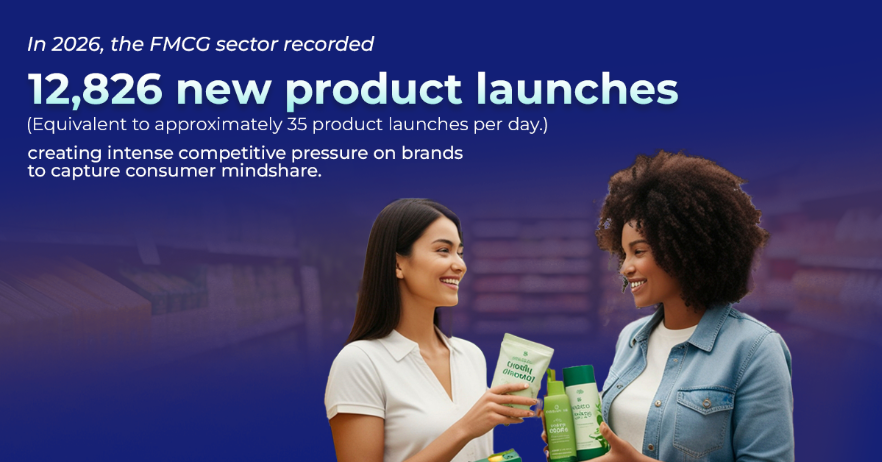
Intense competitive pressure on FMCG brands in 2026
Cre: Novaon Digital
The FMCG purchase journey is also more fragmented than ever. The frequency of at-home shopping has fallen from 145 trips per year in 2019 to 124 in 2025, while the average number of stores visited by a consumer has increased from 5.3 to 6.0. In other words, brands have fewer opportunities to meet customers, yet must maintain a presence and compete across more channels, from social media, KOCs, livestreams, and chatbots to e-Commerce and physical stores.
The pressure to capture attention has therefore increased exponentially. In 2024, the market recorded 12,826 new products, equivalent to around 35 launches per day. More notably, 63% of FMCG categories saw a significant decline in the market share of their top three manufacturers, signaling that even major brands can no longer rely comfortably on scale and established awareness alone.
All of these figures point to one reality: appearing more often no longer guarantees being remembered. Advertising still plays an important role in building awareness, but to genuinely influence purchase decisions, brands need to extend it into experiences that allow consumers to try, respond, create, share, and receive personalized value. This is where Brand Experience becomes the bridge between a brand being seen and consumers actively participating in it.
2. Novaon Digital’s S-C-T Model: Five Brand Experience Solutions for the FMCG Sector
To address this challenge, FMCG businesses in 2026 need a Brand Experience system capable of connecting consumers throughout the journey, from awareness and engagement to purchase and repurchase. Novaon Digital approaches this challenge through its proprietary S-C-T model, which stands for Strategy, Creativity, and Technology.
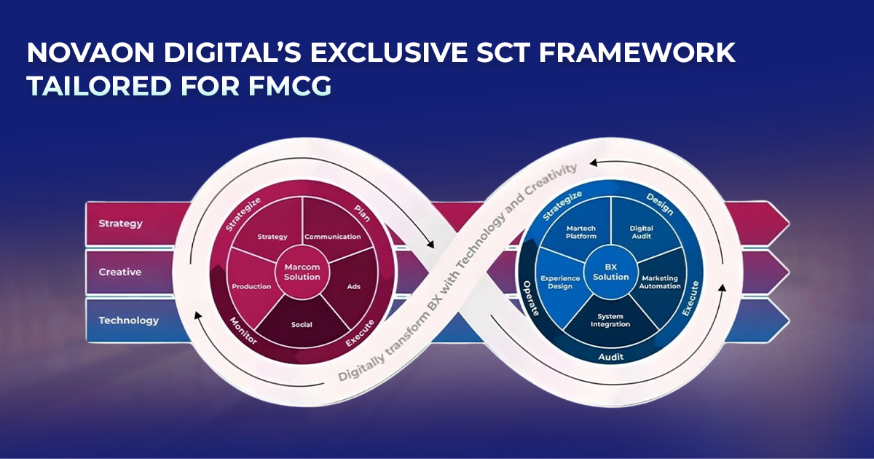
Novaon Digital’s proprietary SCT model applied to the FMCG industry
Cre: Novaon Digital
Strategy helps brands identify the right consumer groups, the right needs, and the right role for each touchpoint across the journey. Creativity turns those insights into emotionally resonant stories that encourage customers to participate actively rather than simply receive messages passively. Technology connects data, personalizes interactions, and extends seamless experiences across both online and offline environments.
These three pillars do not operate in isolation. A creative idea is only truly effective when it starts from the right insight; technology only creates value when it solves a specific barrier; and the data generated must be fed back into the system to optimize strategy and experience in the next cycle. The strength of the S-C-T model lies in helping businesses avoid a situation where each channel, department, and tool pursues a separate KPI, instead aligning them around one unified customer journey.
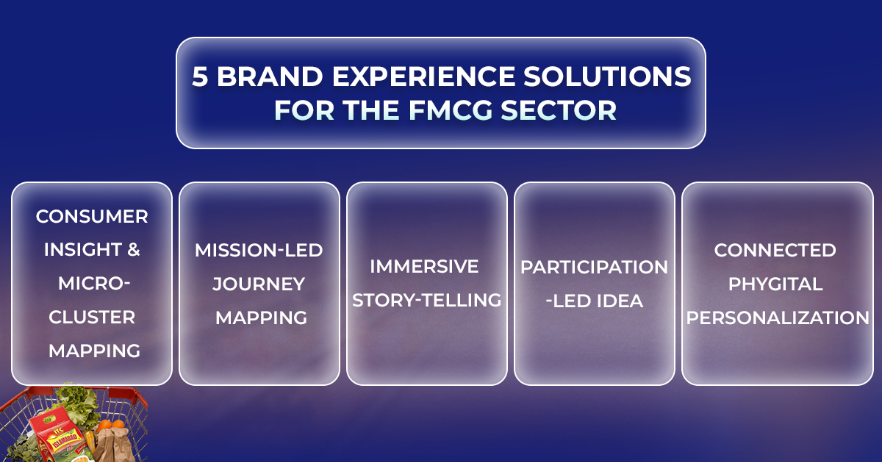
05 Brand Experience solutions for the FMCG industry based on the SCT model
Cre: Novaon Digital
Building on this foundation, Novaon Digital proposes five Brand Experience solutions that FMCG businesses should prioritize in 2026.
First, Consumer Insight & Micro-cluster Mapping, or understanding smaller need-based groups. FMCG behavior today can no longer be explained by age, gender, or income alone. Two consumers with similar demographic profiles may still choose the same product for entirely different reasons, ranging from convenience and self-care to reassurance or the desire to express a lifestyle. A beverage product, for example, may simultaneously serve needs such as an energy boost, refreshment, relaxation, or social connection during gatherings. Businesses need to identify micro consumer clusters based on triggers, barriers, usage contexts, and the value each group is truly seeking, rather than continuing to use one mass-market message for the entire market.
Second, Mission-led Journey Mapping, designing journeys around specific shopping missions. Today’s FMCG purchase journey no longer follows a straight line from advertising to the point of sale. Consumers may discover a product through social media, learn more from KOCs, receive advice via a chatbot, watch a livestream, and only then decide to purchase through e-Commerce or at a physical store. Journey mapping helps businesses identify the right shopping mission at each moment, whether it is an immediate-need purchase, a top-up purchase, a stock-up purchase, or new-product discovery, and then assign a clear role to each touchpoint: social media creates demand, KOCs build trust, chatbots answer questions, livestreams drive conversion, and CRM sustains re-engagement. When every channel understands its role, the journey becomes more seamless rather than fragmented.
Third, Immersive Storytelling, turning product stories into experiences consumers can actually feel. In a market saturated with content describing features and functional benefits, brands need to go beyond simply telling a story. Immersive Storytelling uses imagery, sound, taste, product texture, and cultural cues to bring consumers into a consistent experiential world, expressed through multi-format video, livestreams, product trial spaces, pop-up activations, or localized content. A snack product, for example, can be experienced not only through descriptions of flavor, but also through the sound of breaking it apart, the colors of its ingredients, and memories associated with a particular cultural setting. When the story is rooted in the product’s genuine value, it does more than create a momentary emotional response; it also helps consumers remember the brand’s point of difference for longer.
Fourth, Participation-led Idea, making consumers part of the campaign itself. This shifts consumers from being viewers to becoming direct participants and co-creators of the experience through gamification, social challenges, UGC, voting, interactive livestreams, or sampling tied to tasks and reward mechanisms. In FMCG, this solution is most effective when linked to familiar moments such as eating and drinking, personal care, family life, and entertainment. Importantly, participation should not stop at a simple action performed in exchange for a reward. The user’s action should create content, an outcome, or a version of the experience that carries their own imprint, so they genuinely feel they have a role in the brand story. This also provides the foundation for campaigns to be shared organically and sustain momentum for longer.
Fifth, Connected Phygital Personalization, connecting DOOH, QR, AI, and data into a single ecosystem. This solution enables businesses to link physical and digital experiences into one unified journey: DOOH content can change according to location, time, or context; QR codes on packaging and POSM can direct users to games, consultations, loyalty points, or offers; and AI can personalize content and products for different customer groups. At the same time, integrating data from social media, apps, chatbots, e-Commerce, and point-of-sale activities enables brands not only to know how many people interacted, but also to understand what they care about, where they drop off, and how they should be approached next time. For FMCG, this is an especially important piece of the puzzle for building first-party data, driving repurchase, and gradually reducing dependence on data from third-party platforms.
3. Three Notable FMCG Brand Experience Case Studies from Novaon Digital
Moving from theory to execution, the three case studies below show how Novaon Digital has applied the S-C-T model to specific challenges in the FMCG sector.
Unilever P/S: Personalizing Consultation and Conversion Through Messenger Marketing
As competition in the electric toothbrush market intensifies, P/S needs to attract consumers who are interested in smart personal care products. Yet directing customers straight to e-Commerce platforms creates several barriers, from traffic costs and cart abandonment rates to post-purchase customer care.
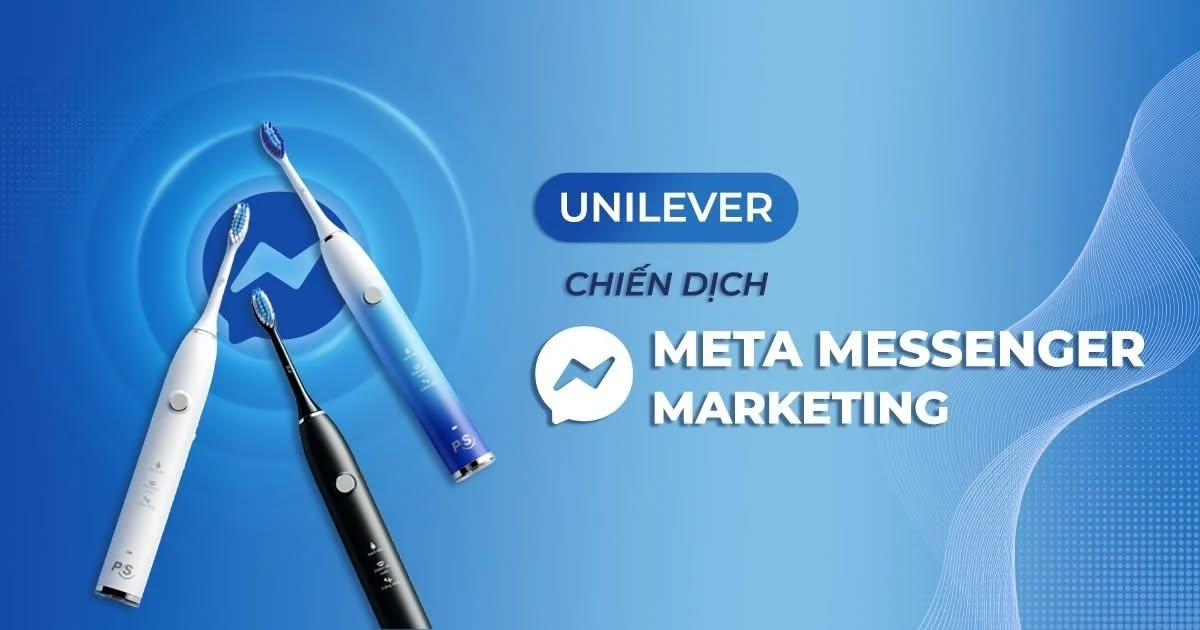
Case study: P/S electric toothbrush campaign by Novaon Digital x Unilever
Cre: Novaon Digital
Novaon Digital implemented Meta Messenger Marketing combined with a chatbot, building conversation flows around each customer’s individual needs and interests. The system also connected consultation, customer service, payment, logistics, and reporting activities to create a relatively seamless journey. As a result, Messenger was no longer merely a channel for replying to messages; it became a personalized touchpoint where users could learn about the technology and product benefits while receiving support throughout the purchase process. This case study shows that Brand Experience can begin with something very specific: designing the right conversation and addressing the right barrier at each stage of the journey.
Custas Cốm: Localizing the Product Through Heritage Storytelling
When launching Custas Cốm, Orion faced the challenge of making a new flavor from an international brand feel relevant and familiar to modern homemakers aged 25 to 40. Influencer Marketing had already become commonplace, so the real challenge was to create content authentic enough to prevent the product from blending into thousands of similar reviews.
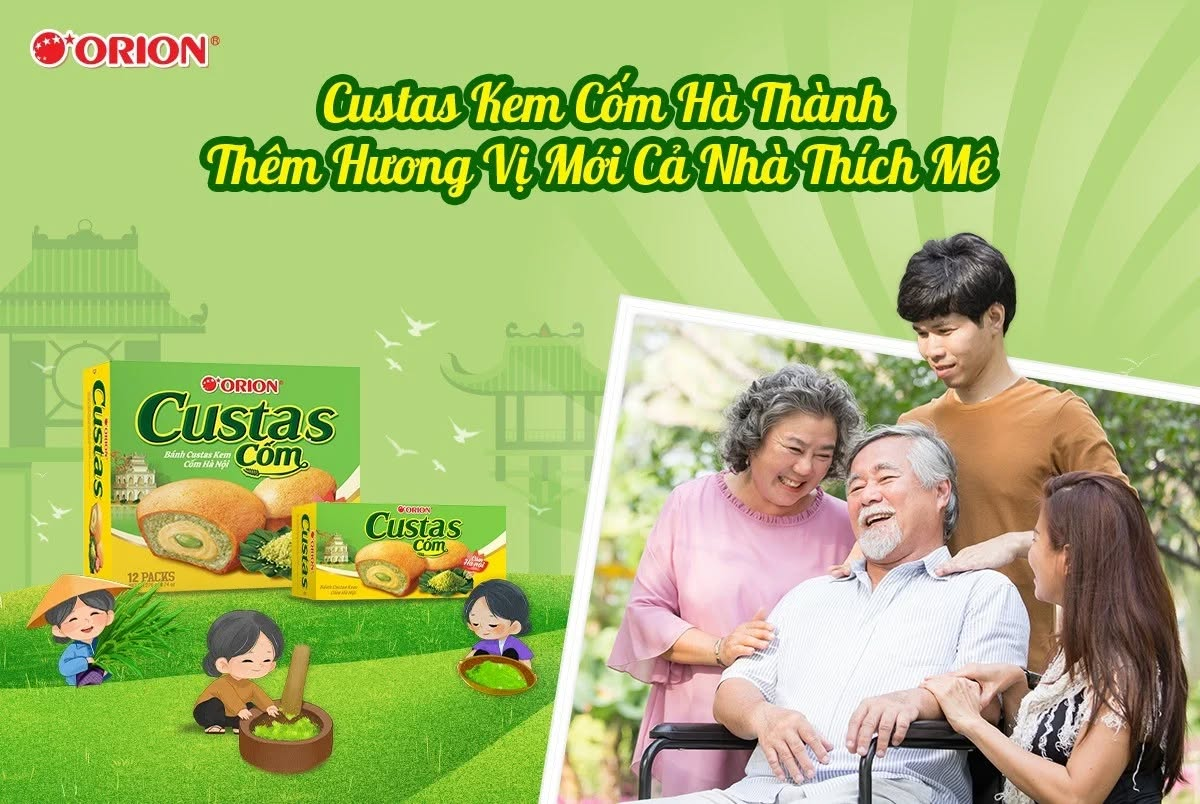
Case study: Custas Com campaign by Novaon Digital x Orion
Cre: Novaon Digital
Under the concept “Awakening the Flavors of Hanoi,” Novaon Digital used AI to select KOCs whose lifestyles, interests, and follower profiles were the best fit for the product. Cinemagraphs, video animation, and multi-photo formats were used to recreate the green hue of cốm, the sound of breaking the cake, and memories associated with Hanoi cuisine. Rather than simply introducing the product, each KOC became a storyteller, weaving personal experience into the content and positioning Custas Cốm as a delicacy connected with local emotion. The campaign generated millions of impressions, with more than 90% of reach coming from the intended target audience and more than 60% positive feedback.
Thạch Long Hải: When the App Becomes the Hub of the Experience Ecosystem
For a brand that has been present in the market for around 20 years, Thạch Long Hải’s challenge was not simply to maintain awareness, but also to build new connections with younger generations of consumers while turning fragmented physical transactions into digital behavior that could be sustained over time.
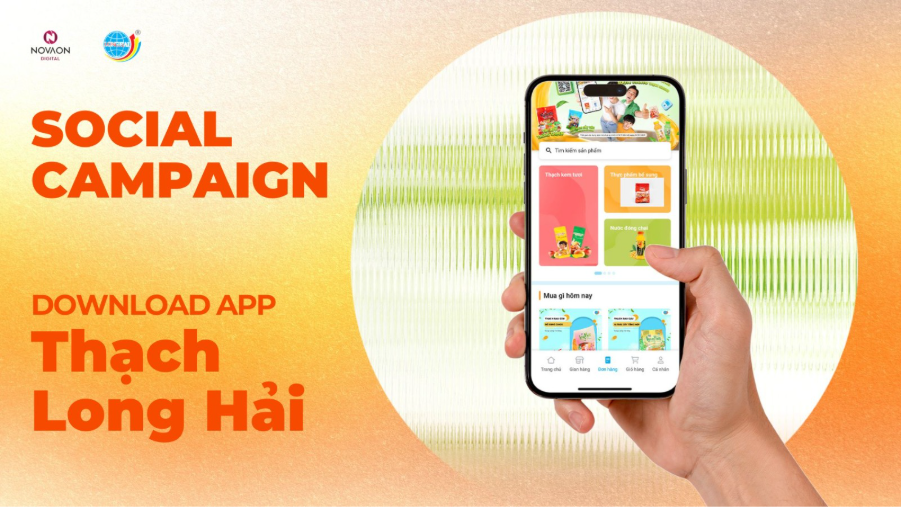
Case study: Long Hai Jelly app promotion campaign
Cre: Novaon Digital
Novaon Digital built an ecosystem around the message “The app opens the way, bringing Long Hải jelly home,” with the app serving as the central hub connecting content, rewards, interaction, and purchase. The “100% chance to win jelly” mechanism gave users a reason to install the app and return, while Snackable Content, Hot Families, KOCs, Zalo Branding, and Live Commerce guided users throughout the O2O journey. The campaign reached more than 7.1 million users, built a community of over 158,000 followers, and attracted tens of thousands of visits to the system. More important than the numbers, however, the app helped the brand gradually build first-party data, laying the foundation for long-term personalization and customer care.
4. Conclusion
In 2026, as FMCG purchase journeys span social media, e-Commerce, livestreams, and physical stores, Brand Experience becomes crucial to keeping brands relevant in each consumption moment, rather than simply appearing and fading away.
Businesses need to know not only who their customers are, but also the needs, shopping missions, and barriers at each touchpoint. From there, creative storytelling must generate emotion and give consumers a meaningful role, while technology connects the journey, personalizes interactions, and transforms data into long-term value.
Novaon Digital follows this approach through its FMCG Brand Experience ecosystem, built on the proprietary S-C-T model: Strategy, Creativity, and Technology. From consumer insight and journey design to creative development, technology, and data integration, it helps brands turn every touchpoint into an opportunity for connection, participation, and growth.
Cre: Novaon Digital