Year-end is a highly competitive period for the Automotive market, as car manufacturers intensify their Marketing activities, introduce promotions, and accelerate sales. However, as consumers increasingly search for information, watch reviews, and compare products across digital platforms, competition is no longer limited to discounts or the ability to attract customers to showrooms.
The shift from a Showroom-first to a Digital-first Journey presents new challenges for Automotive businesses: How can they connect online interactions with physical experiences, effectively manage customer data, and turn interest into sales opportunities? In this context, Omnichannel Journey, Digital-to-Physical Experience, and Lead Nurturing have become three strategic approaches that help brands improve Marketing effectiveness and drive conversions during the year-end peak season.
I. THE CHALLENGE: AS THE CAR BUYING JOURNEY EVOLVES, BUSINESS CHALLENGES BECOME MORE COMPLEX
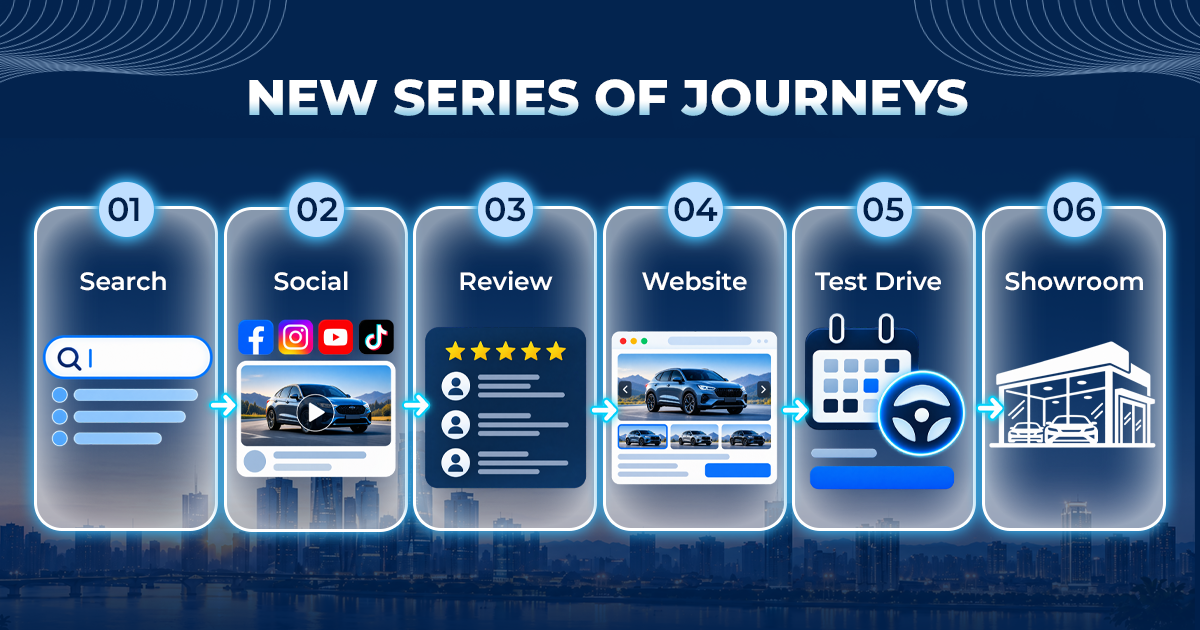
New series of journeys
1. Year-end Automotive Market:
The final months of the year are typically a crucial sales period for the Automotive industry, as car manufacturers and dealership networks focus on driving sales, achieving business targets, and capitalizing on consumer demand ahead of the new year. According to the Vietnam Automobile Manufacturers’ Association (VAMA), vehicle sales reached 47,067 units in December 2025, up 20% from the previous month and 49% compared to the same period in 2024, reflecting strong purchasing demand toward year-end.
However, growth opportunities also bring greater competitive pressure. The diversity of vehicle segments, technologies, pricing, and financing policies gives customers more options, while discount programs, registration fee support, and complimentary insurance offers are widely available. As more brands use promotions to stimulate demand, pricing gradually becomes a competitive requirement rather than a differentiating advantage. Therefore, businesses need not only to attract attention but also to build trust and provide compelling reasons for customers to choose their products among comparable alternatives.
2. Digital-first Journey:
The development of digital is significantly changing how consumers research and choose cars. According to J.D. Power’s “Vietnam Sales Satisfaction Index 2019” study of 1,512 new vehicle owners in Vietnam, among customers who both searched for information online and contacted dealerships, 89% had visited dealership websites and 57% had visited dealership Facebook pages. Although the survey data dates back to 2019, the findings already demonstrated the significant role of digital touchpoints in the car buying journey.
A 2024 study by ABeam Consulting across six Vietnamese cities further showed that the journey from initial research to purchase decisions typically takes 2-3 months. Google remains the primary source of online information, while dealerships continue to play an important role during in-person research and purchasing stages. Factors such as safety, fuel efficiency, and driving experience also have a significant influence on purchase decisions.
In this context, the car buying journey can be summarized through six touchpoints: Search – Social – Review – Website – Test Drive – Showroom. Customers search for vehicle prices and ownership costs on Google, discover products through Social, consult expert or community reviews, verify information on Websites, and then register for a Test Drive before visiting a showroom. Although these touchpoints do not necessarily follow a fixed sequence, digital has become an important part of building awareness, trust, and purchase intent.
3. Three Business Challenges Facing Automotive Companies
Changes in customer behavior are creating three direct challenges for Marketing and sales activities:
First, Marketing effectiveness is not always proportional to investment. Businesses may generate millions of impressions, engagements, or website visits, but these metrics do not necessarily translate into Test Drive registrations or sales if the content does not match customer needs or lacks effective mechanisms to encourage action.
Second, customer data can easily become fragmented across touchpoints. A customer may interact with an advertisement, explore a website, submit information through a chatbot, and later contact a dealership. If data from Marketing, CRM, and Sales is not connected, brands struggle to gain a complete view of the customer journey, while customers may have to provide the same information again and receive messages that no longer match their needs.
Third, lead volume may increase while quality remains inconsistent. Year-end promotional programs can attract large numbers of consultation requests, but not every customer is ready to make an immediate purchase. Without proper segmentation and nurturing based on interest levels, sales resources may become dispersed, while high-value conversion opportunities may not receive timely attention.
II. STRATEGIC SOLUTIONS: CONNECTING TOUCHPOINTS TO DRIVE CONVERSIONS
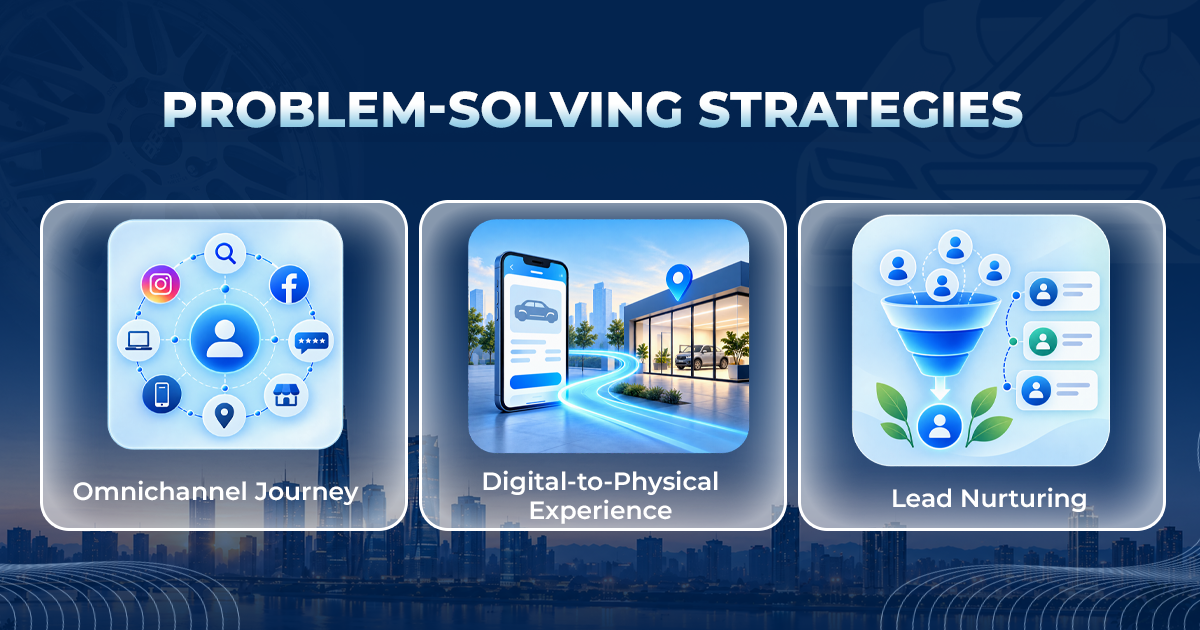
Problem-solving strategies connecting touchpoints
To simultaneously address challenges related to Marketing effectiveness, fragmented data, and lead quality, Automotive brands need to shift from managing individual Marketing channels independently to designing a connected customer journey. Omnichannel Journey, Digital-to-Physical Experience, and Lead Nurturing are three complementary approaches that help businesses guide customers from initial interest to product experiences and vehicle purchases.
1. Omnichannel Journey: Connecting Marketing Activities and Improving Touchpoint Effectiveness
As customers continuously move between Search, Social, Review, and Website, optimizing individual channels is no longer sufficient to ensure the effectiveness of the entire journey. Omnichannel Journey helps businesses define the role of each touchpoint and connect messaging, content, and data to create a consistent experience.
For example, when customers search for information about a family SUV, brands can reach them through SEO content or Search Ads addressing their concerns about pricing, safety, and operating costs. Social Content, video reviews, and testimonials from actual users can then reinforce their interest, while the Website provides official information about vehicle versions, promotions, and Test Drive registration options.
Particularly during the year-end season, content needs to adapt to different levels of purchase readiness. Customers in the early research stage need to be convinced of the product’s value. Those comparing options require evidence of features, driving experience, and ownership costs, while customers with high purchase intent are more interested in financing options, delivery timelines, and specific promotions.
2. Digital-to-Physical Experience: Turning Online Interactions into Physical Experiences
For high-value products such as cars, digital plays an important role in the research process, but in-person experiences still have a significant influence on purchase decisions. Therefore, Digital-to-Physical Experience focuses on bridging the gap between online Marketing effectiveness and the ability to generate sales opportunities at showrooms.
To achieve this, brands need to design digital touchpoints that encourage specific actions. Websites, landing pages, chatbots, and consultation livestreams should not only provide product information but also help customers request quotations, find suitable dealerships, and conveniently register for Test Drives.
More importantly, information collected through digital channels needs to be transferred to the sales/dealer teams. When customers register for a Test Drive, sales consultants can access information about their preferred vehicle models, financing needs, locations, and preferred schedules, allowing them to prepare more relevant consultations. Conversely, results from showroom interactions should also be fed back into the Marketing system to track conversion progress.
3. Lead Nurturing: Optimizing Lead Quality Rather Than Simply Increasing Volume
During the year-end promotional season, the number of customers submitting their information may increase rapidly, but purchase readiness often varies across customer groups. A customer researching prices for a planned purchase several months later requires a different approach from someone who has already selected a vehicle version and wants delivery before Tet.
Lead Nurturing helps businesses segment and engage customers based on signals such as registration sources, interaction behavior, preferred vehicle models, financing needs, and expected purchase timing. For customers in the early research stage, content should focus on product value and ownership experience. Those considering their options need additional reviews, comparisons, and answers to potential concerns, while customers with high purchase intent should be prioritized for consultations, quotations, and Test Drive appointments.
Through CRM, Lead Scoring, and automation tools, businesses can track customer status, establish appropriate nurturing workflows, and transfer high-value opportunities to sales teams. Feedback on lead handling outcomes also enables Marketing teams to refine messaging, advertising audiences, and budget allocation more effectively.
III. CASE STUDY: CONNECTING DIGITAL MARKETING WITH YEAR-END BUSINESS PERFORMANCE
Novaon Digital’s experience working with Subaru and Peugeot demonstrates two different approaches to addressing conversion challenges during peak sales periods: building a multi-touchpoint journey to drive bookings for a new product and leveraging data and technology to improve sales effectiveness within a short period.
1. SUBARU FORESTER – FROM PRODUCT LAUNCH TO DRIVING BOOKINGS THROUGH PHYSICAL EXPERIENCES
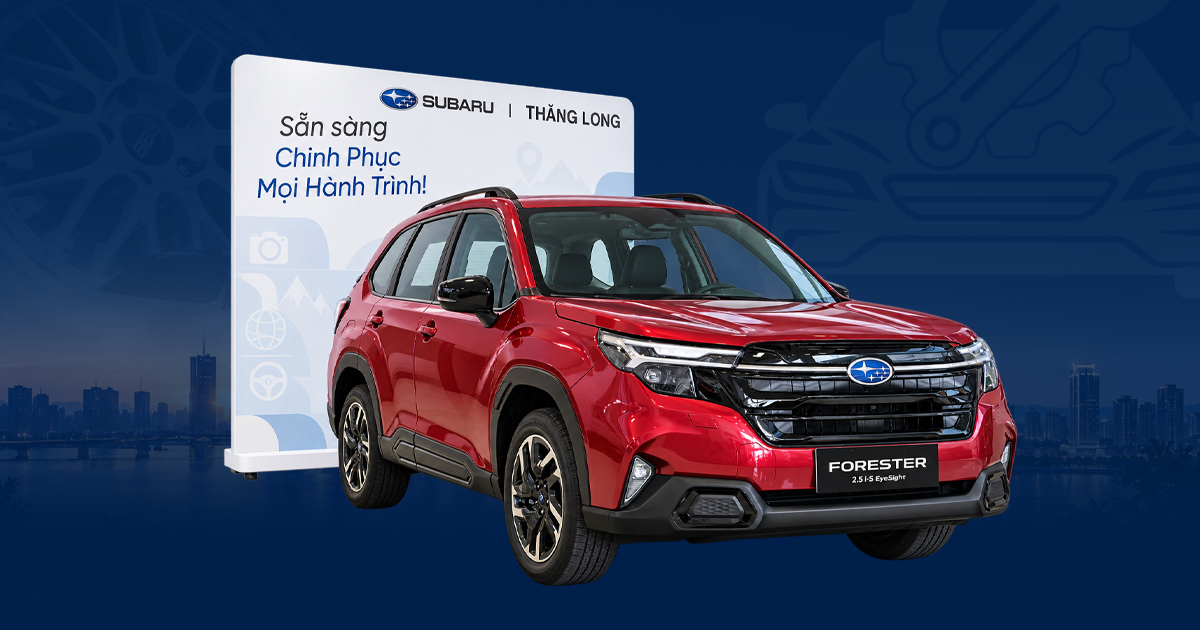
Case study Subaru Forester
Background and Challenge: Subaru launched the sixth-generation Forester in Vietnam amid intense competition in the C-SUV segment, where customers had numerous options in terms of design, technology, and pricing. The transition to fully imported vehicles from Japan resulted in a higher price for the new Forester compared to its predecessor, while the brand also needed to expand its appeal beyond loyal customers who valued its distinctive engineering features. The challenge was to reposition the Forester as a premium, modern SUV for urban families while building trust and encouraging customers to proceed to Test Drives, showroom visits, and bookings during the year-end launch period.
Strategy and Execution: Novaon Digital developed a Marketing strategy targeting two customer groups: loyal customers were reached through messaging focused on the Boxer engine, S-AWD system, and driving performance, while new customers were engaged through design, comfort, and family experiences. The campaign was implemented across three phases: Teaser – Launch – Sustenance, combining product teasers, Digital Ads, a launch livestream, two TVC versions, and a Media Road Trip involving 46 journalists and Automotive experts. Their firsthand reviews were further amplified through PR and Social, while Lead Ads on Facebook and Zalo, supported by the Onlead – CRM system, facilitated lead collection, segmentation, and transfer. SATD Test Drive activities and showroom experiences became important touchpoints, allowing customers to directly evaluate the product’s value before making purchase decisions.
Results: According to Novaon Digital’s campaign report, the campaign generated 88 bookings from 289 leads, achieving 126% of the booking target, while Test Drive registrations reached 148% of KPI. The campaign also generated more than 7 million Social reach, over 250 PR articles and video reviews, and a 160% increase in Forester-related searches, according to the reported data.
2. PEUGEOT – LEVERAGING TECHNOLOGY TO OPTIMIZE CONVERSIONS AND RECOVER YEAR-END SALES
Case study Peugeot
Background and Challenge: As Vietnam’s Automotive market gradually recovered from the impacts of the COVID-19 pandemic, Peugeot identified an opportunity to accelerate sales and strengthen its position in the European SUV segment. However, following a period of declining purchasing demand, the brand faced the challenge of recovering business performance within an implementation period of just one month. The objective was not simply to expand customer reach, but also to identify the right audiences, optimize advertising activities, and improve conversion rates from online interactions.
Strategy and Execution: Novaon Digital partnered with Peugeot to implement a technology-integrated Marketing solution, using customer data as the foundation for optimizing Marketing activities. AI was applied to analyze advertising performance and identify suitable messages and content for different audience segments. At the same time, the Sales – CRM system was upgraded to leverage online behavioral data and support lead management and nurturing. The combination of data-optimized advertising and customer nurturing systems enabled Peugeot to focus resources on high-value customer segments and improve the conversion process from initial interest to vehicle purchases.
Results: According to the case study published by Novaon Digital, Peugeot’s sales increased fourfold compared to the same period in the previous year, market share rose 1.6 times, and the brand achieved the leading position in the reported European vehicle segment during the campaign period. These results demonstrate the role of data and technology in optimizing Lead Generation, supporting customer nurturing activities, and improving business performance, particularly when businesses need to achieve growth within a short timeframe.
IV. NOVAON DIGITAL’S PERSPECTIVE:
Changes in the car buying journey require Automotive businesses not only to adjust their Marketing activities but also to rethink how Marketing effectiveness is approached. As customers actively research and evaluate products before visiting showrooms, activities that build awareness, establish trust, and drive sales need to be designed as interconnected stages of the same journey.
First, businesses should start with their business challenges rather than selecting Marketing channels. For brands with low awareness, the priority may be developing product content and real-world experiences. Meanwhile, businesses generating large numbers of leads but achieving low purchase conversion rates should prioritize improving lead quality, nurturing mechanisms, and connectivity with dealership networks.
Next, content must be developed according to each stage of the decision-making process. Creative should not only attract attention but also address specific buyer concerns, from product value and driving performance to financing options and ownership experiences. Touchpoints such as Review, Test Drive, and Showroom need to be connected with digital Marketing to turn customer interest into trust and action.
At the same time, data should become the bridge between Marketing and Sales. CRM integration, lead segmentation, automated nurturing, and dealership performance tracking allow businesses to evaluate effectiveness beyond initial registration numbers, thereby prioritizing budgets for activities with greater potential to generate actual conversions.
With its Strategy – Creative – Technology approach, Novaon Digital views Automotive Marketing as an integrated experience system: Strategy identifies the right insights and customer journey, Creative develops content that guides customers, and Technology supports data management and conversion optimization. When these three capabilities operate in alignment, businesses can pursue growth based on the quality of sales opportunities rather than simply expanding Marketing reach.
V. CONCLUSION
During the year-end peak season, the competitive advantage of Automotive brands lies not only in promotions or their ability to attract customers to showrooms, but also in effectively connecting the journey from Search, Social, Review, and Website to Test Drive and Showroom. The Subaru Forester 2025 and Peugeot campaigns demonstrate how integrating Marketing, customer experiences, and data can help businesses improve lead quality, drive conversions, and enhance business performance. With its Strategy – Creative – Technology capabilities, Novaon Digital partners with Automotive brands to create seamless Marketing journeys, turning every touchpoint into an opportunity for tangible growth.