Consumers expect more than fast transactions. They increasingly seek relevant, secure, and meaningful experiences that deliver tangible value. Against this backdrop, Brand Experience has emerged as a strategic approach that enables financial brands to engage customers at key moments, strengthen trust, and become their preferred choice. As consumer behaviors evolve and experience-driven strategies gain momentum, how can Bank & Finance brands leverage Brand Experience to build a competitive advantage during the festive season?
I. MARKET LANDSCAPE AND CONSUMER BEHAVIOR
In 2026, Vietnam’s consumer market maintains its growth momentum, alongside the rapid expansion of digital financial services.
1. Bank & Finance Market Overview 2026
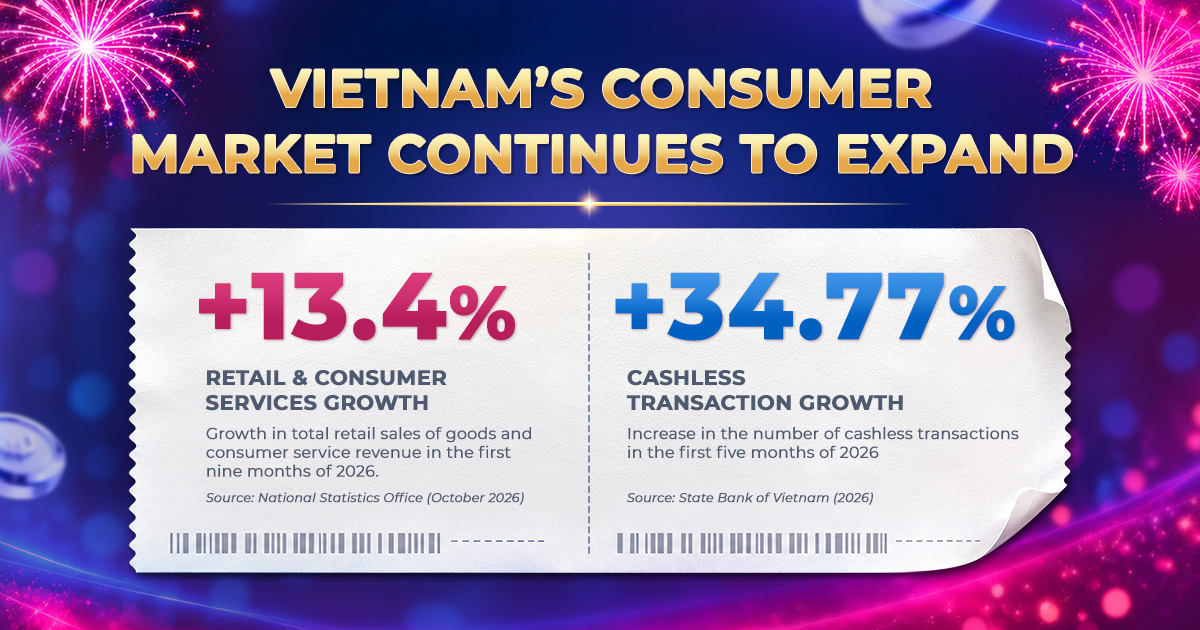
Vietnam’s consumer market continued to grow in 2026, alongside the expansion of digital financial services. According to the National Statistics Office’s October 2026 report, total retail sales of consumer goods and services reached VND 5,925.7 trillion in the first nine months of 2026, an increase of 13.4% year over year.
In the payments sector, according to a July 2026 article published by Thanh Tra Newspaper citing the State Bank of Vietnam, the number of cashless transactions increased by 34.77% in the first five months of 2026, reflecting the growing adoption of digital payment methods. In particular, the 2026 year-end festive season and Lunar New Year 2027 are expected to generate substantial demand for shopping, travel, money transfers, and budget management. This creates opportunities for financial brands to engage consumers throughout their everyday activities, rather than only when they actively seek banking products.
2. Shifts in Festive Season Spending Behavior
According to Ipsos’ Tet 2026 in Vietnam: Festive Hearts, Sharper Carts, which surveyed 500 consumers across four major cities: 84% spent the same amount or more during Tet 2026 compared with the previous year, 53% completed most of their Tet shopping within one to two weeks before the holiday, 62% chose to spend the holiday at home with their families. These findings suggest that consumers continue to prioritize meaningful spending while becoming more selective about value and purchase timing.
Meanwhile, Visa’s January 2026 report found that 52% of surveyed Vietnamese consumers expressed concerns about fraud, scams, or transferring money to the wrong recipient. This highlights the need for convenience to be accompanied by transparency and greater control over transactions. Based on these findings, three key consumer needs emerge: Planned Spending – Convenient Payments – Secure Financial Management These needs provide a foundation for Bank & Finance brands to design experiences relevant to different moments throughout the festive season.
3. The Brand Competition Challenge in Bank & Finance
According to the Accenture Banking Consumer Study 2025, which surveyed 49,300 customers across 39 countries, 73% use services from multiple banks, while 58% purchased a financial product from a new provider within the previous 12 months. Meanwhile, the Brand Finance Banking 500 Journal 2026 highlights the growth of digital banks while reaffirming the importance of trust in major financial decisions.
As consumers gain access to more financial service providers and promotional offers become increasingly similar, the challenge for brands extends beyond driving transactions. The priority is to give customers compelling reasons to trust the brand, choose it over competitors, and continue using its services.
II. BRAND EXPERIENCE: A STRATEGIC APPROACH TO DIFFERENTIATION DURING THE FESTIVE SEASON
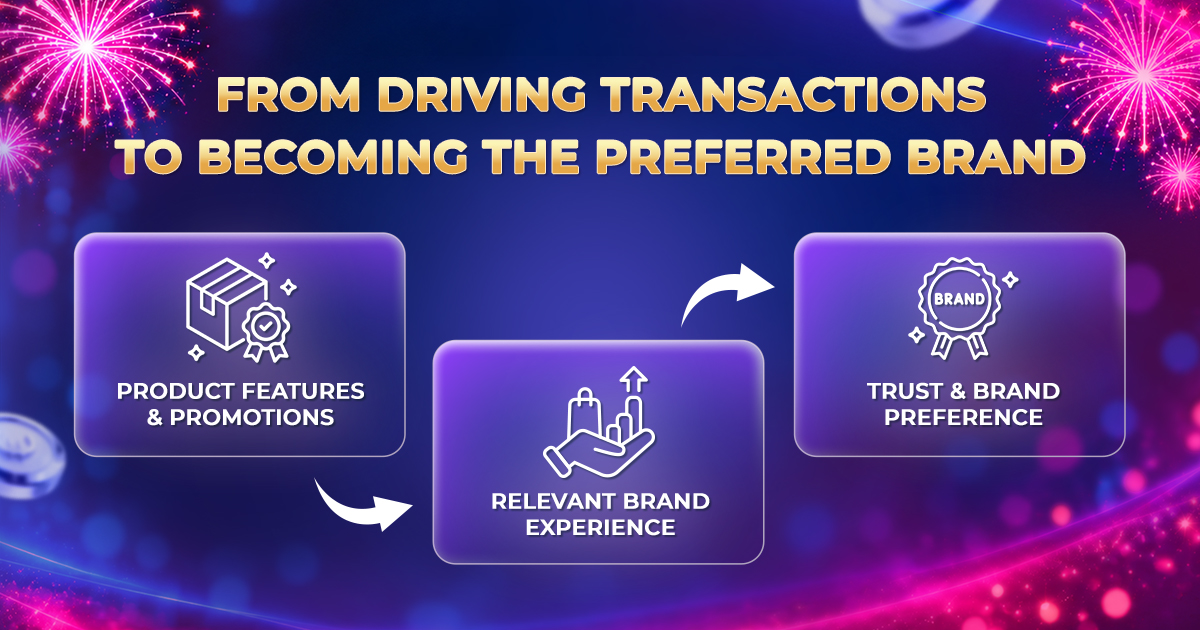
Brand Experience shifts the focus from promoting offers to personalizing experiences, addressing customer needs and strengthening engagement.
1. The Role of Brand Experience in Bank & Finance
In the financial sector, brand experience is shaped by multiple touchpoints, including marketing communications, in-app interactions, product usage, financial consultation, and post-transaction customer service. Therefore, a campaign that successfully captures attention is not necessarily enough to establish long-term customer relationships.
Brand Experience shifts the focus from communicating product features and promotional offers to designing experiences around customer needs. This approach enables brands to engage consumers at relevant moments, deliver tangible value, and maintain meaningful connections throughout the customer journey.
2. Three Key Brand Experience Strategies for the 2026 Year-End Festive Season
2.1. Moment-based Brand Experience: Engaging Consumers at Key Spending Moments
Rather than promoting a single product throughout the festive season, financial brands need to identify the moments when customers genuinely experience financial needs. The customer journey can be divided into five stages: Planning – Shopping – Payment – Expense Management – Savings. Each stage requires a different approach.
Before Lunar New Year, customers may focus on budgeting, selecting promotional offers, or booking travel. During the peak festive period, priorities may shift toward convenient payments and maximizing card benefits. After the holiday, expense tracking and setting new savings goals become more relevant. Banks can therefore develop budgeting content, needs-based promotions, interactive tools, and partnerships with retail and travel businesses.
For example, a festive credit card campaign could engage customers through Tet travel planning content, combining destination recommendations with card benefits and payment offers. Rather than simply promoting financial features, the brand becomes part of the customer’s travel preparation journey.
By focusing on meaningful spending moments, brands can improve message relevance, encourage more natural interactions, and increase their likelihood of being chosen when financial needs arise.
2.2. Trust-centric Brand Experience: Building Experiences Around Trust
In Bank & Finance, trust is established not only through a reputable brand image but also through how customers receive information, complete transactions, and access support. The Brand Finance Banking 500 Journal 2026 emphasizes that while technology and AI improve efficiency, human interaction remains essential in complex financial decisions.
This creates a need to balance digital convenience with trustworthy customer experiences. During the festive season, brands can develop trust-centered experiences across three stages:
- Before the transaction: Communicate benefits, promotional terms, and financial safety guidance transparently.
- During the transaction: Help customers use services conveniently while clearly understanding each step and transaction status.
- After the transaction: Provide educational content, accessible support channels, and expense-tracking tools.
For example, a campaign could use Interactive Content or experiential activations to simulate common financial scams, allowing participants to identify risks and practice appropriate responses. By improving the quality of support throughout the transaction journey, brands move beyond communicating trustworthiness toward creating experiences through which customers can evaluate that trust for themselves.
This approach can contribute to stronger long-term customer relationships.
2.3. Connected Omnichannel Experience: Creating a Seamless Journey Across Touchpoints
Financial customers often interact with brands across multiple channels. A customer might discover a promotional offer on social media, explore product details on a website, participate in an activation, and eventually apply for a product through mobile banking.
When these channels operate independently, the customer experience can become fragmented. Connected Omnichannel Experience addresses this challenge by integrating touchpoints into a unified customer journey: Media & Social – Interactive Content & Activation – Website & Mobile App – Conversion – CRM.
For example, a bank launching a Tet credit card campaign could begin with social media content focused on festive shopping plans. Interested customers could then be directed to an interactive experience highlighting card benefits before proceeding to the bank’s app to submit an application. The journey would continue with card usage guidance, promotional updates, and post-registration customer engagement.
To improve effectiveness, brands can use legally collected interaction data to segment audiences, personalize content, and measure performance across touchpoints. By supporting customers throughout the journey of identifying needs, researching options, making decisions, and completing payments, financial brands can go beyond expanding media reach. They can connect experiences with meaningful actions, reduce friction, and strengthen customer relationships beyond the campaign period.
3. From Brand Experience to Brand Growth
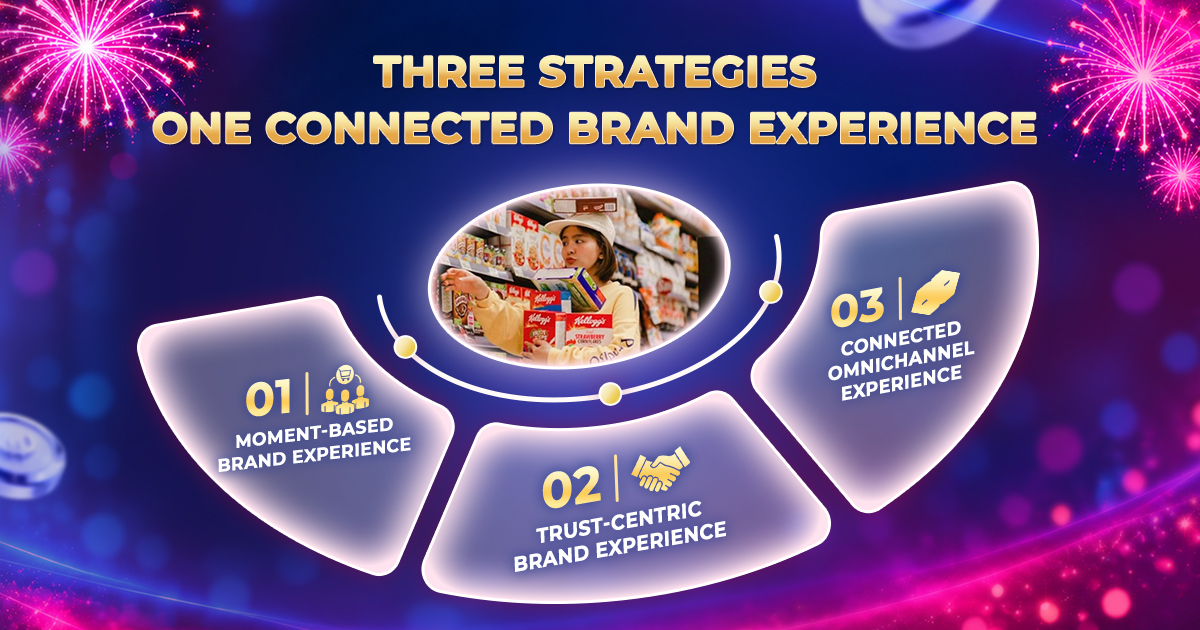
The three strategies are not independent. They complement one another: Moment-based Experience drives relevance – Trust-centric Experience strengthens trust – Connected Omnichannel Experience connects the journey and encourages action.
Brand Experience not only creates engagement but can also contribute to customer preference, loyalty, and business performance. According to Forrester (2025), companies that improve both Brand Experience and Customer Experience can achieve revenue growth rates up to 3.5 times higher. Within the banking industry, Accenture (2025) found that banks with the highest levels of customer advocacy achieved revenue growth 1.7 times faster.
These findings highlight the importance of connecting customer experience with the broader brand journey: Brand Awareness – Brand Consideration – Brand Preference – Customer Loyalty. Rather than focusing solely on reach and engagement, brands should evaluate how experience contributes to customer relationships and long-term business outcomes.
III. CASE STUDIES: BRAND EXPERIENCE IN BANK & FINANCE
During the festive season, financial brands compete not only through promotional offers and payment convenience but also by becoming part of meaningful moments in customers’ lives.
From Lunar New Year gifting traditions and safer Christmas shopping to personalized rewards journeys, the following three campaigns demonstrate different approaches to Brand Experience: Moment-based Brand Experience, Trust-centric Brand Experience, and Connected Omnichannel Experience.
Case 1. Dah Sing Bank – Voice Laisee 2026: Personalizing Lunar New Year Gifting
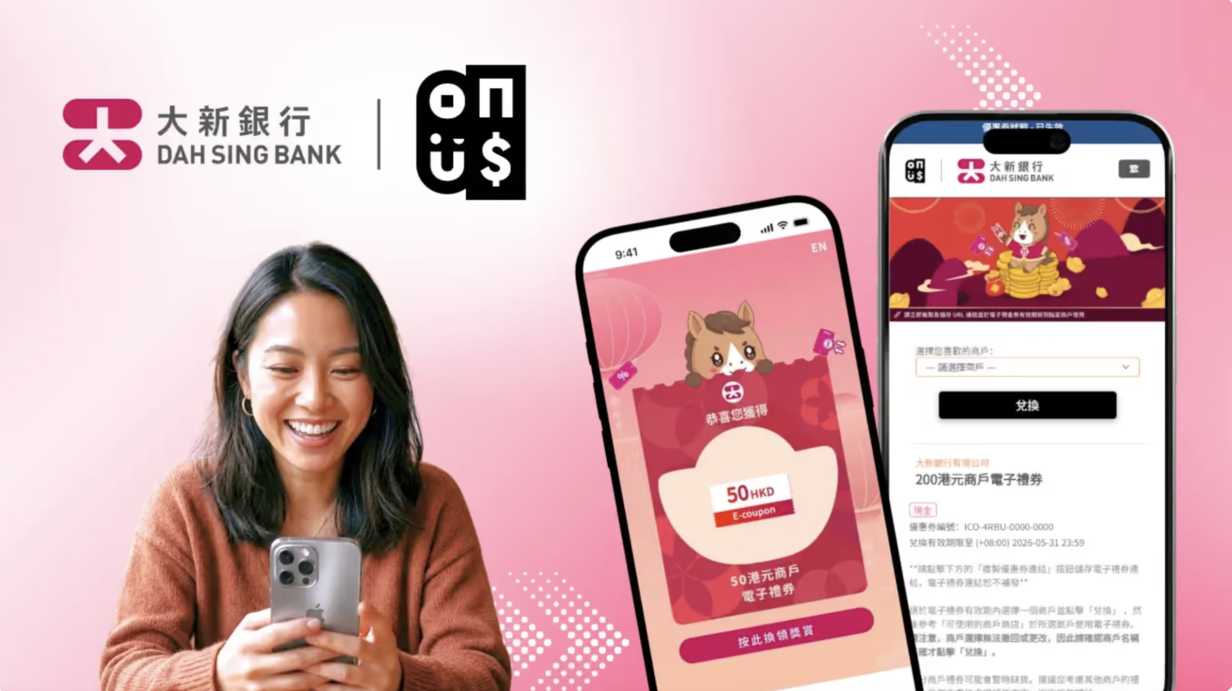
Dah Sing Bank enhances digital red envelopes with personalized voice greetings, creating a more meaningful and engaging gifting experience. Source: On-us
Giving lucky money is a cherished Lunar New Year tradition, closely associated with good wishes, prosperity, and family connections. However, as digital red packets become increasingly common, the experience risks becoming a simple money transfer, losing some of the warmth associated with traditional gifting.
For Dah Sing Bank, the challenge was to integrate a familiar cultural tradition into digital banking while encouraging customers to engage more frequently with its mobile app. Rather than merely digitizing red packets, Dah Sing Bank introduced an experience that allowed users to attach personalized voice greetings. This transformed a financial transaction into an emotional connection, enabling the bank to become a natural part of the Lunar New Year tradition.
Working with On-us, Dah Sing Bank integrated Voice Laisee directly into its mobile banking platform, enabling customers to send digital red packets accompanied by recorded greetings. Participants also had opportunities to receive vouchers from brands in the dining, entertainment, and lifestyle sectors. A Year of the Horse lucky draw was introduced alongside the campaign to encourage users to complete digital banking activities and continue interacting with the app.
According to On-us, Voice Laisee usage increased by 80% compared with the previous Lunar New Year. The redemption rate for multi-brand vouchers was 2.8 times higher than that of single-brand vouchers. The solution reduced costs by 60% compared with traditional physical gift incentives.
Dah Sing Bank demonstrates that the value of Moment-based Brand Experience lies in understanding the emotional meaning behind financial behaviors. By combining money transfers with personalized greetings, the bank not only facilitated transactions but also enriched the Lunar New Year gifting experience. When a brand appears at the right moment and delivers value that resonates with cultural traditions, an ordinary transaction can become a meaningful reason for customers to engage.
Case 2. Santander – All “AI” Want For Christmas 2025: Building Trust Through Safer Shopping Experiences
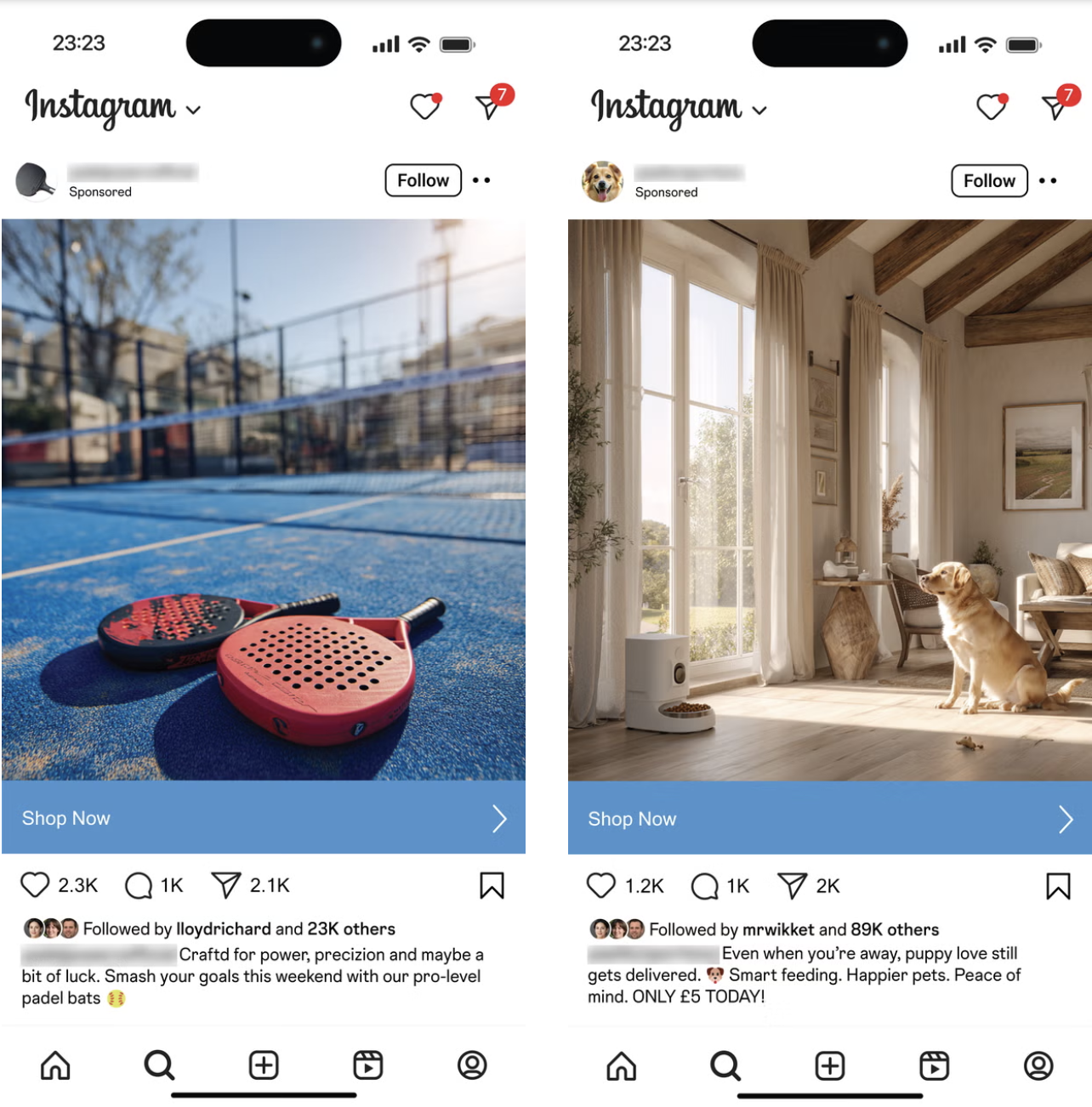
Santander uses AI-generated fake Christmas advertisements to raise awareness and educate consumers on identifying potential online scams. Source: Santander.
Christmas is a peak period for gift searches and online shopping, while AI-generated fraudulent advertisements are becoming increasingly sophisticated.
According to a November 2025 survey conducted by Santander in partnership with Opinium among 2,000 UK adults, 74% failed to correctly identify AI-generated fake advertisements, while 56% were concerned that they or their loved ones could become victims of scams. Against this backdrop, Santander needed to increase customer awareness without relying on conventional fraud warnings that might be overlooked.
Santander used AI itself to demonstrate how convincing fraudulent Christmas gift advertisements could appear. The bank developed AI-generated fake gift advertisements as creative communication materials, accompanied by guidance on identifying warning signs such as unrealistic prices, unusual images, suspicious links, and insecure payment pages. Santander illustrates how Trust-centric Brand Experience can be developed around real risks in the consumer journey. By making fraudulent tactics more visible and providing practical prevention guidance, the bank moved beyond communicating security as a brand promise and delivered useful educational content.
Trust is built not only through a bank’s commitments but also through its ability to help customers feel more confident when making financial decisions.
Case 3. Banco de Bogotá – Compra y Gana tus Recompensas: Connecting Omnichannel Experiences to Drive Spending
Inspired by Colombia’s Christmas piñata tradition, the bank personalizes transaction goals and rewards based on individual customer behavior. Source: Banco de Bogotá.
While Santander focused on reducing concerns surrounding online shopping, Banco de Bogotá addressed another festive-season challenge: turning credit card promotions into actual customer spending.
In Colombia’s competitive credit card market, loyalty programs and promotional offers have become increasingly common, making generic rewards less compelling. Banco de Bogotá sought to increase card spending, encourage more frequent transactions, and reactivate less engaged cardholders. To achieve these objectives, the bank needed a festive experience that also reflected the needs and spending behaviors of different customer segments.
Inspired by Colombian Christmas traditions and the piñata, a festive symbol associated with surprise gifts, the bank developed a campaign in which every qualifying transaction could bring customers closer to a reward. Rather than offering the same spending threshold and incentive to all customers, the campaign introduced personalized spending goals informed by previous transaction behavior.
Working with Mastercard Marketing Services, Banco de Bogotá analyzed transaction frequency, value, and history to segment customers. Each customer received two personalized spending goals and could select a preferred rewards partner. The journey was connected through email, WhatsApp, the bank’s owned channels, and a mobile-optimized landing page. Customers could register, select their goals, and track their progress in real time.
Communication content and frequency were continuously adjusted based on engagement data, helping maintain customer interest throughout the nine-week campaign. According to Mastercard: Card spending increased by 6.4%. Customers who registered for the program achieved a 23% increase in spending. Customers who selected spending goals recorded growth four times the campaign’s average increase.
These results demonstrate the potential of combining personalization, rewards mechanisms, and data-driven communication. Banco de Bogotá shows that Connected Omnichannel Experience is not simply about being present across multiple channels. It is about connecting messages, data, and actions into a coherent customer journey. When customers can receive information, select benefits, monitor progress, and continue interacting through relevant touchpoints, a rewards program becomes more than a standalone promotion.
It becomes an experience capable of encouraging product usage and deeper customer engagement.
IV. BRAND EXPERIENCE SOLUTIONS FROM NOVAON DIGITAL
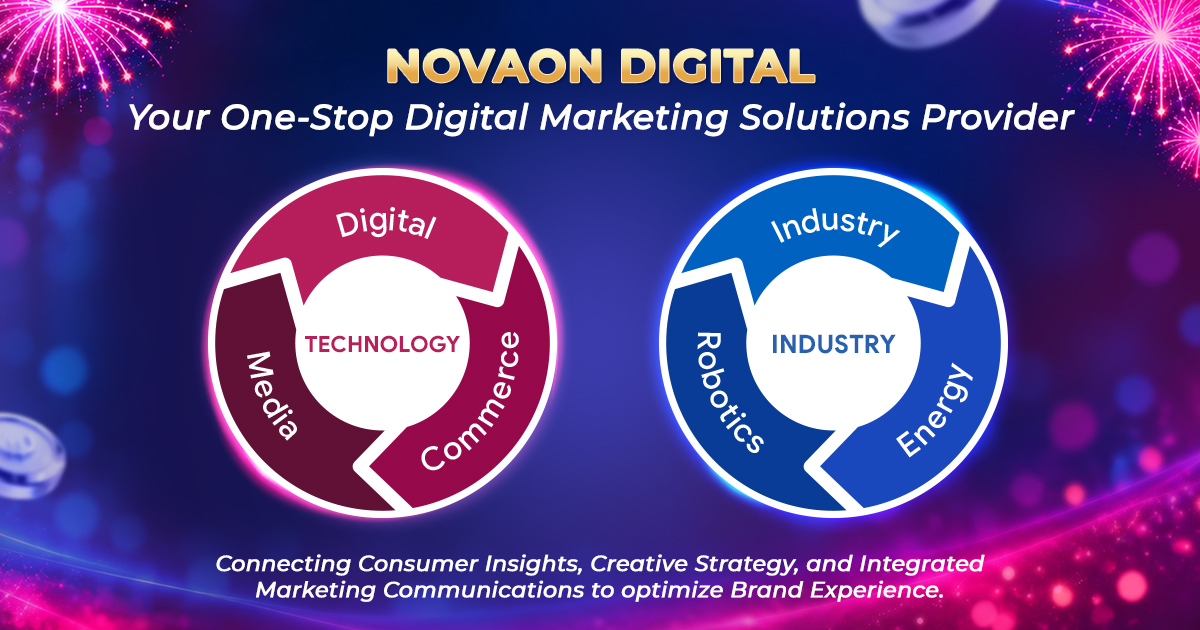
Novaon Digital optimizes festive Brand Experience through integrated marketing solutions, combining Consumer Insights, Creative Strategy, and IMC.
As festive-season spending behaviors continue to evolve, Bank & Finance brands need to move beyond isolated marketing campaigns toward integrated Brand Experience strategies that connect customer needs with communication touchpoints and conversion opportunities.
To maximize the impact of Brand Experience, Novaon Digital develops integrated communication solutions combining Consumer Insights, Creative Strategy, and Integrated Marketing Communications (IMC) to create relevant brand experiences tailored to different consumer needs and festive spending moments. By strategically integrating Digital Advertising, Social Media, Content Marketing, Influencer Marketing, OOH/DOOH, Experiential Activation, and Strategic Partnerships, Novaon Digital connects touchpoints into a consistent customer journey.
From building awareness and driving engagement to encouraging conversion, these integrated solutions are designed to maximize Brand Experience, strengthen Brand Preference, and enhance marketing effectiveness for Bank & Finance brands.
V. CONCLUSION
The 2026 year-end festive season and Lunar New Year 2027 present more than opportunities to increase transactions. They also intensify competition around trust and experience in the Bank & Finance industry.
As consumers place greater emphasis on spending value, convenience, and security, Brand Experience enables financial brands to move beyond product-focused communication toward experiences that address real customer needs. Moment-based Brand Experience builds relevance, Trust-centric Brand Experience strengthens confidence, and Connected Omnichannel Experience connects the journey from awareness to product usage.
Through its integrated communication capabilities, Novaon Digital aims to help Bank & Finance brands translate market understanding into differentiated brand experiences, strengthen customer relationships, and support long-term growth.