Every car buyer has their own priorities and selection criteria. This means automotive brands must go beyond providing comprehensive product information to understand what customers care about, what kind of guidance they need, and which factors influence their purchase decisions. With its ability to analyze data, identify customer needs, and personalize interactions, AI is creating new opportunities for brands to support customers more effectively at every touchpoint.
1. As the Car-Buying Journey Becomes Increasingly Personalized
Purchasing a car is a high-value decision that typically involves multiple stages of research, comparison, and consideration. From searching for information and reading vehicle reviews to comparing prices and visiting showrooms, every touchpoint can influence the final purchase decision. However, as customer needs become increasingly diverse, generic messages and mass-market content are becoming less effective at addressing individual preferences and concerns.
Against this backdrop, AI enables brands to personalize the car-buying journey by analyzing data, identifying customer needs, and adapting interactions based on individual behaviors. Instead of simply presenting product information, brands can proactively recommend suitable vehicles, deliver relevant content, and provide guidance at different stages of consideration.
This shift not only helps customers access more relevant information but also creates opportunities for automotive brands to improve customer experiences, connect touchpoints, and support conversion more effectively.
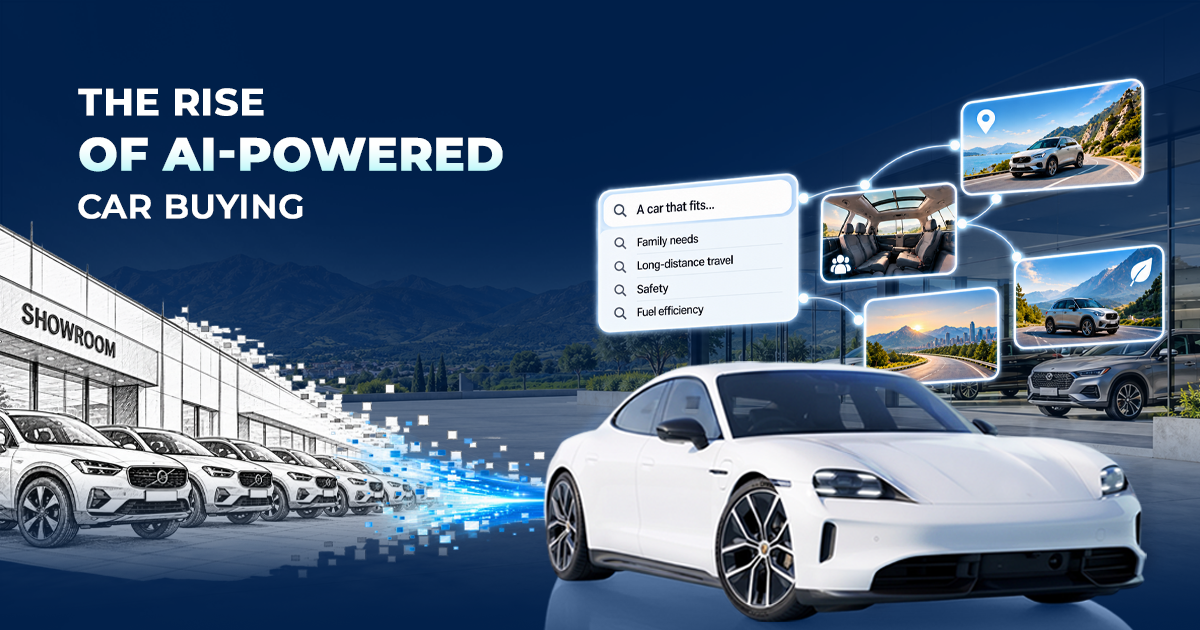
AI is reshaping how consumers discover, evaluate, and choose the right vehicle.
Source: Novaon Digital
2. Four AI Applications Transforming the Car-Buying Experience
AI Recommendation: Helping Customers Find the Right Vehicle
One of the most common challenges in the car-buying journey is choosing among numerous vehicle models, variants, and configurations. Even after establishing a budget, customers must still consider a wide range of factors, including intended use, seating capacity, safety features, driving performance, and total cost of ownership.
AI Recommendation refers to product recommendation systems that use data and criteria related to individual customer needs. Rather than requiring customers to explore an entire vehicle portfolio independently, these systems can ask questions about budget, driving habits, family size, and preferred features before suggesting suitable options for further comparison.
For example, a customer looking for a family vehicle within a specific budget could receive recommendations for suitable SUVs, accompanied by information about interior space, safety features, and operating costs. Meanwhile, a customer who primarily drives in urban areas might be presented with different options based on vehicle dimensions, energy consumption, and everyday convenience.
This capability can be integrated into brand websites, online vehicle configurators, or virtual showrooms, making the product discovery process more intuitive and better guided.
For automotive brands, AI Recommendation offers two notable benefits. First, it reduces the amount of information customers need to process independently, improving the overall product research experience. Second, the preferences and criteria customers provide can serve as valuable indicators of demand, helping brands better understand interest in specific vehicle models.
However, the quality of recommendations depends on product data, evaluation criteria, and system design. AI should provide explainable suggestions rather than assuming that one vehicle will suit every customer with similar characteristics.
Personalized Content: From Generic Messaging to Content Tailored to Individual Needs
While AI Recommendation helps customers narrow down their vehicle options, Personalized Content focuses on how brands communicate information that is relevant to different customer needs and stages of consideration.
In automotive marketing, a single vehicle may offer multiple competitive advantages, ranging from design and technology to driving performance, comfort, and safety. However, not every benefit carries the same persuasive value for every customer.
Someone looking for a family car may prioritize interior space and safety assistance systems, while technology enthusiasts may be more interested in infotainment displays, connectivity, or driver-assistance features. When brands use identical content for all audiences, the benefits most relevant to each customer may not be communicated clearly enough.
With AI, brands can analyze signals such as previously viewed content, vehicles of interest, engagement behavior, and the customer’s stage in the buying journey to select or adapt marketing messages.
For example, customers in the discovery stage may encounter introductory videos and lifestyle-oriented content. As they move into consideration, communications can focus more on variant comparisons, technical specifications, driving reviews, and ownership costs. For customers demonstrating stronger purchase intent, information about test drives, sales policies, or relevant dealerships becomes more practical.
Personalization can be applied across multiple touchpoints, including digital advertising, email marketing, websites, landing pages, and customer service channels. AI can also support content classification, message recommendations, and the optimization of creative variations based on performance data.
For brands, the value of Personalized Content lies not simply in producing more content variations but in communicating the right product benefits to the right audiences at the right moments. This provides a foundation for improving marketing relevance, supporting customer consideration, and using content resources more efficiently.
Nevertheless, personalization does not mean completely changing a brand’s message for every individual. Communications must maintain consistent positioning, brand identity, and core values while complying with personal data protection and privacy requirements.
Conversational AI: When Customer Consultation Begins with a Conversation
A distinctive characteristic of the car-buying journey is that customers often have numerous questions before they feel ready to visit a showroom. These questions may concern technical specifications, differences between variants, ownership costs, warranty policies, or test-drive registration procedures.
At the same time, customers do not necessarily seek information during business hours or when sales consultants are immediately available.
Conversational AI, particularly AI-powered conversational systems capable of natural language processing, allows customers to ask questions in everyday language and receive responses based on the product information made available to the system.
Unlike traditional chatbots that primarily operate through predefined scripts, Conversational AI can support more flexible interactions. Customers do not need to select a specific menu option; instead, they can ask questions such as: “Which SUV would be suitable for a family of five?”, “What are the key differences between these two variants?”, or “Can I schedule a test drive this weekend?”
When integrated with product data and relevant operational systems, AI can help compare information, explain features, collect initial customer requirements, and forward inquiries to sales consultants.
What makes Conversational AI particularly valuable is its ability to turn a simple information-seeking interaction into an opportunity for deeper customer engagement. Rather than merely reading website content, users can ask follow-up questions, clarify concerns, and gradually identify the options that best suit their needs.
For automotive brands, this application has the potential to improve responsiveness, support initial lead qualification, and reduce the burden of repetitive inquiries on sales teams. As a result, sales consultants can focus more on interactions requiring specialist knowledge, hands-on experiences, and direct consultation.
However, Conversational AI should not be viewed as a complete replacement for human consultants. Information relating to vehicle prices, inventory, promotions, financing conditions, and dealership policies must be regularly updated and verified. For complex questions or high-value purchase decisions, systems need clear mechanisms for transferring conversations to human representatives.
CRM Personalization: Extending Personalization Beyond the First Interaction
A prospective car buyer may interact with a brand multiple times before making a purchase decision. They might see an advertisement, visit a website, explore a particular model, request a consultation, book a test drive, and continue considering their options over several weeks or months.
If data from these interactions is not connected, each return visit may feel like starting the journey all over again. This not only affects the customer experience but also makes it difficult for brands to recognize individual interest levels and actual needs.
CRM Personalization focuses on using customer data to tailor engagement and relationship management throughout the customer lifecycle. When combined with AI, CRM systems can help analyze behavior, segment customers, predict areas of interest, and recommend appropriate follow-up activities.
For example, a customer who has repeatedly viewed information about a particular model and requested a consultation could be prioritized for variant comparison content or a test-drive invitation. A customer who has already completed a test drive could receive follow-up information about the vehicle they experienced, rather than continuing to receive generic introductory content.
After purchase, CRM Personalization can also help maintain customer relationships through service reminders, after-sales information, customer care programs, and content relevant to vehicle ownership.
For automotive brands, the value of CRM Personalization lies in its ability to connect marketing, sales, and after-sales service. Data is not used solely for lead generation; it also helps brands understand where customers are in their journeys and which interactions would be most meaningful next.
However, the effectiveness of this application depends heavily on data quality, system integration, and collaboration across departments. AI cannot deliver accurate personalization when customer data is fragmented, duplicated, or outdated.
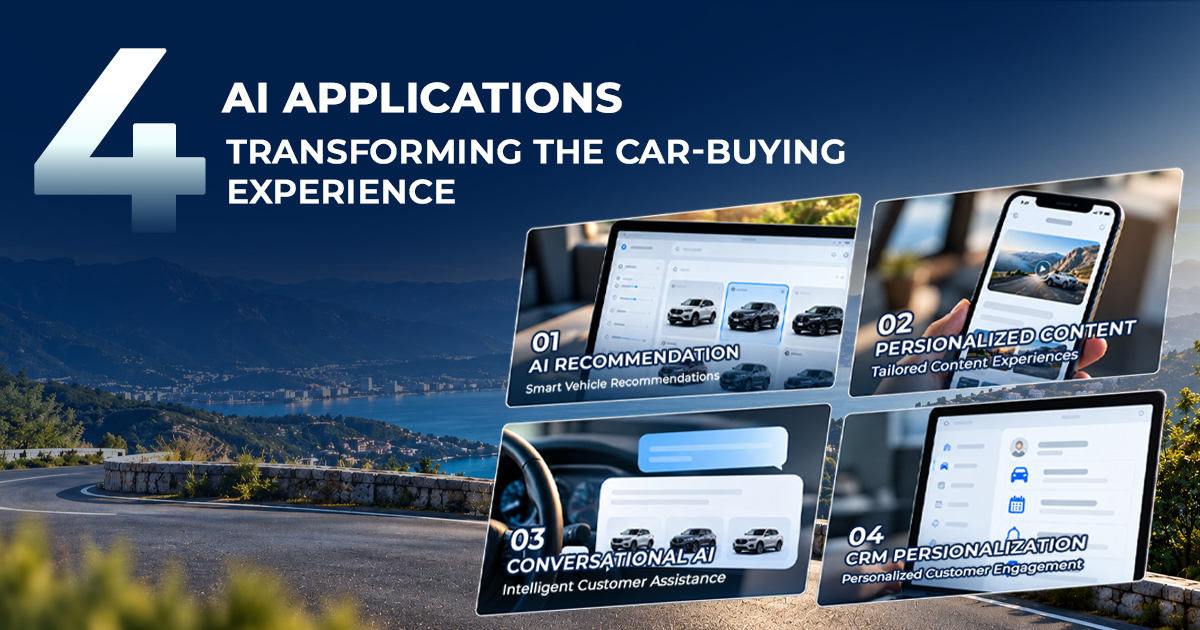
From smart recommendations to personalized engagement, AI is redefining the car-buying experience.
Source: Novaon Digital
3. Connecting AI to Create a Seamless Customer Experience: From Discovery to Purchase Decision
The four AI applications can address different needs throughout the car-buying journey, but their greater value lies in connecting them to create a seamless experience. From recommending suitable vehicles and personalizing content to providing consultation and customer care, data gathered at each touchpoint can inform subsequent interactions, enabling brands to better understand customer needs and maintain consistent engagement throughout the consideration process.

Connected AI solutions bridge online and offline touchpoints, creating a seamless journey from discovery to purchase.
Source: Novaon Digital
For instance, when customers use an AI Recommendation tool to identify suitable vehicles, information about their budgets, intended uses, and preferred features can form the basis for subsequent content personalization. If they require more detailed advice or wish to book a test drive, Conversational AI can help receive and process their requests, while the CRM system enables sales teams to continue engaging with them based on previously identified needs. This makes it possible to create a more connected journey from online research to the showroom experience.
According to Cox Automotive’s 2025 Car Buyer Journey Study, published in January 2026, 25% of new-vehicle buyers in the United States used AI tools during their car-buying process. The study also found that 63% of respondents considered a combination of online and in-person interactions to be the ideal car-buying experience. These findings suggest that AI is becoming part of the automotive purchase journey, while the integration of digital touchpoints and physical experiences remains important to consumers.
For automotive brands, integrating AI with customer data, marketing activities, and sales systems creates opportunities to improve consultation quality, nurture potential customers, and support conversion. Rather than optimizing each tool independently, brands should work toward a consistent journey in which every interaction contributes to a deeper understanding of customer needs, delivers relevant value, and strengthens customer relationships.
4. Conclusion
AI is gradually transforming the car-buying journey, from how customers discover vehicles and engage with content to how they seek information, receive consultation, and experience customer care. Through AI Recommendation, Personalized Content, Conversational AI, and CRM Personalization, automotive brands have greater opportunities to understand customer needs, personalize interactions, and connect different stages of the purchase journey more effectively.
However, the value of AI does not come from technology adoption alone. It also depends on the ability to integrate data, maintain consistent customer experiences, and connect digital interactions with real-world sales activities.
In this context, Novaon Digital approaches automotive customer experience through its Strategy – Creative – Technology (SCT) framework, bringing together strategic thinking, creative content, and technology solutions throughout the customer journey. Building on this foundation, AI applications, content personalization, and data management can be considered for integration across relevant touchpoints, with the aim of improving engagement quality, supporting conversion, and building lasting relationships between automotive brands and their customers.