Tết 2026 remains a critical peak season for the FMCG industry, but the context has changed. As consumers become more cautious, prioritizing reassurance, value, and relevance over deep discounts, traditional Tết campaigns are gradually losing effectiveness. This shift raises a new question for FMCG brands: what should be done, and how, to sustain growth during a more considered Tết season? This article examines the FMCG landscape for Tết 2026, highlights key consumer insights, and outlines four Brand Experience directions to help brands adapt and enhance growth potential.
Part 1: The FMCG landscape for Tết 2026 when growth remains but the challenge has changed
Tết remains a familiar peak season, but the context no longer repeats itself:
For many years, Lunar New Year has played a decisive role in the growth of the FMCG industry. Data from NielsenIQ shows that Tết consistently records the highest shopping index of the year, outperforming other seasonal occasions such as Mid-Autumn Festival, Vu Lan, or Christmas. Beyond its cultural significance, Tết is also a period when consumers increase spending on food, beverages, household care products, and gift items.
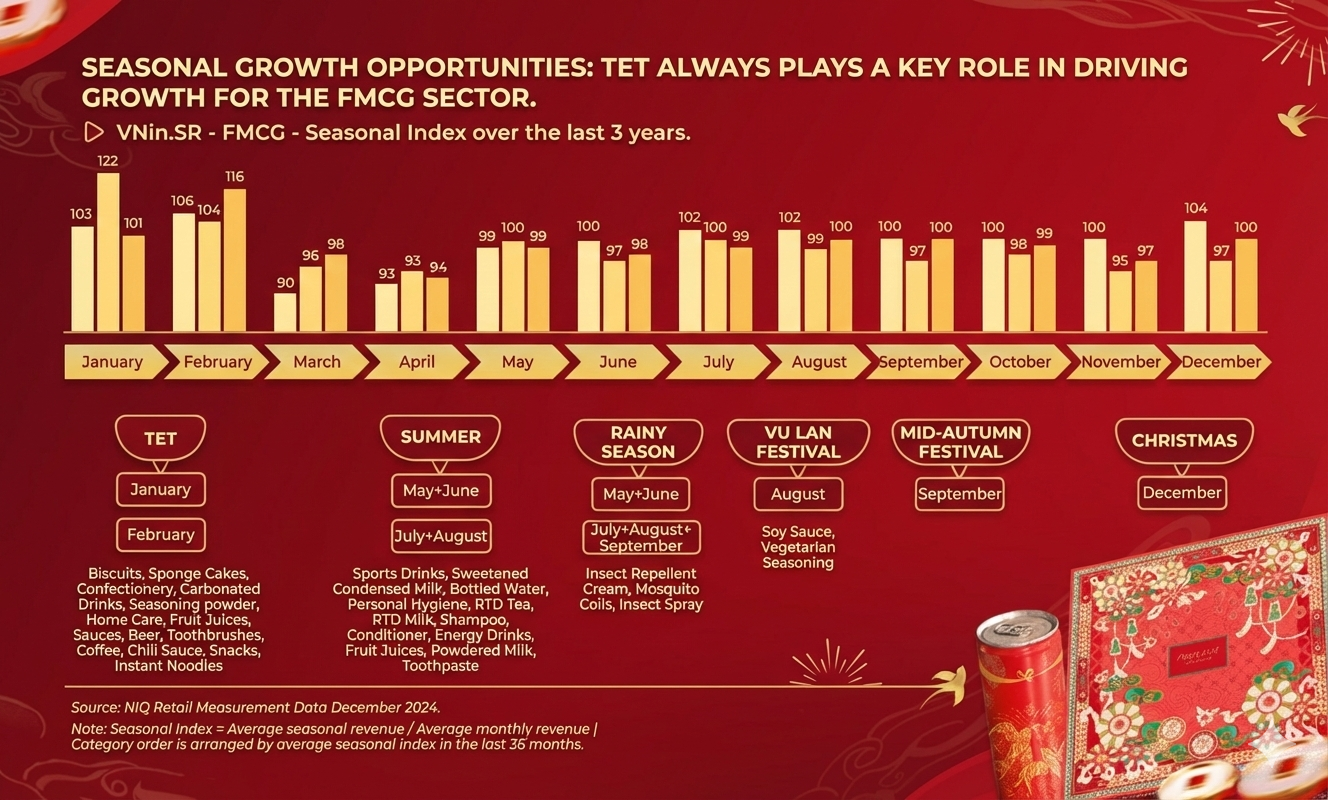
Tết is the season contributing the largest share to FMCG growth in Vietnam.
(Source: NielsenIQ)
However, while the importance of Tết remains unchanged, the social and economic context shaping consumer behavior differs each year. As a result, Tết is no longer a formula that can be repeatedly applied, but a challenge that must be reassessed in each cycle.
The FMCG market enters Tết 2026 with mixed signals:
Heading into Tết 2026, the FMCG market shows both positive and cautious signals. NielsenIQ data indicates that in recent Tết seasons, FMCG demand has remained stable with double-digit growth compared to pre-Tết periods. Tết revenue contributes approximately 19 to 20 percent of annual FMCG sales, reaffirming the critical role of this season.
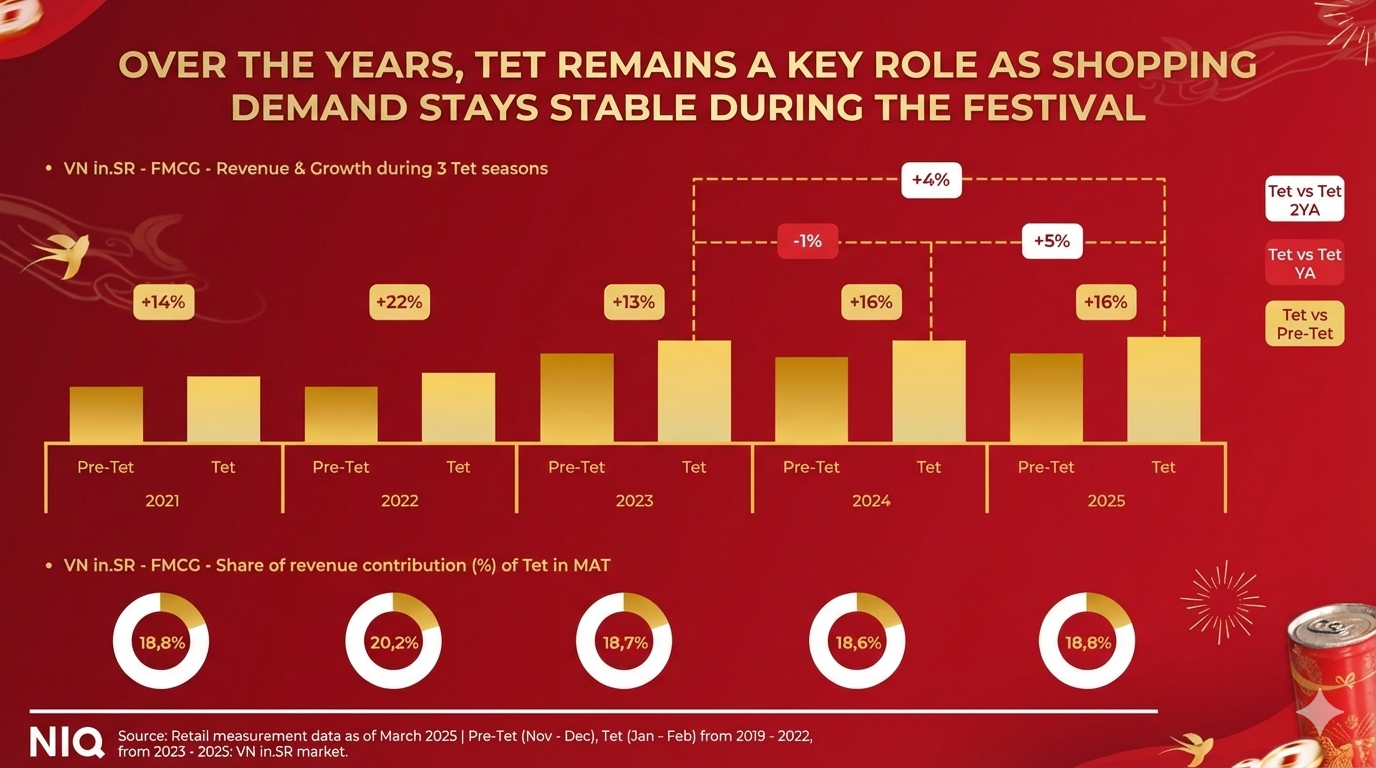
FMCG revenue during Tết remains stable over the years, but growth momentum is no longer expanding strongly.
(Source: NielsenIQ)
At the same time, consumers enter the Tết season with a more cautious mindset. Pressure from living costs, income constraints, and broader economic uncertainty has made shopping behavior more selective and calculated. The market is not pessimistic, but it no longer generates the strong growth momentum seen in earlier periods.
Tết 2026 is no longer a scale-driven race by inertia:
In this context, Tết growth no longer comes from simply expanding scale or repeating familiar tactics. Tết budgets are still being maintained, but pressure around return on investment and real impact on purchase decisions is increasing.
This forces FMCG brands to rethink their approach, shifting from a coverage-driven mindset to a more selective one, focused on creating experiences aligned with consumers’ evolving priorities. Tết 2026 therefore raises a fundamental strategic question: what are consumers truly looking for from brands during a more considered Tết season?
Part 2: What are Tết 2026 consumers looking for from brands?
Entering Tết 2026, purchase decisions are no longer driven by impulse or deep promotions, but by a more deliberate evaluation process. Three key needs are shaping how consumers choose brands during the Tết period.
Reassurance, safety, and verifiability:
Growing concerns around counterfeit goods, product quality, and safety have made consumers more cautious during Tết. This is especially evident for household products and gift items, where reassurance influences not only the purchase decision but also the buyer’s sense of responsibility and personal image.
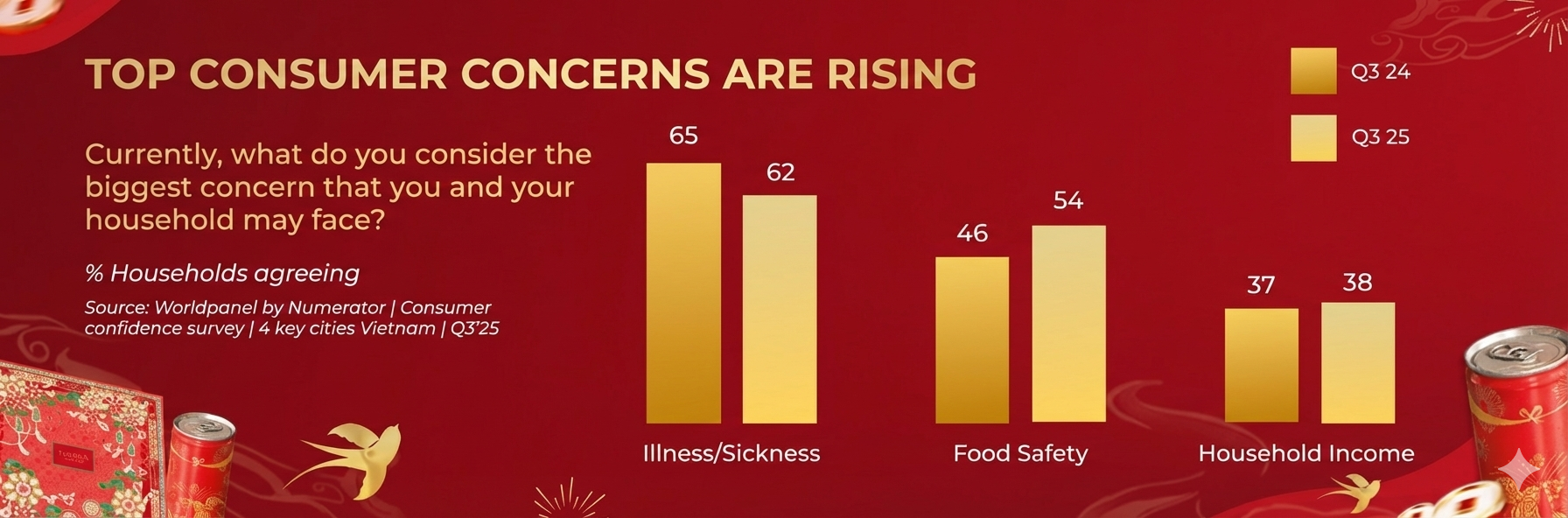
Food safety and health are becoming top consumer concerns.
(Source: Worldpanel by Numerator)
Meanwhile, many FMCG brands still communicate quality through one-way claims, lacking concrete proof or experiential elements that allow consumers to verify for themselves. As a result, trust is difficult to sustain across touchpoints from communication to point of sale. Rather than simply claiming quality, brands need to enable consumers to experience and validate reassurance from the very first interaction.
Emotional value and the meaning behind Tết choices:
Alongside reassurance, Tết consumers do not view shopping as a purely functional act, but as part of preserving and expressing family values. Each choice carries expectations of care, thoughtfulness, and meaning in moments of reunion or gifting.
However, much Tết communication still falls into emotional clichés, disconnected from real-life contexts. While messages may evoke festive sentiment, they often fail to clarify the product’s role in Tết routines, making it difficult for emotion to translate into choice. To build genuine connection, brands need to anchor products in concrete usage situations that feel close enough for consumers to see themselves within.
Balancing spending and quality:
Tết 2026 consumers remain willing to spend, but purchase decisions are not based on the lowest price. Instead, they seek a sense of making a reasonable choice that justifies the money spent and fits specific Tết usage purposes.
Heavy promotion can drive short-term sales, but it can also erode perceived value. Many brands fail to clearly explain why a price point is reasonable or which Tết context a product best fits. Rather than focusing solely on discounts, brands need to communicate value relative to price and design pricing structures and bundles tailored to distinct Tết needs.
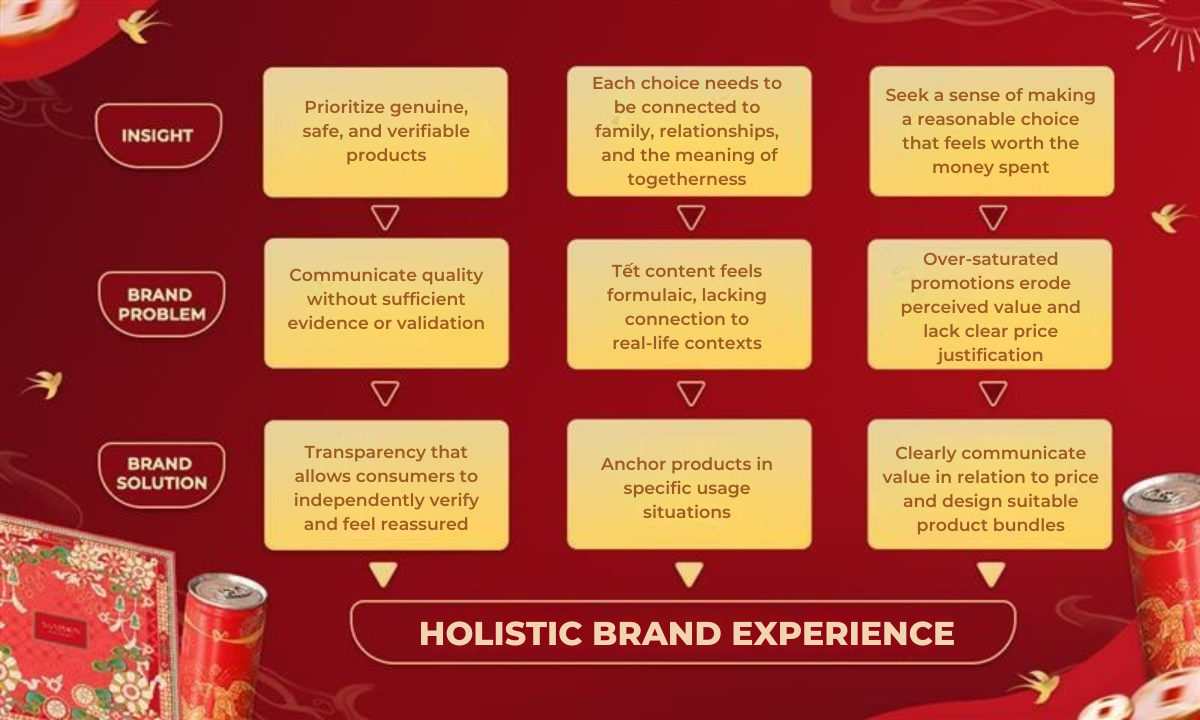
Three Tết 2026 consumer insights indicate that Brand Experience must be designed holistically and selectively.
(Source: Novaon Digital)
These insights show that Tết 2026 consumers no longer make decisions based on immediate emotion or high promotions, but prioritize reassurance, meaning, and a sense of making a reasonable choice. This sets a new requirement for FMCG brands: instead of deploying fragmented communication or promotions, brands need to build a comprehensive Brand Experience that is flexible enough to respond to shifting consumer psychology.
Part 3: Four brand experience directions to enhance FMCG growth potential for Tết 2026
As Tết 2026 consumers prioritize reassurance, meaning, and reasonable choices, Brand Experience can no longer be a collection of isolated activities. It must be designed as an integrated experience system. The following four directions reflect how FMCG brands can adapt to this new context.
Direction 1: Adaptive Consumer Response
Tết shopping behavior no longer follows a fixed trajectory from pre-Tết buildup to peak days. Consumers continuously adjust decisions based on income, economic conditions, spending priorities, and personal circumstances. This requires Brand Experience to function as a system capable of observation, response, and adjustment, rather than adhering rigidly to a pre-defined seasonal script.
In practice, brands need to implement this direction by integrating strategy, creative thinking, and technology to respond flexibly to Tết shopping behavior. Campaigns should be structured in phases aligned with the consumer decision journey, from preparation and consideration to purchase moments. Behavioral data from digital platforms should be continuously monitored to allow timely adjustments in messaging, content, and touchpoints, while optimizing commercial elements such as promotions and product bundles based on real market dynamics. This enables brands to maintain presence throughout the Tết season while appearing precisely when consumers are ready to choose.
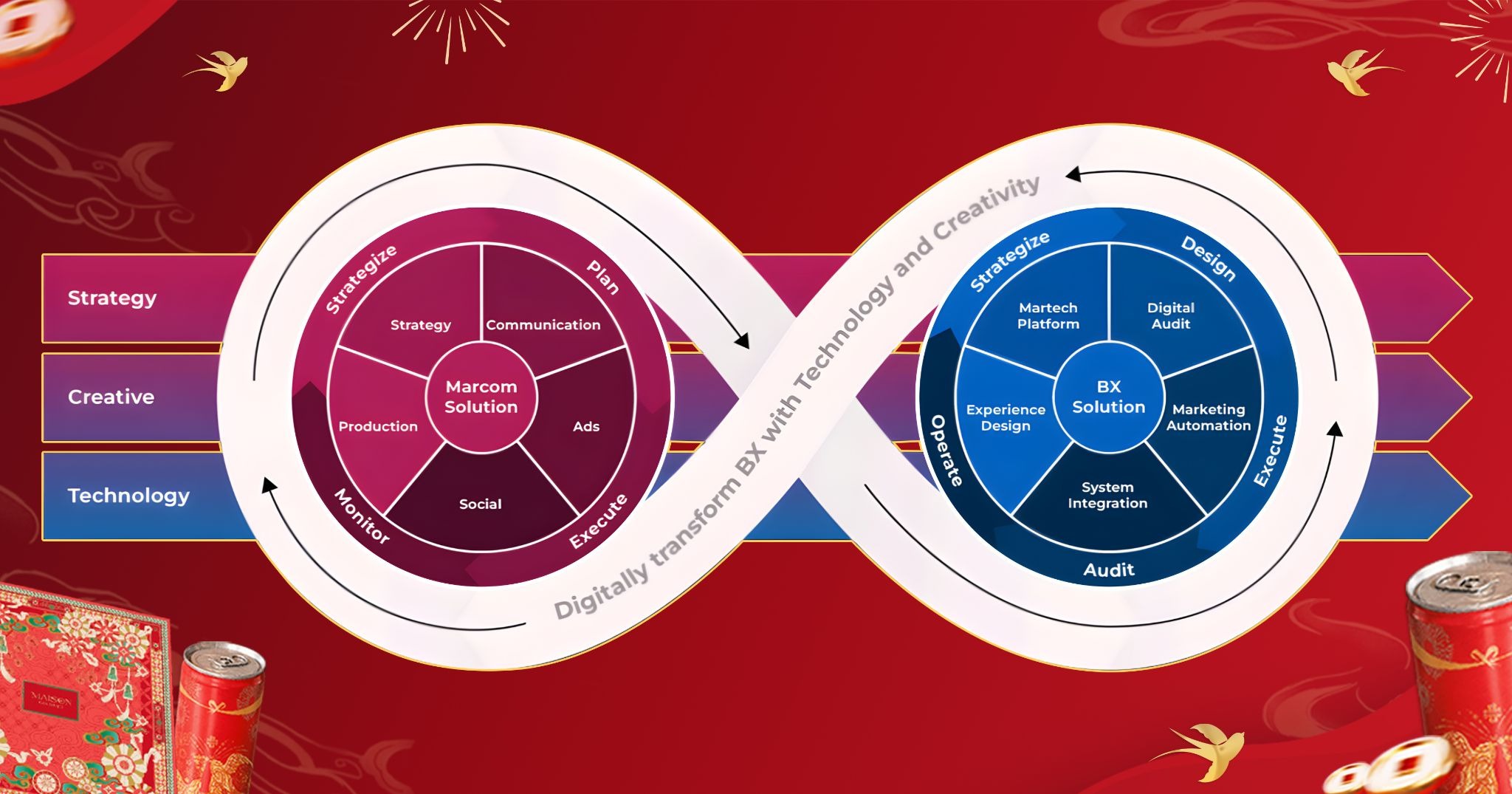
The integration of strategy, creative thinking, and technology in building Brand Experience.
(Source: Novaon Digital)
Direction 2: Verified Trust and Authenticity
As concerns about counterfeits, food safety, and product quality increase, trust no longer comes from how strongly brands claim excellence. Consumers seek reassurance grounded in tangible evidence and the ability to verify for themselves.
Brands can adopt this approach by integrating PR and Influencer Marketing around real-life experiences. Instead of one-way quality claims, products should be placed in everyday usage contexts through credible content creators. Influencer selection should not rely solely on reach, but on alignment in image, lifestyle, and trust-building capacity with target audiences. At the same time, influencer evaluation, selection, and management need to be conducted systematically to ensure consistency between quality narratives, real experiences, and brand positioning.
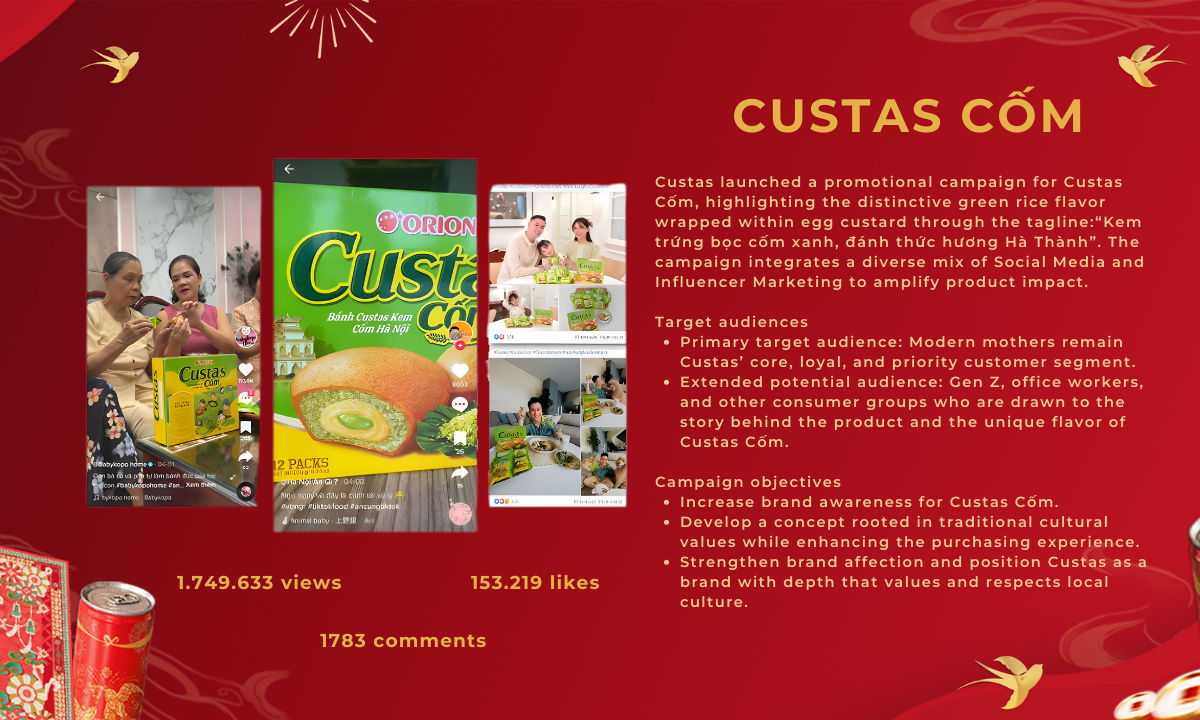
Custas brand collaborating with Novaon Digital to activate Influencer Marketing based on real experiences.
(Source: Novaon Digital)
Direction 3: Meaningful Value Communication
When the Tết market is saturated with promotions, consumers are no longer persuaded by high discount rates alone. They need clarity on what value a product delivers during Tết, who it is for, when it is used, and why it is a reasonable choice. Value lies not in promotional numbers, but in the product’s specific role in Tết life.
Under this direction, brands should build content strategies centered on usage roles. Content should directly address consumer questions, from household use and gifting to stockpiling. Instead of generic symbolic Tết stories, content is placed in familiar life situations, making it easier for consumers to visualize product value in their own context. When value is communicated clearly and consistently across touchpoints, brands provide a compelling reason to be chosen, even without heavy promotions.

High-quality Tết content generates genuine interest and real connection with consumers.
(Source: Novaon Digital)
Direction 4: Empathetic Price-Quality Balance
Tết 2026 consumers are not searching for the cheapest option, but for choices that feel reasonable and reassuring. Purchase decisions are made when the price feels proportional to the value received and appropriate for specific purposes, whether for family use, gifting, or festive stockpiling.
From an execution perspective, Brand Experience should be designed around concrete Tết shopping contexts. By integrating strategy, creative thinking, and technology, consumer behavior and needs can be analyzed by usage purpose, enabling tailored pricing structures, product bundles, and messaging for each context. In parallel, Influencer Marketing plays a reinforcing role by validating purchase decisions through real experiences, explaining why a certain price was chosen, for which occasion, and how the value is perceived. This approach helps consumers feel that their choice is thoughtful and trustworthy, rather than driven by short-term incentives.
Part 4: Expert Perspective
From the market landscape and behavioral insights, it is clear that Tết 2026 is no longer a race of scale or reach, but a challenge of building trust and enabling reasonable choices in a more considered consumer environment. While Tết remains a priority spending season, purchase decisions are increasingly based on reassurance, real value received, and perceived credibility, rather than reactions to short-term messages or promotions. This positions Brand Experience as the central factor, requiring brands to ensure consistency across messaging, products, pricing, and engagement approaches in order to earn consumer trust and selection during Tết.
At Novaon Digital, Brand Experience is implemented as an integrated system based on the SCT – Strategy, Creative and Technology operating in parallel. This approach enables FMCG brands not only to adapt flexibly to the Tết 2026 context, but also to build trustworthy experiences and long-term value that extend beyond a single seasonal peak.