As the second half of 2025 and early 2026 approach, trust has emerged as the new “currency” of the financial and banking industry. Competition among brands is no longer defined solely by service quality yet by which institutions can deliver more reliable brand experience. So what are the behavioral shifts and communications trends that banks should understand to rebuild brand experience and reinforce customer trust? This article will analyze the financial and banking scenario from late 2025 to early 2026, then explore key communication trends reshaping brand experience towards sustainable trust and long-term growth.
1. Financial and Banking market landscape in the first half of 2026
In this era, the elevation of customer experience to the core of business competitiveness is not coincidental. Rather, it is the direct outcome of significant macroeconomic shifts, policy changes and geopolitical instability that are reshaping the financial ecosystem. Consequently, consumer behavior has evolved in response to these pressures, prompting banks to rethink and redesign brand experience strategies to remain adaptive and resilient.
When policy, political and monetary factors move beyond simple economic metrics to become the fundamental variables in consumer behavior
Amid ongoing global geopolitical and economic turbulence, Vietnam’s economy has undergone notable shifts that directly impact demand for financial and banking services. According to the latest report by the Banking Review, the transition from 2025 to 2026 has been shaped by three dominant factors: escalating tariff policies and geopolitical pressure from the United States, heightened geopolitical instability stretching from Eastern to Central Europe, and waves of monetary easing from major central banks worldwide.
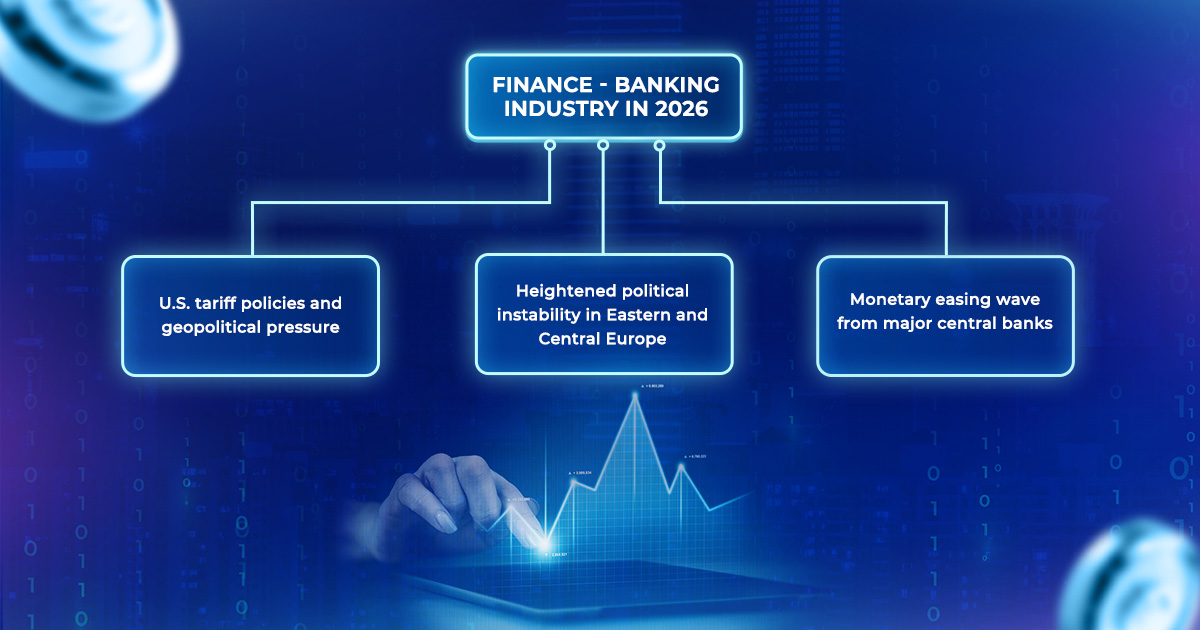
Three major factors that influence finance – banking sector in 2026
(Source: Novaon Digital)
Against this backdrop, The Leader forecasts that global economic growth will slow to approximately 3.1-3.2%, accompanied by significant downside risks. For an open economy like Vietnam, global instability has created additional barriers, including exchange rate pressures, interest rate volatility, and credit constraints, alongside weakened domestic demand, particularly affecting the financial and banking sector.
The rise of safe-haven behavior and gold consumption
Facing financial uncertainty, consumers are increasingly shifting toward safe-haven assets such as gold and silver in response to escalating geopolitical tensions. According to Bao Dau Tu, this trend reflects not only preferences for secure and transparent saving vehicles but also desires to minimize risks while optimizing sustainable returns. Capitalizing on this momentum, the gold market experienced strong investment flow as it closed the first month of 2026 with an impressive 20% growth rate. Significantly, industry experts further project continued expansion in this lucrative market, driven by sustained demand.
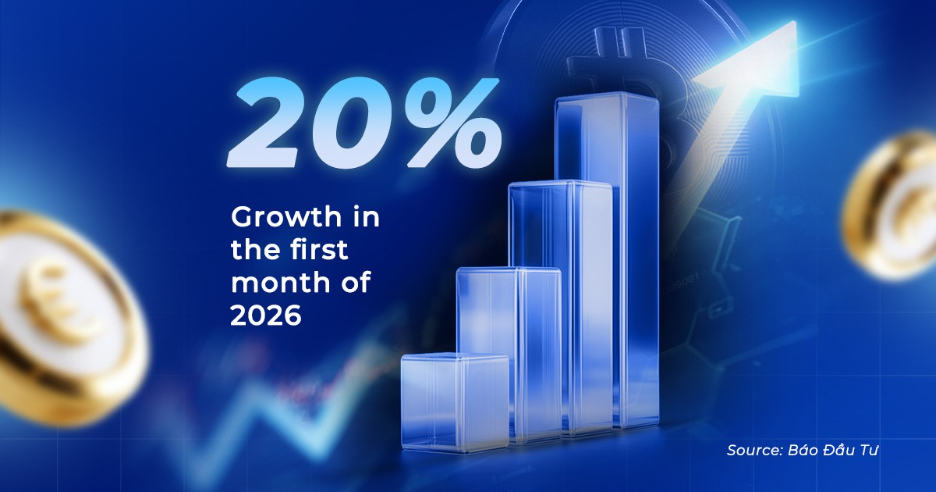
The gold market increased by 20% in the first month of 2026
(Source: Báo Đầu Tư)
From interest rate competition to brand experience strategy
As Vietnam navigates economic and political headwinds alongside shifting consumer behavior, financial institutions must rethink how they engage and deliver services to customers, thus ensuring safety, transparency, and long-term value.
The challenge can no longer be addressed solely through attractive interest rates or short-term incentives. Instead, it lies in cultivating enduring brand relationships built on meaningful experiences, particularly in today’s digital era. By elevating brand experience, financial institutions can implement breakthrough marketing and communication strategies that rebuild trust, retain customers, and regain competitive advantage.
2. Communication trends in financial and banking sector in early 2026
In the face of macroeconomic volatility and evolving consumer behavior, banks are facing a critical challenge of how to enhance brand experience and build lasting confidence. Moreover, in an era where rates and benefits are no longer the sole differentiators, the competitive advantage now lies in how brands orchestrate customer journeys, personalize engagement and cultivate sustainable value across every touchpoint.
Thus, below are 5 key communication trends that have effectively shaped the financial and banking sector in early 2026.
Trend 1: AI-driven Brandformance – Personalization Balance
In today’s growth environment, business performance and profitability in financial services are no longer driven solely by metrics such as conversion rates or active accounts. More fundamentally, they are shaped by the brand experience delivered to customers. This experience-led advantage is what enables sustainable performance and brand building in parallel, also referred to as brandformance.
To deliver on this dual objective, AI is no longer a trend but the operating layer that powers experience optimization while safeguarding commercial efficiency. According to PwC, banks leveraging AI can improve productivity in dynamic cash-flow management and consumer behavior prediction by up to 15%. In addition, AI-integrated marketing solutions have been shown to increase brand engagement by 40%.
In practice, brandformance is realized through categories such as AI-powered personalization, where content and services adapt to users’ financial behaviors; predictive and contextual messaging, which replaces mass communication with timely, relevant touchpoints; and dynamic creative optimization (DCO), enabling brands to reach customers with the right message at the right moment. Together, these capabilities elevate personalization from a tactic to an outcome, where strategy, creativity, and technology converge to deliver real-time, high-impact experiences that outperform short-term, campaign-led approaches.
Trend 2: Experience-led Omnichannel and Conversational Engagement
In a digital-first reality, customer journeys unfold simultaneously across social platforms, media, livestreaming, and banking apps. As a result, siloed, channel-by-channel execution is no longer effective. The market is shifting toward omnichannel marketing, where experiences are orchestrated end-to-end. McKinsey reports that brands implementing seamless omnichannel experiences have achieved 25-30% higher customer satisfaction.
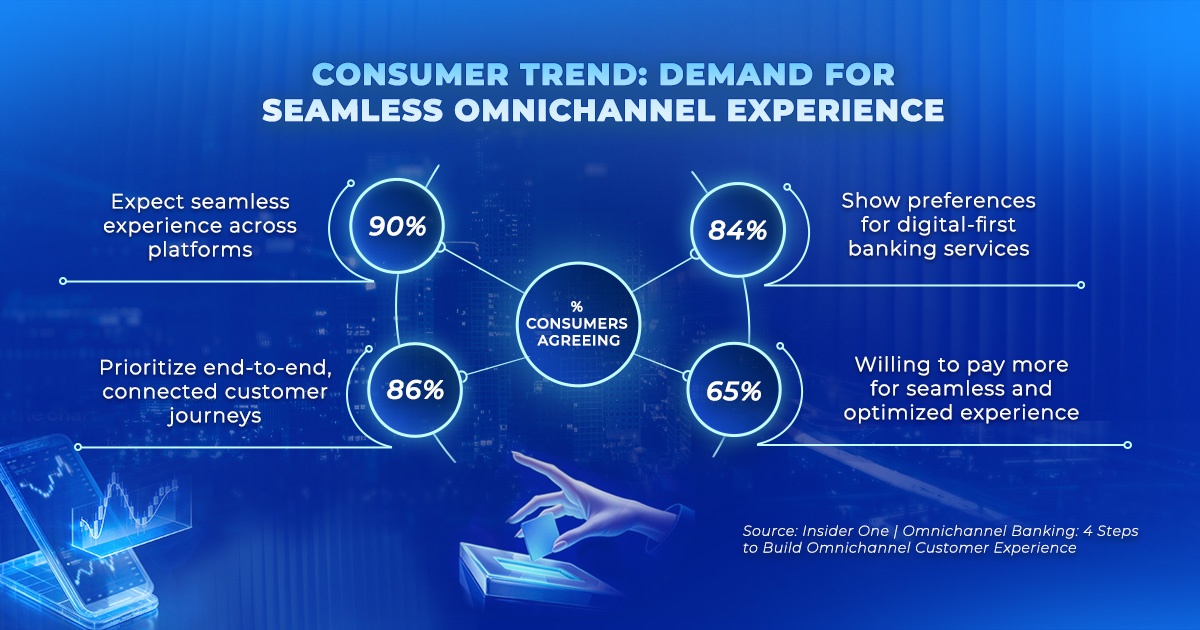
Consumer trend and demand for seamless omnichannel experience
(Source: Insider One)
Insights from Insider One further reflect strong consumer demand for integrated omnichannel experience that directly impacts trust in financial brands. In this context, seamless omnichannel delivery is no longer optional but a baseline requirement for engagement and loyalty in today’s digital competition.
Beyond omnichannel journey orchestration, financial services are accelerating toward conversational marketing, thus activating two-way engagement via AI chatbots and live chat to resolve queries in real time. Interactive content and online-to-offline (O2O) integration ensure digital interactions translate seamlessly into in-branch experiences. Also, as one-way communication becomes less effective for complex financial products, brand experience must be designed as a connected interaction system, which is strongly aligned in tone, messaging, and decision support across every customer touchpoint.
Trend 3: The Creative Technology Nexus
Immersive technologies are redefining how financial brands deliver experiences. Instead of relying on technical explanations, services are now communicated through interaction, simulation, and visual formats, thus helping users clearly understand how offerings work and the real-world value they create.
According to the American Bankers Association, 73% of banks have successfully integrated modern MarTech into their marketing strategies. Alongside AI and Big Data, Customer Data Platforms (CDPs) are increasingly deployed to enable seamless experiences. Interactive technologies, namely AI chatbots, AR/VR, and gamification are reshaping engagement models, optimizing conversion while creating distinctive, brand-led digital touchpoints.
Creativity and technology are the dual levers of effective brand experience. When grounded in strategy and activated through innovative creativity and modern technology, financial brands can strengthen memorability, shorten consideration cycles, and build trust, which emerges as an essential currency in a high-risk category like financial and banking services.
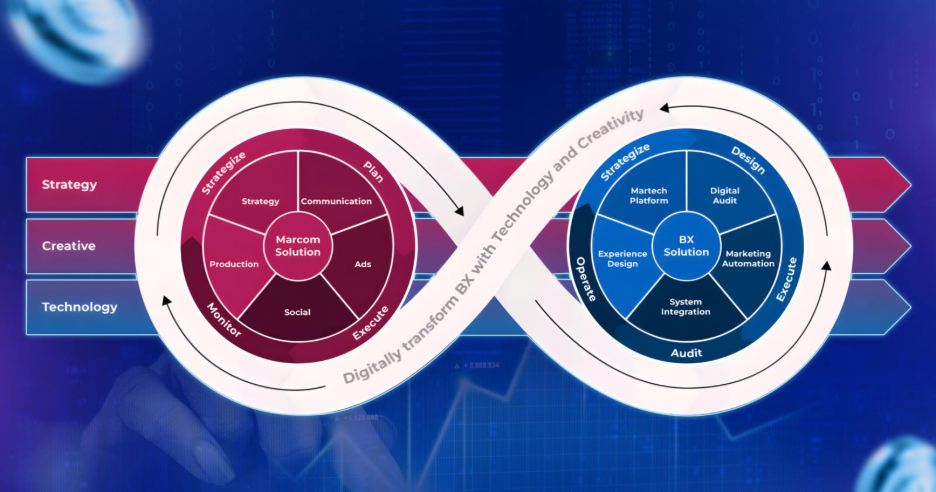
The integration of strategy, creativity and technology in building Brand Experience
(Source: Novaon Digital)
Trend 4: Authentic Storytelling and Transparency
In financial services, trust is no longer built by claims alone. Rather, it emerges from experiences customers can feel and verify. Storytelling, therefore, plays a central role, not just in communicating benefits, but in aligning trust-building strategy with creative execution to create durable brand value.
As market volatility intensifies, storytelling must move beyond generic symbolism to reflect real-life financial contexts and everyday usage. This shift makes narratives more credible and persuasive. Effective formats include Brand Storytelling (authentic narratives around mission and journey) and Digital Storytelling (video, podcasts, and digital content that simplify complex financial topics into accessible experiences). These approaches build emotional connections while supporting informed decision-making.
Ultimately, brand experience only delivers impact when stories are told with transparency and consistency, which accurately reflect how services show up in customers’ lives. When experience aligns with message, trust compounds naturally, sustaining long-term relationships in a category where credibility is paramount.
Trend 5: Community and Human-led Brand Experience
Alongside strategic and creative thinking in storytelling and the application of technology to optimize brand experience, communities and real human experiences play a pivotal role in building trust, with long-term influence on consumer decision-making. Moreover, communities and customer experiences, specifically employees, loyal customers, and relevant communities are actively restoring the trust that has gradually faded in traditional advertising. They are no longer merely communication targets within influencer marketing campaigns, instead, they have become an integral part of brand experience.
According to a McKinsey survey, brands that adopt community-experience-led marketing strategies can increase customer satisfaction by more than 20%, while simultaneously strengthening financial competitiveness and profitability. Therefore, the implementation of influencer marketing should no longer be driven solely by an influencer’s reach. More importantly, the influencer must be aligned with the brand’s image, narrative, and core values.
This trend elevates the impact of Community-driven Content and Peer-to-peer influence strategies, enabling customers to become influential actors shaping the financial behaviors and decisions of new consumers. In parallel with maximizing the influence of consumers, Expert-led influence initiatives also help brands reinforce credibility and thought leadership, enabling customers to feel more confident in their financial decisions. Notably, Employee Advocacy, where employees directly deliver long-term value to customers, can help brands strengthen positioning through authentic sharing and real experiences from internal teams.
Only when brand experience is disseminated through people and real experiences can financial and banking brands build long-term relationships grounded in empathy and shared value. This approach not only enables brands to sustain durable presence and credibly demonstrate service quality but also reduces reliance on short-term communication tactics, thereby strengthening competitive advantages and long-term brand positioning in the market.

Community, influencers, experts and employees are key factors influencing consumer behaviors
(Source: Novaon Digital)
3. Case Study
Amid economic and geopolitical volatility and increasingly cautious consumer sentiment, the five communication trends outlined above are not passing trends but strategic axes shaping the brand experience race in the financial and banking industry in 2026. Moreover, these trends have already been successfully applied in practice through the representative case studies below.
Case study 1: VIB – Credit Card Activation via Max App powered by Onfluencer and Employee Advocacy Marketing
As a retail bank positioned at the forefront of innovation, in 2025, VIB launched the “Đại sứ thẻ tín dụng VIB” campaign with the objective of increasing credit card registrations via Max App, while reinforcing the platform’s positioning as a fast, secure, and experience-optimized online card issuance channel. To effectively execute this campaign, VIB combined automated Influencer Marketing solutions with the Onfluencer Employee Advocacy model, integrating external influence and internal resources to disseminate credit card usage experiences in a relatable and authentic manner to consumers.
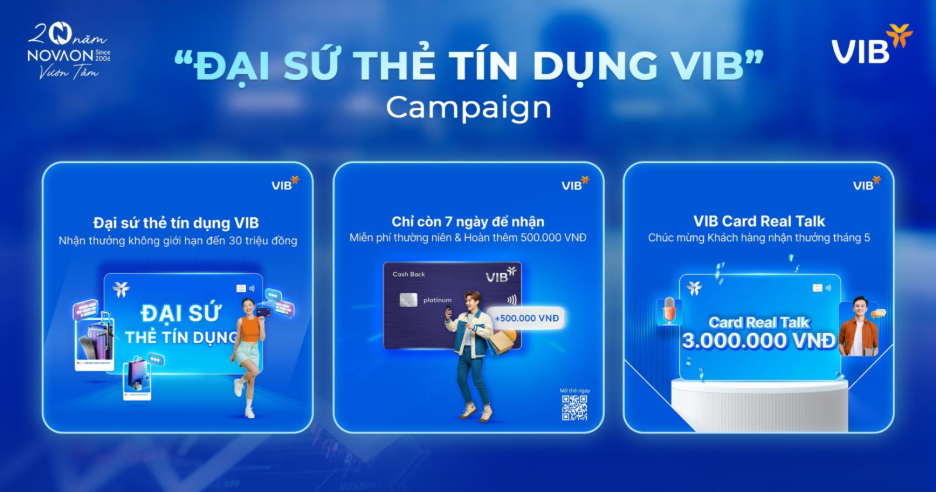
VIB brand collaborates with Novaon Digital to optimize Onfluencer and Employee Advocacy Marketing strategy
(Source: Novaon Digital)
The campaign targeted customer segments ranging from Gen Z to Millennials, segmented based on different behaviors and card usage experiences. Through the Onfluencer system and Employee Advocacy strategy, VIB personalized messaging and incentive mechanisms for each customer group, thereby strongly stimulating card registration behavior and Max App usage.
In terms of performance, the campaign enabled VIB to measure results in real time, optimize content based on consumer behavior, and build a transparent reporting system to support subsequent marketing decision-making. At the same time, public recognition and reward mechanisms helped enhance and optimize user experience, increase motivation for service referrals, and directly contribute to growth in credit card users and the bank’s revenue from fees and interest
Case study 2: Westpac Banking Corporation (Australia) – Enhancing consumer experience through advanced AR technology to visualize personal financial data and elevate brand satisfaction
Facing the challenge of increasing engagement amid the rise of mobile banking as the primary transaction channel, Westpac leveraged AR technology as a catalyst to enhance brand experience quality, thereby upgrading and optimizing how users interact with personal financial data. Westpac transformed seemingly dry numerical tables, cash flows, and spending data into 3D visualizations to increase interaction, enabling users to grasp and manage their financial picture in a more vivid and intuitive way.
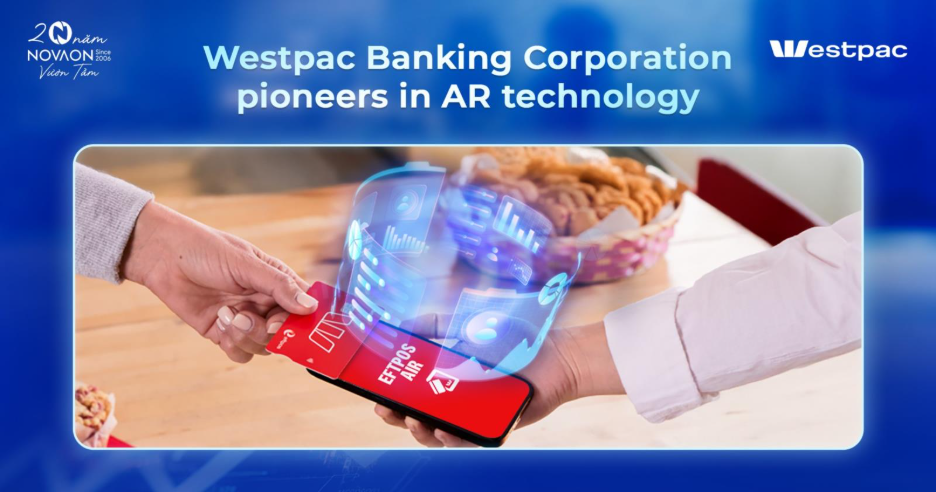
Westpac Banking Corporation pioneers in AR technology
(Source: Novaon Digital)
The strategy focused on Gen Z and Millennial customers who are tech-savvy and regard mobile banking as their primary consumption channel yet still expect more interactive and visually engaging digital experiences. Accordingly, the integration of AR technology removed barriers to accessing complex financial data, thereby increasing app usage time, interaction frequency, and user attachment to the bank’s modern service ecosystem.
The outcomes of this strategy reflected a clear increase in user satisfaction and in-app engagement, while reinforcing the brand’s innovative image within the rapidly digitalizing financial and banking landscape. In addition, this solution successfully strengthened Westpac’s positioning not only as one of Australia’s most long-established and reputable banks, but also as a pioneer in experience-driven banking technology.
4. Novaon Digital’s Expert Perspectives
Against the backdrop of market trends and shifts in consumer behavior, competitive advantage in the financial and banking industry in 2026 no longer lies in interest rate figures or short-term promotions, but in the capability to build and reinforce consumer trust over the long term. As capital flows increasingly gravitate toward safe-haven channels, financial and banking brands can no longer compete solely on financial incentives. Instead, comprehensive brand experience becomes the strategic pillar for sustaining long-term growth, as trust emerges as the decisive factor shaping consumers’ service choices.
To operationalize sustainable brand advantages and effectively apply these communication trends, brand experience must be implemented and designed as an integrated ecosystem combining Strategy – Creative – Technology. Strategy provides direction by defining the right consumer insights and the role of experience across the customer journey. More specifically, creativity transforms complex and rigid financial messages into relatable and accessible experiences, while technology drives personalization, omnichannel connectivity, and real-time interaction optimization. This integrated approach not only enables banks to adapt flexibly to market volatility but also creates seamless experiences that reduce perceived risk and progressively strengthen long-term brand trust in the digital era.