In recent years, as AI has made content production more cost-efficient than ever, the volume of digital content has increased dramatically compared to users’ limited attention. Marketers are caught between two pressures: solving the growth optimization problem while also designing content that is differentiated, consistent, and engaging across multiple touchpoints. Against that backdrop, this article focuses on analysing five key content marketing trends that can help brands build a more holistic brand experience.
I. How Content Marketing Is Changing – A Macro View
As of 2025, consumers in Vietnam and globally are not only spending more time online, but doing so in very different ways: spending hours scrolling short-form video, letting algorithms suggest what to watch or buy, and turning to AI search rather than only using Google. These shifts are creating three core challenges for brand content strategies in 2026.
First, the world is moving deeper into the era of the Attention Economy – where attention has become the scarcest resource. The volume of content users encounter each day is growing exponentially, while their “time budget” and cognitive bandwidth remain limited. Research by Lumen (2025) shows that only around 35% of digital ads are actually seen by users, and among those, 91% receive less than one second of attention. In other words, a large share of media budgets is merely “passing in front of users’ eyes” rather than entering memory or influencing behaviour – a serious challenge for any content strategy.
In parallel, social media distribution algorithms are changing how brands reach users. Multiple industry reports indicate that major platforms (Meta, TikTok, YouTube, etc.) are shifting from a social graph model (prioritising content from accounts users already follow) to an interest graph model (prioritising content that best matches each user’s interests and behavioural patterns on the platform). This means that even with a large follower base, brands no longer “naturally” reach those followers. Every piece of content must be sufficiently engaging, relevant, and interaction-worthy to be surfaced by recommendation systems in users’ feeds.
Next, search behaviour is being reshaped. A recent study by Bain & Company shows that around 80% of users rely on AI-generated summaries in at least 40% of their searches. As a result, organic website traffic has dropped by an estimated 15–25% in many sectors (Bain, 2025). When answers are presented directly on the results page, GEO/AEO (Generative/Answer Engine Optimization) is emerging as the next evolution of SEO, requiring content marketers to design content optimised for AI selection and summarisation.
So, as capturing attention becomes more difficult and search and content distribution algorithms change rapidly in 2026, which content trends will truly rise to prominence?
II. Five Key Content Marketing Trends for 2026

1. Competing in SEO with E-E-A-T in the Age of AI Search
E-E-A-T is the new content quality standard that Google emphasised in 2025 and that its algorithms increasingly prioritise. It includes:
- Experience
- Expertise
- Authoritativeness
- Trustworthiness
Multiple meta-analyses indicate that SEO still delivers an average ROI of around 200–500% – meaning every 1 unit of cost can generate 2–5 units of revenue – with some practical studies estimating around 275% ROI.
In parallel, Google has rolled out AI Overviews to over 200 countries and more than 40 languages, serving over 1.5 billion users. Independent tests show that this AI section can occupy more than two-thirds of the screen and significantly reduce CTR for the organic results below.
If brands want to continue capturing value from search, SEO content must meet E-E-A-T rigorously: grounded in real experience (cases, examples, data), with consistent identity across touchpoints, and transparent citation and structure so that AI systems are confident to prioritise and quote it.
2. Scaling Authentic Content
As marketers increasingly use AI to streamline content ideation and production, what becomes scarce is a distinctive Brand Voice.
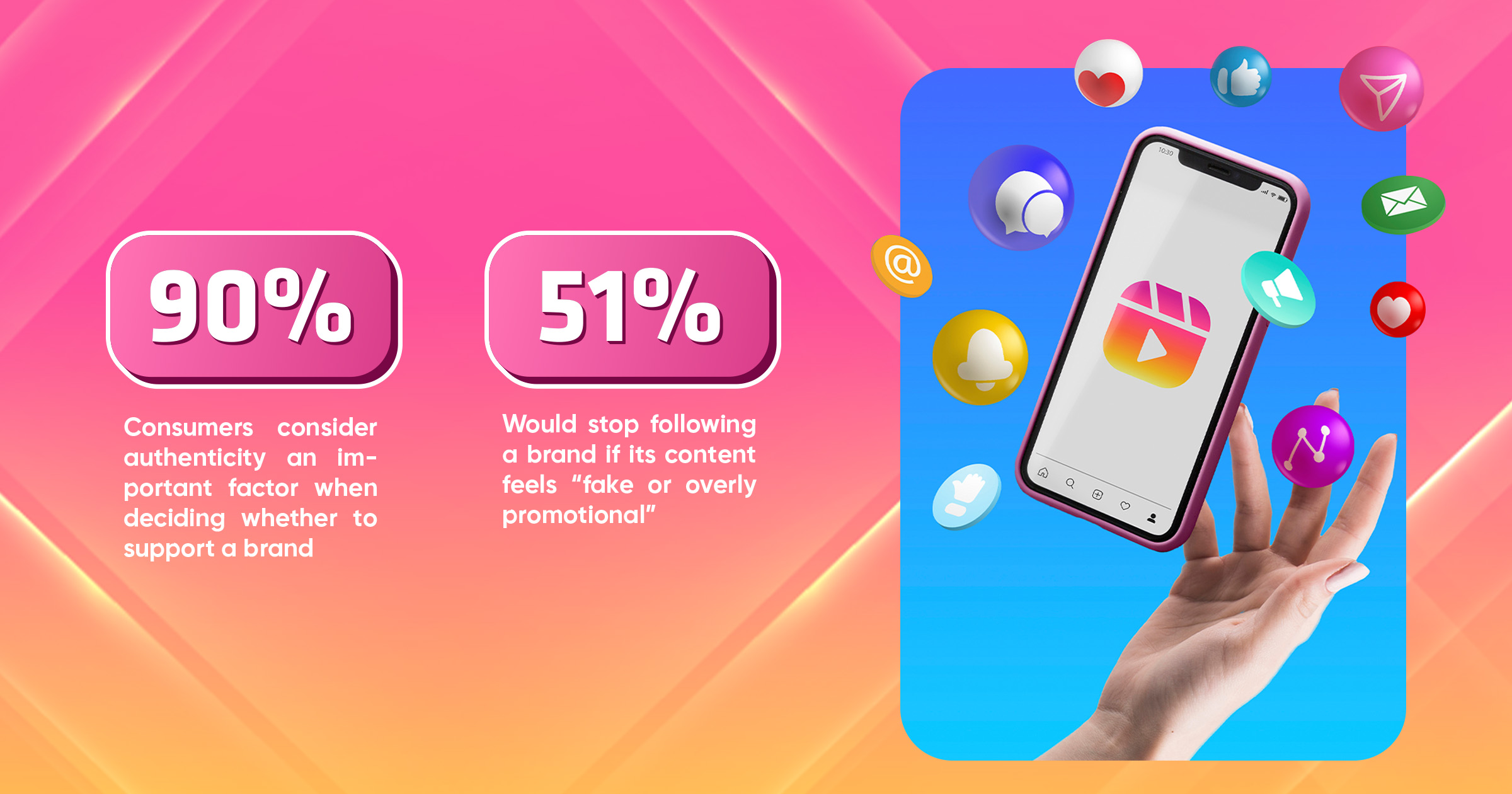
A 2024 study by Stackla found that roughly 90% of consumers consider authenticity an important factor when deciding whether to support a brand, and more than 51% say they would stop following a brand if its content feels “fake or overly promotional.”
In the context of Vietnamese businesses shifting towards AI-generated captions, outlines, and scripts, brands need to strengthen authenticity through:
- Building a consistent Brand Voice: defining clearly how the brand communicates, instead of chasing every trending tone that may conflict with its positioning.
- Prioritising storytelling: telling genuine brand stories – from product development and production processes, to customer journeys, to perspectives from internal teams.
3. Developing Micro-Community Content
According to Kantar (2025), nearly 40% of consumers trust content from micro-communities at a level comparable to recommendations from friends or family. Kantar also reports that in China – a frontrunner in social content trends – brands that invest in micro-community content achieve marketing ROI more than 25% higher than the market average.
Platforms such as Weibo Planet and Xiaohongshu (Little Red Book) are prime examples, hosting millions of micro-communities built around highly specific topics, interests, and lifestyles – from skincare and fashion to parenting, travel, and personal finance. Brands appear as members of these communities, contributing high-value content (knowledge, experience, case examples) before directly driving sales.
In Vietnam, this strategy can be implemented via specialised groups and forums on Facebook, Zalo, and other platforms, as well as fan communities around celebrities and KOLs/KOCs – environments where participants already have high trust and are willing to discuss in depth the issues that brands want to engage with.
4. Activating User-Generated Content (UGC)
User-generated content (UGC) is one of the strongest trust signals because it comes from real user experiences: marketplace reviews, user-posted photos or videos, comments in communities, or content from KOCs.
According to Envato Elements, campaigns that incorporate UGC often achieve conversion rates up to 29% higher than those relying solely on brand-produced content. In the context of 2026 – especially for SMEs – UGC is arguably the most effective way to build credibility with limited budgets.
5. Thought Leadership Content and Employee Advocacy
Many Vietnamese businesses still implement Employee Advocacy in a basic way, mainly encouraging staff to like, comment on, or share posts from the brand’s fanpage. The emerging trend, however, is to proactively develop employees into thought leaders – people who shape perspectives in their industry.
Instead of relying only on external KOLs, brands empower internal teams to step out and speak: sharing expertise, breaking down real cases, explaining tough decisions, and directly addressing issues that customers care about.
To execute this effectively, companies need to:
- Select a group of internal “brand faces” or ambassadors,
- Train them in writing, public speaking, and professional use of social media,
- Provide clear content guidelines and a recognition system.
When done well, every article, webinar, or video created by employees becomes a powerful content touchpoint, adding a highly credible and hard-to-replicate layer to the overall brand experience.
III. Strategic Perspective from Novaon Digital
From the perspective of Novaon Digital’s experts, content competition in 2026 can be seen as two parallel chess games:
- Winning algorithms through sound structure and data.
- Winning people through story and brand experience.
Based on that approach, Novaon structures its 2026 content marketing solutions around four pillars:
- Brand and content strategy: clarifying the brand’s core, then designing a long-term content backbone that is both algorithm-friendly and true to brand identity.
- Designing real, specific narratives across touchpoints: building authentic story arcs across online and offline channels.
- UGC and community content: creating experiences and mechanisms that make customers want to tell their stories with the brand.
- Turning employees into “brand faces”: training a core group of staff so they can confidently appear as industry experts, thereby adding a layer of credibility that competitors find hard to imitate.
IV. Conclusion
Looking towards 2026, content marketing requires assets that are both structured and machine-readable for algorithms and AI, and meaningful and deep enough for people to see themselves in. Trends such as authentic content, micro-communities, UGC, and Employee Advocacy ultimately converge on the same goal: building trust and a consistent brand experience across multiple touchpoints.
Novaon Digital approaches content marketing as an integrated solution: from brand strategy and content architecture, to multi-channel storytelling, UGC design and activation, micro-community building, and Employee Advocacy programmes for internal teams. The ultimate objective is not simply to “produce more content”, but to turn each content piece into a deliberate touchpoint along the customer journey – where the brand becomes clearer, more trustworthy, and more effective in driving business outcomes.