In a context where spending is increasingly controlled, understanding how consumers evaluate and make purchase decisions has become critical for FMCG brands. Following this direction, the first section focuses on the macro context and foundational shifts shaping consumer behavior in the FMCG sector.
1. FMCG Landscape 2026: Macro Uncertainty and Tightened Spending
Entering 2026, FMCG spending behavior is becoming more cautious and calculated under the influence of macroeconomic factors. Below are three key shifts reshaping how consumers allocate budgets and make purchasing decisions.
Geopolitical uncertainty becomes a constant state
According to FMCG Gurus, 32% of consumers are concerned about global conflicts, while 29% express concern about domestic political conditions. These figures indicate that macro factors are no longer distant contexts, but are directly influencing everyday consumer psychology.
Amid unpredictable conditions, consumers tend to maintain a cautious mindset and prioritize safety in financial decisions. As a result, purchasing behavior becomes more restrained, especially for non-essential spending.
The gap between saving intentions and actual spending is widening
Data from Deloitte ConsumerSignals as of March 2026 shows a notable divergence: while savings and investment increased by 12%, total spending declined by 8%. This clearly indicates that consumers are actively restructuring how they allocate their finances.
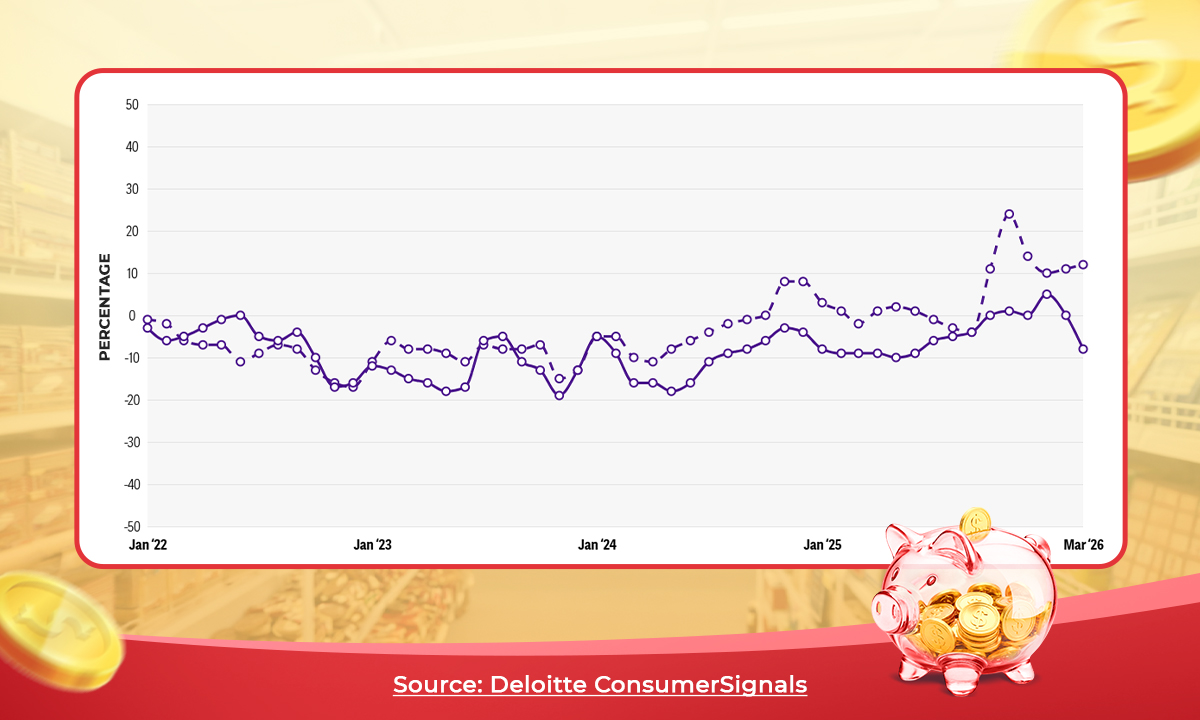
The rise in savings alongside declining spending is becoming increasingly evident.
(Source: Deloitte ConsumerSignals)
Consumers are not stopping spending, but they are exercising tighter control over how they spend. Purchasing decisions are no longer based solely on affordability, but are tied to maintaining financial safety in a volatile environment.
FMCG becomes a category under strong optimization pressure
According to Deloitte ConsumerSignals as of March 2026, spending on food and essential goods accounts for a significantly lower proportion compared to fixed expenses such as housing or education. This indicates that FMCG, despite being a frequent necessity, is among the most adjustable categories in the short term.
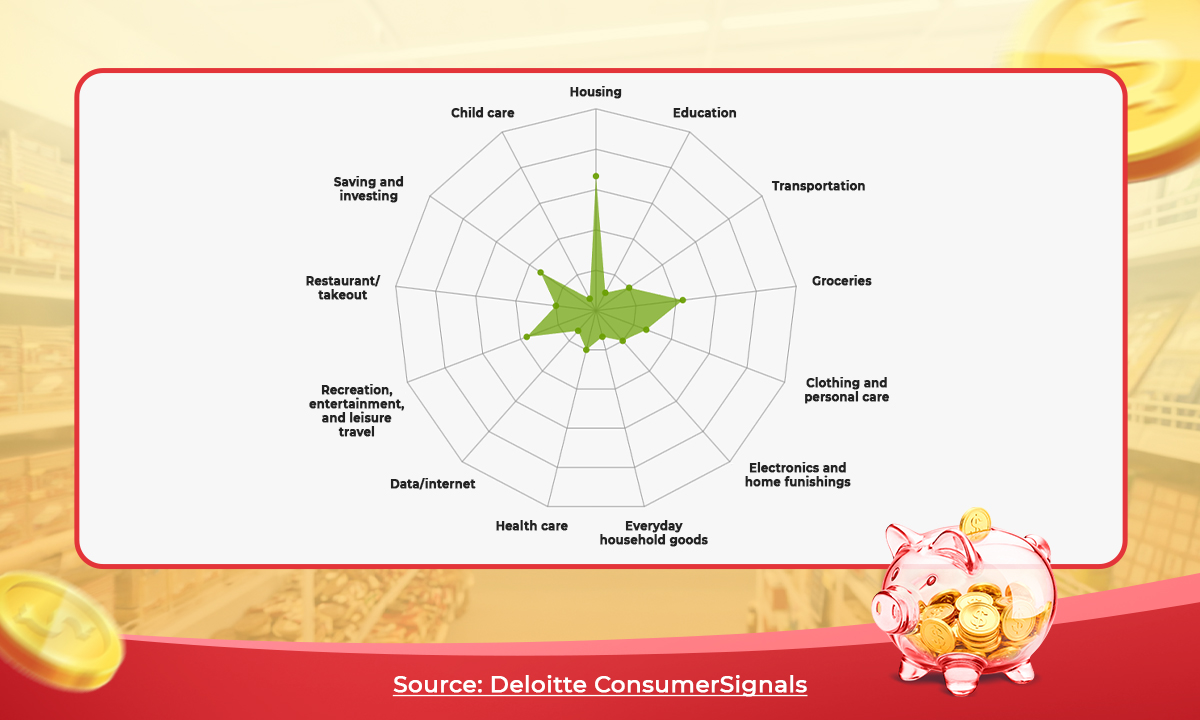
FMCG spending is under strong optimization pressure within the consumer basket.
(Source: Deloitte ConsumerSignals)
As budgets are reallocated, consumers tend to tighten smaller but frequent expenses. FMCG therefore becomes a flexible zone where behaviors such as brand switching, reduced purchase frequency, or value optimization occur more prominently than in other spending categories.
Macro pressure, rising saving behavior, and FMCG’s flexibility as an adjustable category are leading consumers to control daily spending more tightly. Spending is no longer about cutting or maintaining, but is shifting toward actively optimizing each purchase decision.
2. Smart Spending and Key Trends in FMCG Purchasing Behavior
As spending becomes more controlled, FMCG purchasing behavior is shifting toward a more proactive and calculated approach. Smart Spending is no longer a situational response, but is becoming a dominant mindset in everyday decision-making.
Smart Spending is not simply about cutting costs, but about maintaining consumption while actively optimizing value in each purchase. Price is no longer the sole factor, but is evaluated in relation to the actual benefits received. This requires consumers to carefully weigh cost against value, while pushing brands to demonstrate value more clearly and convincingly. This mindset is reflected in four key trends shaping FMCG behavior today.
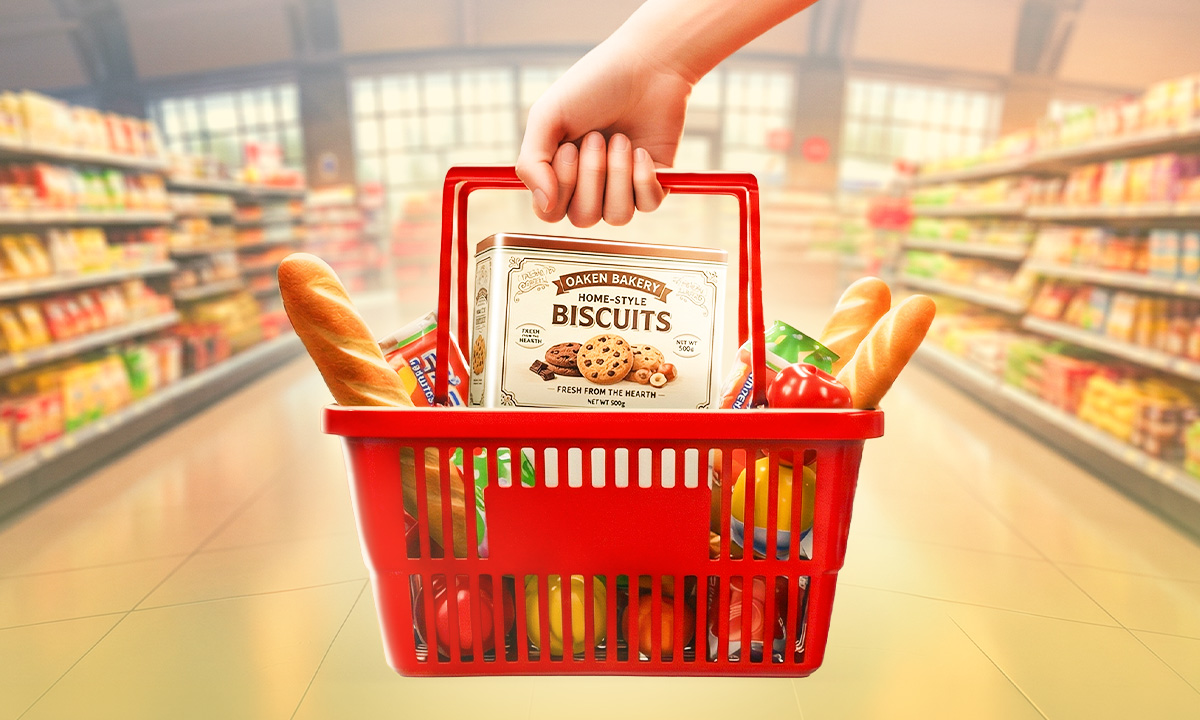
Spending is no longer centered on price, but on real value in each purchase decision
(Source: Novaon Digital)
Trend 1: Comfort Zone (Seeking reassurance in everyday choices)
In an environment filled with pressure and uncertainty, consumers tend to prioritize choices that feel safe and predictable. Purchasing decisions are influenced not only by functional needs but also by perceived risk, leading them toward products with clear information, familiar benefits, and easily evaluated value.
This creates a challenge for FMCG brands, where attraction no longer lies in novelty but in reducing perceived risk in decision-making. Brands that fail to clearly communicate value from the first touchpoint are easily eliminated, even if the product meets actual needs.
To address this, brands need to standardize how value is defined and communicated across the entire journey. Brand Strategy should clarify usage context, benefits, and differentiation. Communication Strategy must ensure consistency, clarity, and accessibility across all touchpoints to shorten the consideration process and increase the likelihood of selection.
Trend 2: Rewired Wellness (Prioritizing clear and credible health benefits)
Consumers are not only concerned about health, but are actively researching and evaluating information before making purchase decisions. As skepticism increases, they prioritize products with clear benefits, transparent information, and easy-to-understand communication rather than relying on vague claims.
This creates a challenge for FMCG brands, as health benefits can no longer be communicated emotionally but must be clearly demonstrated at every touchpoint. Brands that fail to explain product mechanisms and effectiveness will struggle to build trust and drive purchase decisions.
Trend 3: Fiercely Unfiltered (Expressing identity through personalized consumption choices)
As options become more diverse, consumers are less attracted to mass-market products that lack personal relevance. Purchasing becomes a way to express lifestyle and identity, leading them to favor choices that reflect their values and individuality.
This creates a challenge for FMCG brands, as mass communication is no longer sufficient to build connection. Brands relying on a single message for the entire market will struggle to remain relevant, resulting in lower engagement and reduced likelihood of selection.
To address this, brands need a more flexible approach to content development and execution. IMC campaigns should be designed with layered messaging tailored to different consumer segments and lifestyles. Influencer Marketing solutions help connect messages with representative voices, increasing resonance and creating a sense of personalization.
Trend 4: Next Asian Wave (Toward fast and seamless omnichannel shopping experiences)
The growth of mobile and social platforms is shaping new expectations around speed and seamlessness in the shopping experience. As information discovery, interaction, and purchase can occur within a single journey, consumers increasingly prefer fast, convenient, and uninterrupted experiences.
This creates a challenge for FMCG brands, as the shopping journey is no longer linear but requires seamless integration across touchpoints. Brands that fail to optimize the end-to-end experience risk disrupting decision-making and missing conversion opportunities.
To address this, brands need to redesign the shopping journey to be simple and connected across platforms. Marketing Automation solutions enable data synchronization and personalized interaction based on user behavior. Combined with Conversational Marketing and Lead Management solutions, brands can shorten the conversion process and capture demand at the moment it arises.
These four trends show that Smart Spending is reshaping how consumers evaluate and make purchasing decisions in FMCG, from seeking reassurance and real value to expecting experiences aligned with personal needs. In this context, adaptation requires not just isolated actions but a holistic strategic and executional approach to maintain competitiveness.
3. Expert Perspective: How Should FMCG Brands Adapt to the Smart Spending Shift?
As spending becomes increasingly controlled, the FMCG market faces a dual pressure: demand remains, but spending behavior becomes more cautious and selective. Growth no longer comes from expanding consumption, but depends on the ability to clearly demonstrate value and create relevance in each purchase decision, opening opportunities for brands that adapt quickly and build more effective experiences.
In this context, consumers no longer make decisions based on habit or impulse, but adopt a more deliberate, value-driven approach. They seek reassurance, demand transparency, and are willing to switch brands if they find options that better align with their needs and lifestyles. Purchasing behavior becomes more flexible, but also more demanding in evaluating products and experiences.
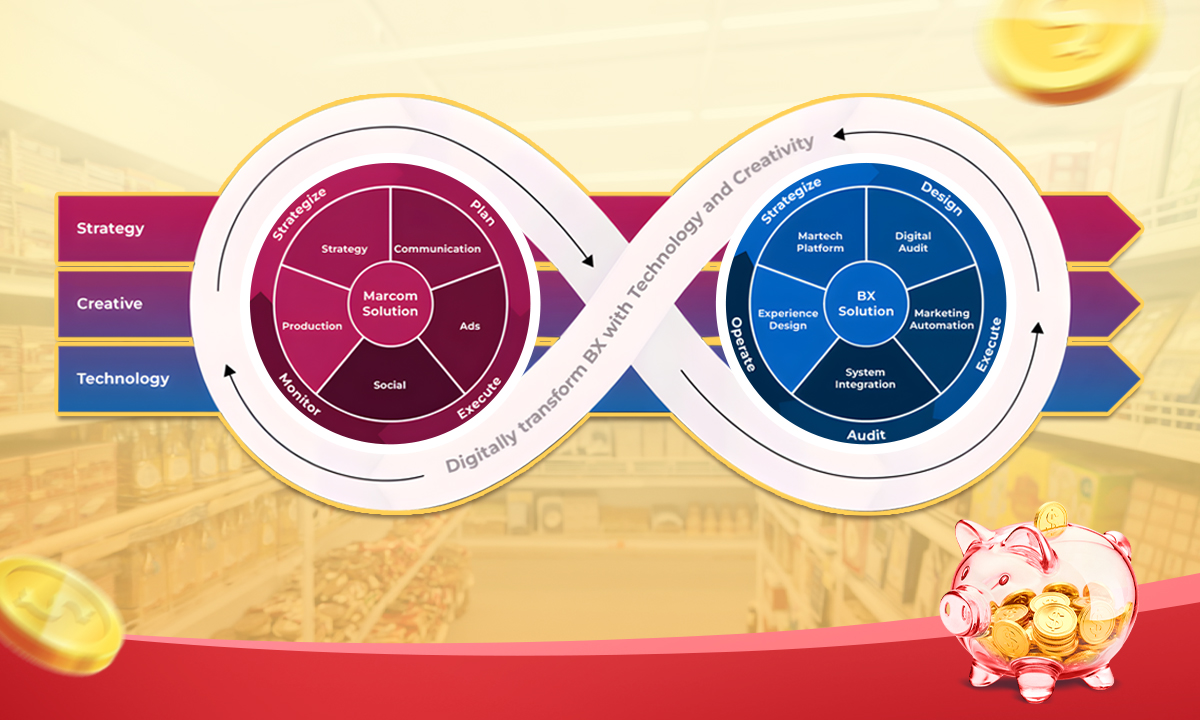
The integration of strategy, creative, and technology in building Brand Experience
(Source: Novaon Digital)
From these shifts, the competitive focus of the FMCG industry is moving toward the ability to build an integrated experience, where strategy, creative thinking, and technology are deployed cohesively across the entire consumer journey. The consistent integration of Strategy, Creative, and Technology not only helps brands clarify value, but also optimizes engagement and conversion, creating a foundation for sustainable growth in the coming period.