Vietnam’s automotive market is entering a period of intense competition in the second half of 2026, as customers no longer choose a vehicle based on technical specifications alone. In this context, Brand Experience has become an effective solution for retaining customers. This article takes a closer look at the role of Brand Experience in the automotive industry and proposes an appropriate strategy for the second half of 2026.
1. Automotive Market Context in the Second Half of 2026
A customer walks into a showroom carrying a printed specification comparison, yet what ultimately persuades them to sign the contract is how they feel when they sit in the driver’s seat, how the sales consultant explains the vehicle, and the image they form of themselves behind the wheel. According to the 2026 Deloitte Global Automotive Consumer Study, which surveyed 28,553 people across 27 markets, 43% of Southeast Asian consumers regard the driving experience as an important reason for choosing an electric vehicle—the highest proportion among the eight major markets analyzed. More notably, 67% of consumers in the region intend to switch brands for their next purchase, a figure surpassed only by China and India. This is largely because these markets have a very high proportion of first-time vehicle buyers who have yet to develop loyalty to any particular brand.
Without an established base of customer loyalty to rely on, brands must win consumers over emotionally from the very first touchpoint—not through specifications alone. This is why the automotive industry requires one of the strongest Brand Experience strategies among all durable consumer goods sectors.
2. Three Reasons Automotive Brands Should Invest in Brand Experience
To reinforce businesses’ confidence in the role of Brand Experience in the automotive industry, below are three reasons brands should adopt this solution, compiled from reputable sources:
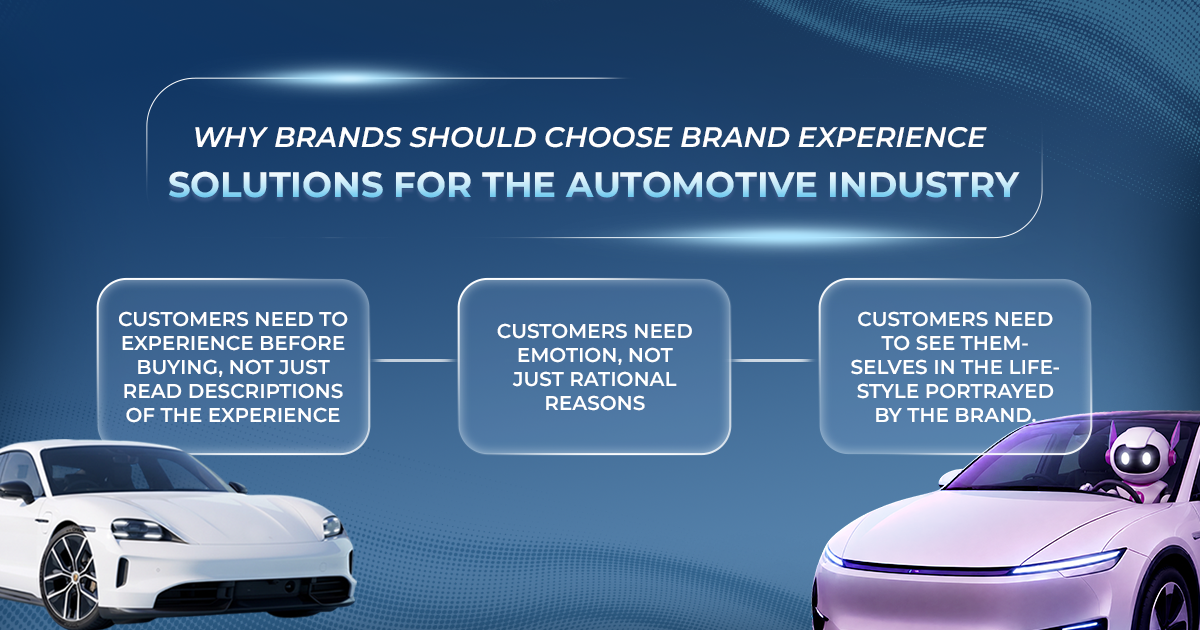
3 Reasons Brands Should Choose Brand Experience Solutions for the Automotive Industry
Source: Novaon Digital
Customers need to experience the product before buying—not merely hear the experience described. Dealer visits remain the most widely used source of information during vehicle research (52%), while 41% of Southeast Asian consumers consider physical interaction—namely, a test drive—the most important element of the vehicle-buying experience. No matter how persuasive digital content may be, a real-world interaction is still needed to convert interest into a final decision.
Customers need emotion—not just rational reasons. The driving experience (43%) and the broader lifestyle experience beyond driving (37%) rank alongside rational considerations such as lower fuel costs (51%) and faster charging speeds (42%). Emotion does not replace rational judgment; it reinforces it. This is evident in the fact that 82% of consumers are willing to pay more for emergency assistance features and 83% for anti-theft features—needs associated more with peace of mind than with functionality alone.
Customers need to see themselves in the lifestyle portrayed by the brand. In Southeast Asia, 34% of consumers consider brand image important when choosing a vehicle, far higher than in mature markets such as Germany (14%) and Japan (17%). In a market with a high proportion of first-time buyers, customers are not simply purchasing a means of transport; they are buying an upgraded version of themselves. If a brand does not help them visualize that version clearly and consistently, a competitor will do it instead.
3. Three Recommended Automotive Brand Experience Solutions Based on the SCT Model for Vietnam in H2 2026
The three arguments above show that automotive companies in the second half of 2026 need a sufficiently powerful Brand Experience solution to retain customers from the very first interaction. Novaon Digital recommends a suitable BX solution implemented through its proprietary SCT model.
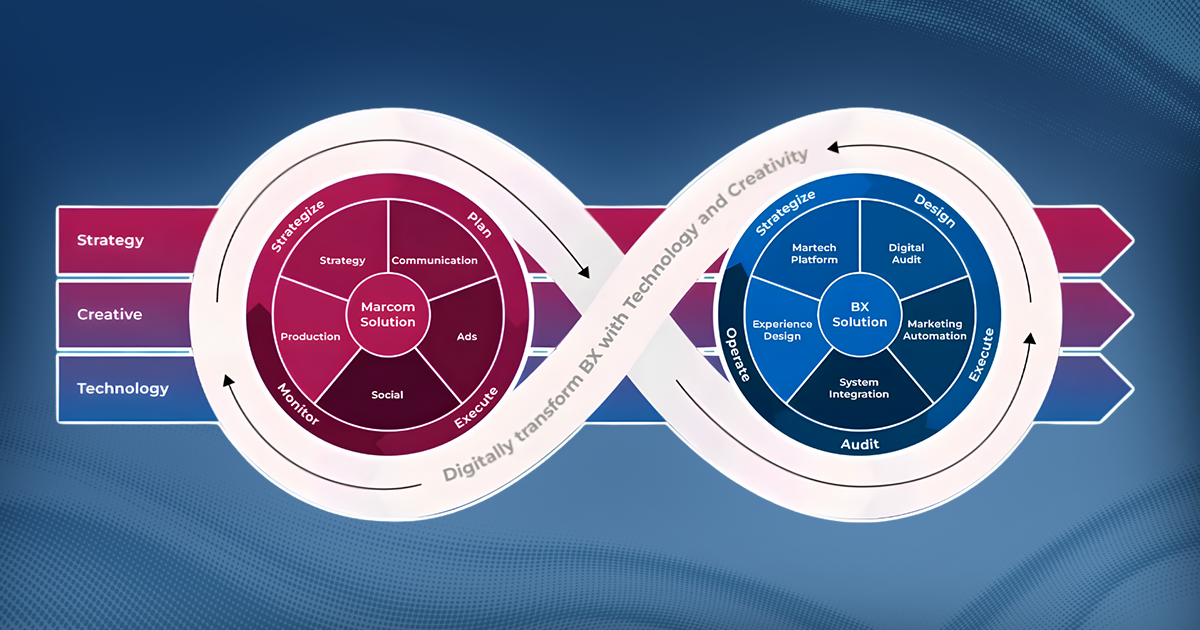
Novaon Digital’s Proprietary SCT Model for the Automotive Industry
Source: Novaon Digital
The SCT model comprises three pillars. Strategy defines the role of each touchpoint within a unified customer journey, rather than allowing each department to pursue a separate KPI. Creativity aligns the emotional narrative and lifestyle imagery in which the brand wants customers to see themselves. Technology connects data from every touchpoint to personalize the experience, converting an engaged prospect into a contracted customer.
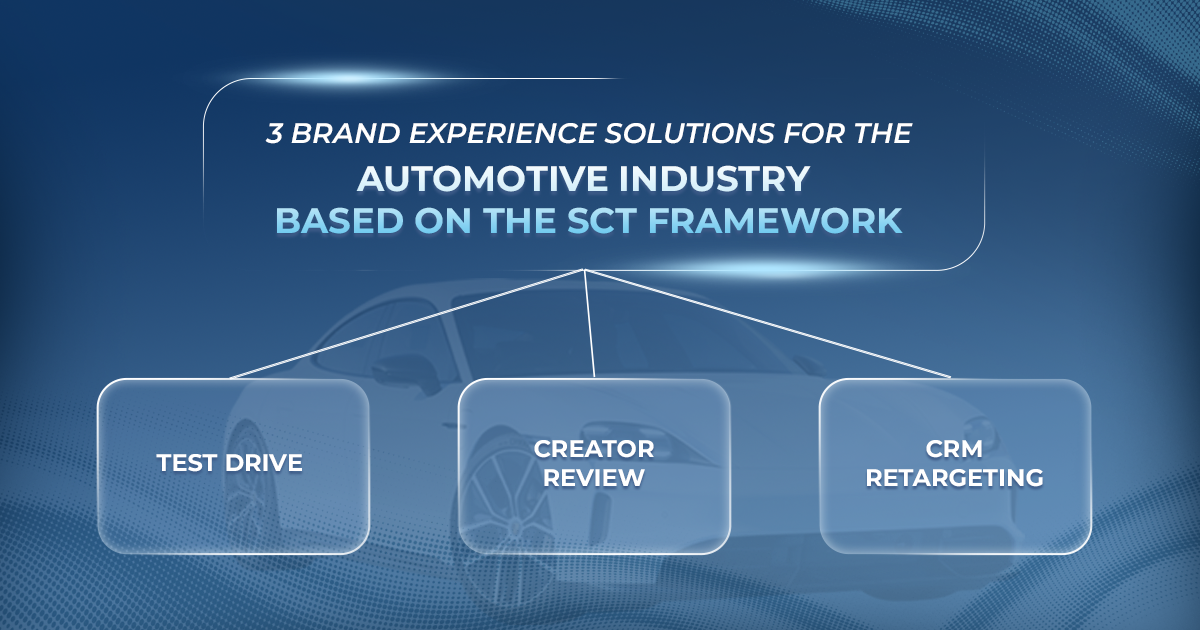
3 Suggested Brand Experience Solutions for the Automotive Industry Based on the SCT Model
Source: Novaon Digital
Based on this model, the three core solutions automotive companies should prioritize in Vietnam in the second half of 2026 are:
1. Test drive. This is the decisive touchpoint where rational and emotional considerations converge, in line with Deloitte’s findings on the role of physical interaction in vehicle-purchase decisions. No matter how persuasive digital content or online advertising may be, customers still need the moment of sitting in the driver’s seat, feeling the steering wheel, and experiencing the vehicle firsthand before signing a contract. Companies should invest in the quality of the test-drive experience—from the consultation script and driving route to how staff communicate the brand story throughout the journey—instead of treating the test drive as a mandatory formality.
2. Creator reviews. In a market with a high proportion of first-time vehicle buyers such as Vietnam, most customers have not yet developed trust in any particular brand. As a result, third-party perspectives are becoming an increasingly influential source of information. An objective review from a creator, KOL, or KOC with strong product knowledge can address concerns that official brand advertising may struggle to resolve, particularly regarding technical factors such as batteries, durability, and electric-vehicle operating costs. Companies should select creators who fit their brand positioning and allow them to experience the vehicle firsthand rather than simply read from a prepared script, ensuring that the content retains the necessary credibility.
3. CRM retargeting. The decision to purchase a high-value product such as a car rarely happens immediately after the first touchpoint; it typically unfolds over several weeks or months of consideration. Without a system that maintains contact throughout this period, interested prospects can easily switch to another brand before reaching a decision. Companies should develop CRM retargeting journeys for each stage of the customer journey—from test-drive reminders and personalized offers to after-sales care—so they do not lose customers who already intend to buy but have yet to finalize their decision.
IV. Conclusion
Vietnam’s automotive industry is shifting from competition based on specifications to competition based on Brand Experience in the second half of 2026. With 67% of customers willing to switch brands for their next purchase, companies can no longer rely solely on existing loyalty; they must proactively create a strong impression from the very first touchpoint. Novaon Digital hopes these recommendations will help brands strengthen customer connections and accelerate sales growth in the second half of 2026.
Cre: Brands Vietnam