As 2026 approaches, the Electric Vehicle (EV) industry is no longer a playground for early adopters but has officially entered the mass market with high penetration. Brand competition has therefore shifted from core technology to comprehensive ecosystems and personalized experience. To address the 2026 EV marketing challenge, this report analyzes the global EV market scenario and highlights five key communication trends that shape how businesses create brand experience and achieve sustainable growth.
I. The 2026 EV Market Context
EVs are becoming the global standard for automotive development, driven by urbanization and Net Zero goals. According to the International Energy Agency, industry scales exceeded 17 million vehicles in 2024 (approximately 25% increase). Moreover, they are projected to surpass 20 million by 2026. Significantly, China leads with over 11 million units sold, while emerging markets like Vietnam are growing rapidly thanks to supportive policies and the participation of domestic brands.
However, as battery technology plateaus, the competitive advantage is shifting from hardware to ecosystems and user experience. This market is currently led by three groups: Tech-first brands, Chinese manufacturers optimizing prices and supply chains, Legacy OEMs transitioning to electrification.
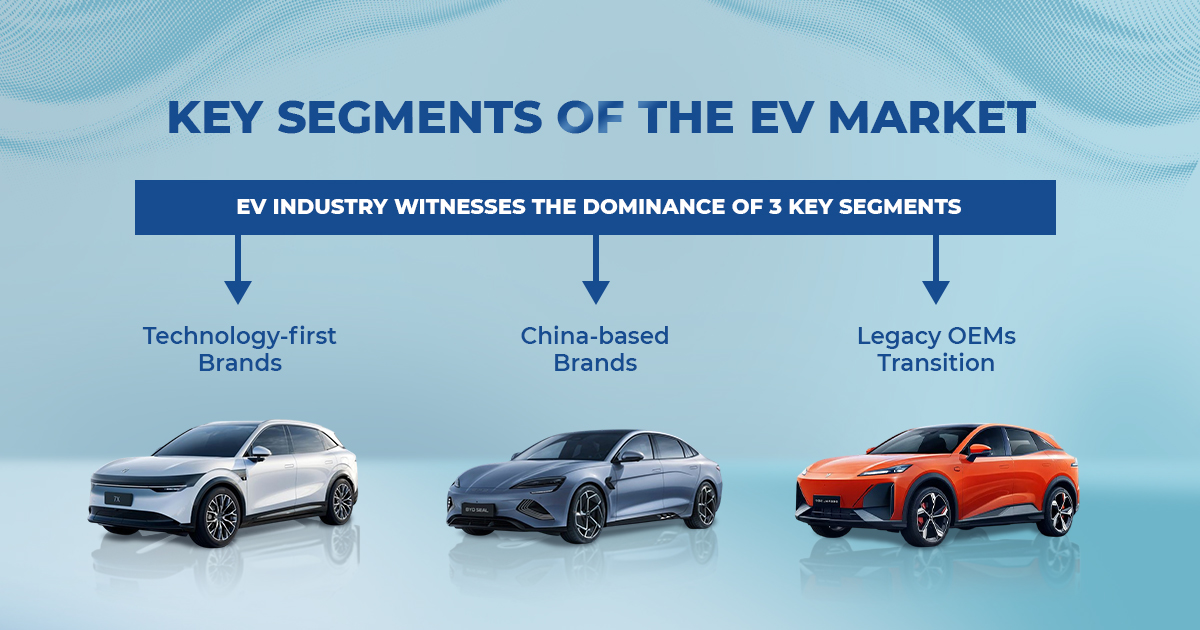
Key segments of the EV market
(Source: Novaon Digital)
From a consumer perspective, buying an EV is increasingly a long-term investment. According to McKinsey and Deloitte, 56% of users consider EVs for low operating costs while 46% prioritize environmental factors. Yet, barriers such as range anxiety (43%), charging infrastructures (29%) and initial pricing (35%) persist. This conflict drives Marketing initiatives to simultaneously solve practical concerns while establishing long-term trust through holistic experience.
II. Key EV Marketing Trends in 2026
In such an increasingly fierce landscape, the advantage belongs to brands that can design a seamless experience journey, personalize interactions and optimize long-term value. Thus, following are five core trends shaping the 2026 EV industry.
Trend 1: Tech-led Storytelling – Defining Electric Vehicles as Digital Entities
EVs are redefined as digital entities where software and connectivity are core. At this stage, Marketing no longer limits to technical specifications but shifts towards helping users experience technology in the digital space. Brands should accordingly utilize CGI and AR/VR to visualize invisible technology like AI or advanced driving ecosystems, thus shortening the awareness-to-trust path. Notably, Test Driving is also expanding into Test Experience, allowing multi-dimensional interaction before purchase.
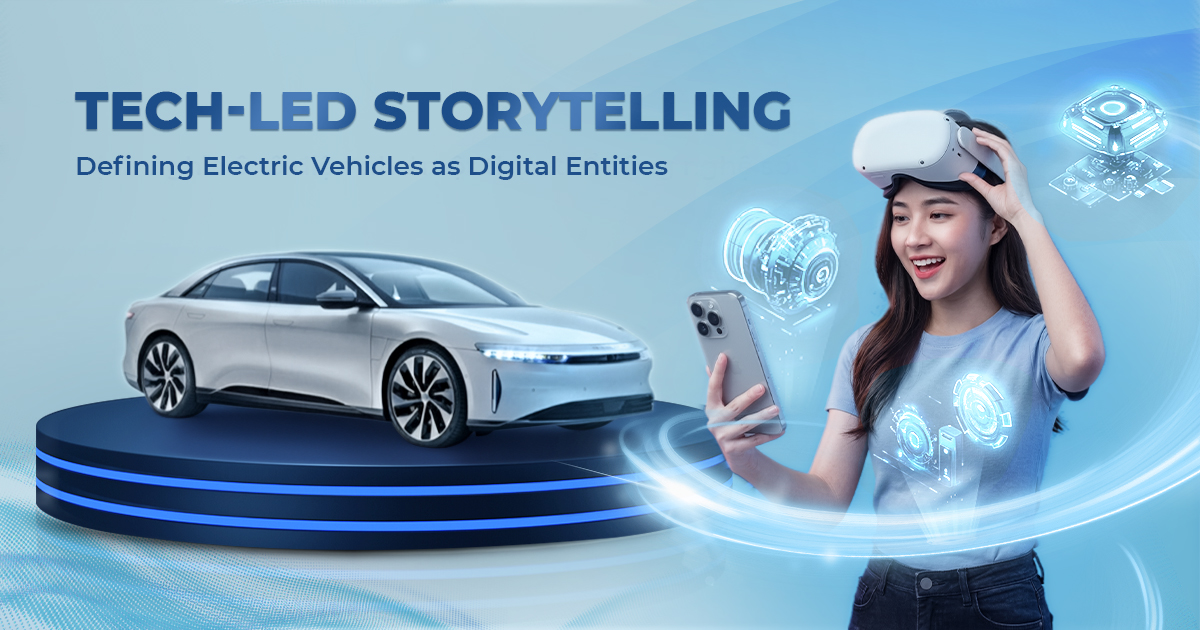
Tech-led Storytelling: Defining Electric Vehicles as Digital Entities
(Source: Novaon Digital)
Trend 2: Ecosystem-as-a-Guarantee – Shifting Trust from Product to Infrastructure
While adoption increases, charging infrastructures remain a major barrier. Consequently, brands are moving from product communication to ecosystem communication as a guarantee of usability. Charging networks, real-time management apps and O2O (Online-to-Offline) connectivity have become vital touchpoints. When convenience is proven throughout the journey, the ecosystem will evolve from a supportive tool into a core competitive advantage that eliminates psychological barriers among consumers.
Trend 3: Full-lifecycle Marketing – Optimizing Touchpoints Across Seamless Experience Journeys
EV marketing no longer focuses solely on the point of sale but spans the entire customer lifecycle. Every touchpoint, from awareness and consideration to purchase and after-sales must be seamlessly designed. By leveraging MarTech and CRM systems, brands can personalize interactions at each stage, thus transforming Marketing from a short-term cost into a long-term growth engine.
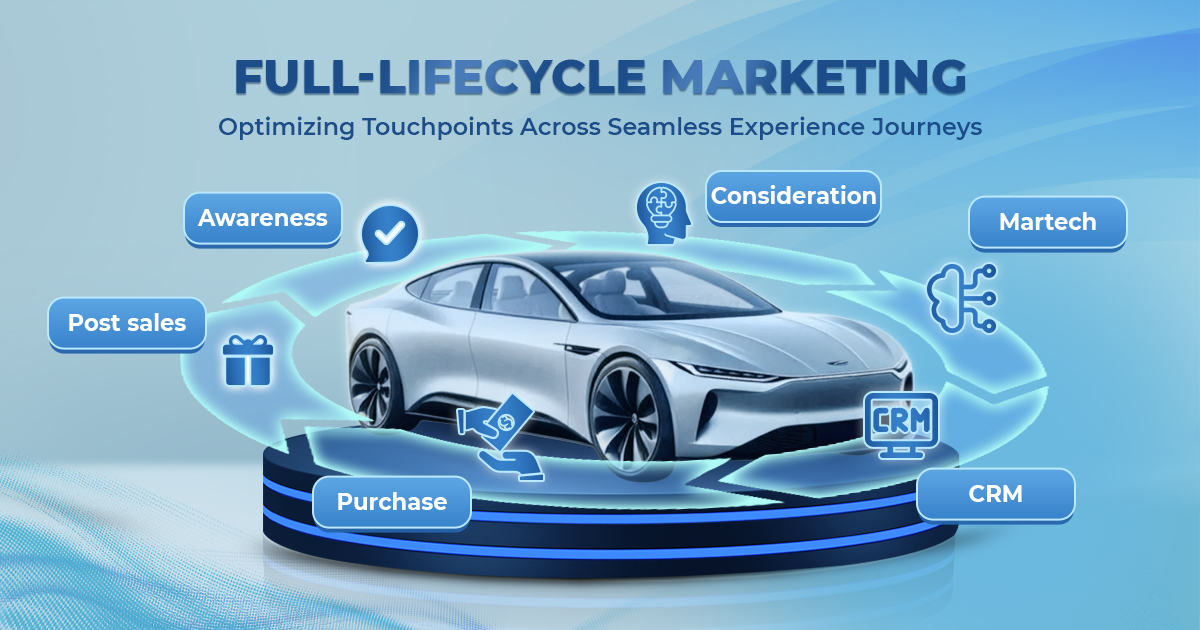
Full-lifecycle Marketing – Optimizing Touchpoints Across Seamless Experience Journeys
(Source: Novaon Digital)
Trend 4: Eco-Status Symbol – Turning EVs into a Statement of Personal Identity
As green living becomes a baseline, an EV is not just a vehicle but a lifestyle symbol. Consumers choose EVs to reflect their aesthetic taste, modern mindset and personal values. Communication is shifting from functional features to community building. Therefore, brands should collaborate with influencers and technological experts to create a sense of belonging, turning EVs into the hallmark of a pioneering community.
Trend 5: Strategic Efficiency Pivot – Repositioning Real Value Amid Global Competition
Under price pressures, brands are moving away from price wars to focus on long-term ownership value. Messaging now revolves around operating costs, resale value and after-sale service. Marketing is becoming more performance-driven, optimizing budgets based on data and targeting high-intent customer segments. By doing so, efficiency and measurability will become sustainable competitive advantages for EV brands.
III. Successful Case Studies
Case 1: Omoda & Jaecoo Vietnam – Reinforcing Brand and xEV Product Trust with Brandformance
To break barriers from well-established competitors in Vietnam, Omoda & Jaecoo partnered with Novaon Digital to deploy a Brandformance strategy via multi-platform Livestreams. The highlight was building the personal brands of brand leaders as representative voices to interact and answer technical engine queries directly. Significantly, this “real people, real results” approach combined with Performance Marketing garnered 15 million views and a 42% high-quality lead conversion rate, solidifying trust from the very first touchpoints.
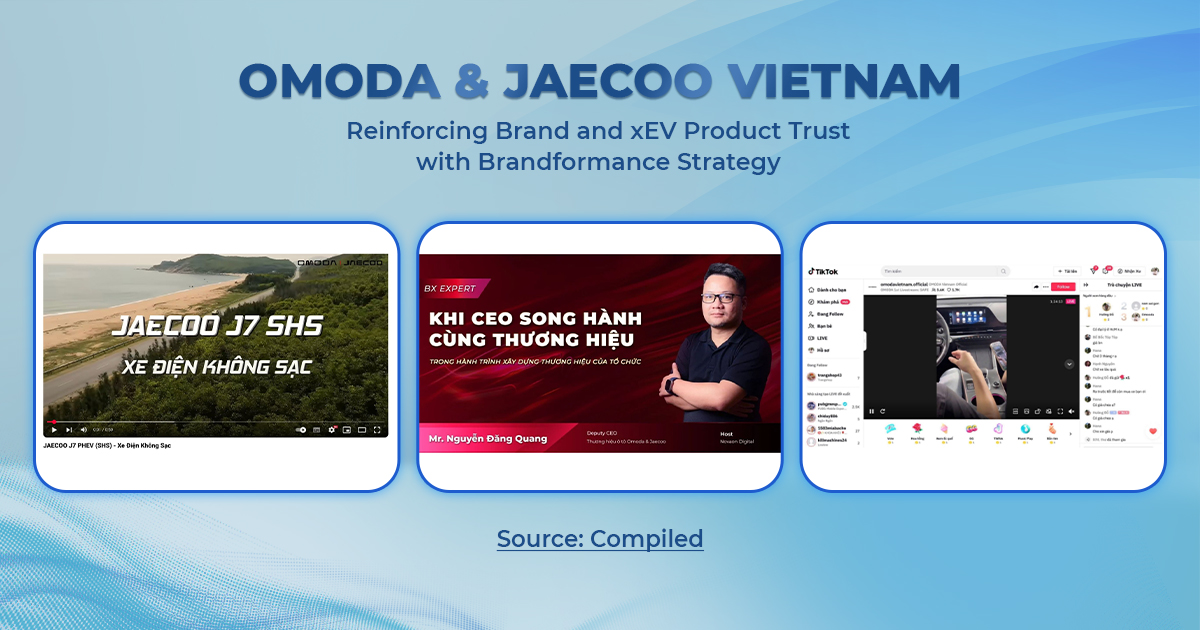
Omoda & Jaecoo Vietnam – Reinforcing Brand and xEV Product Trust with Brandformance Strategy
(Source: Novaon Digital)
Case 2: BYD – Integrated EV Ecosystem Solutions
BYD solidifies their position through the “Ecosystem-as-a-Guarantee” model, positioning themself as an infrastructure creator rather than just an automaker. By mastering supply chains and manufacturing their own batteries, BYD’s communication focuses on end-to-end EV solutions. By 2025, the brand reached 2.25 million vehicles, surpassing Tesla in global sales and becoming a symbol of reliability in emerging markets.
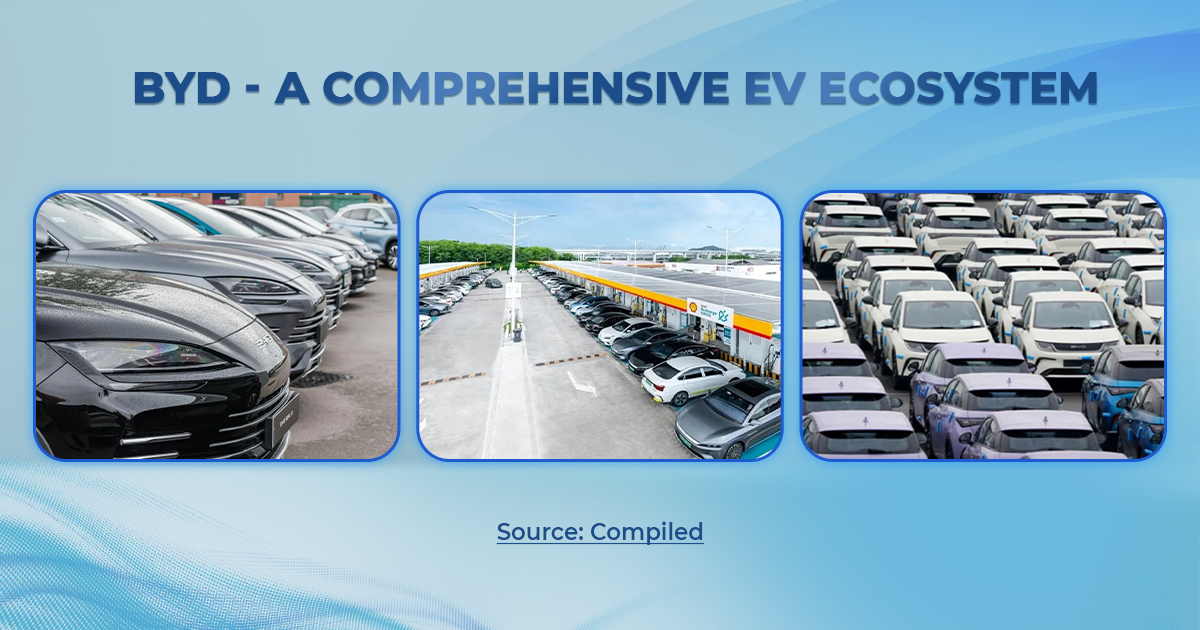
BYD – Integrated EV Ecosystem Solutions
(Source: Novaon Digital)
Case 3: Polestar – Identity-driven Brand Positioning
Polestar made a strategic pivot by turning sustainability into an “Eco-Status Symbol.” As the first automaker to disclose detailed lifetime carbon emissions for its products, Polestar used transparency as a core value to build trust. Combined with a minimalist, high-end urban design language, the brand successfully created a loyal community that views the car as a statement of ethics and progressive aesthetics.
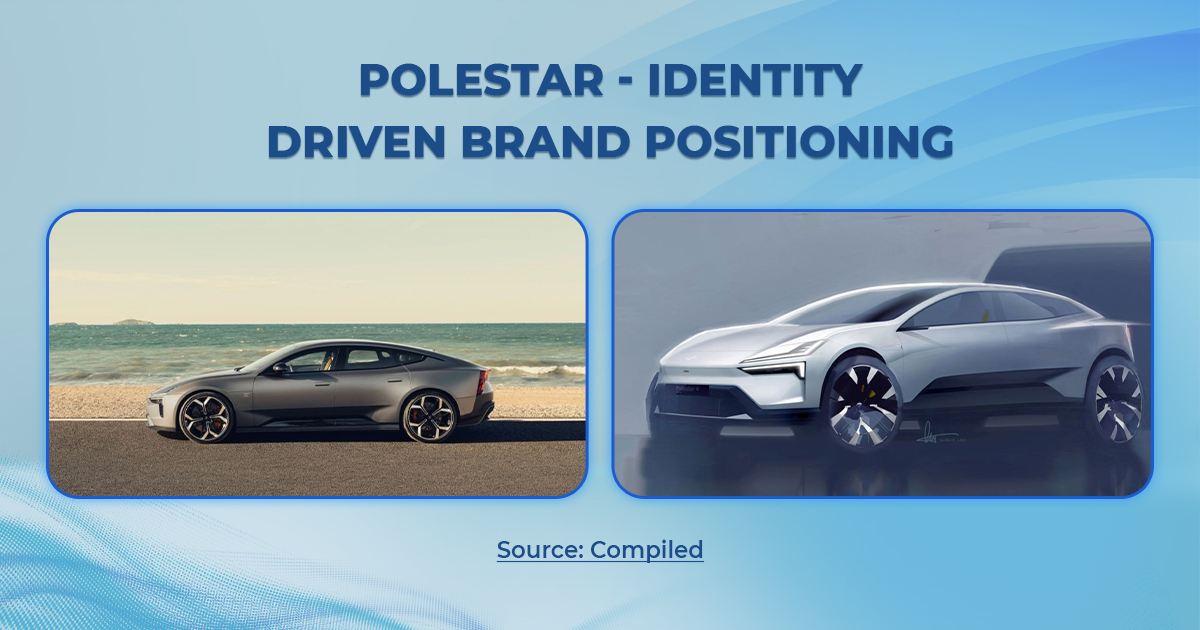
Polestar – Identity-driven Brand Positioning
(Source: Novaon Digital)
Case 4: VinFast – Bridging Tech-Pioneering with Personal Identity Positioning
The VinFast VF3 is a testament to Tech-led Storytelling, launching entirely through striking digital designs instead of physical vehicles. By combining Influencer Marketing and interactive livestreams, VinFast created a massive hype that hit Gen Z desire for personal identity. Significantly, the campaign recorded 27,700 orders in just 3 days and won Gold at the 2025 APAC Effie Awards, marking revolutionary transition in branding and market positioning.
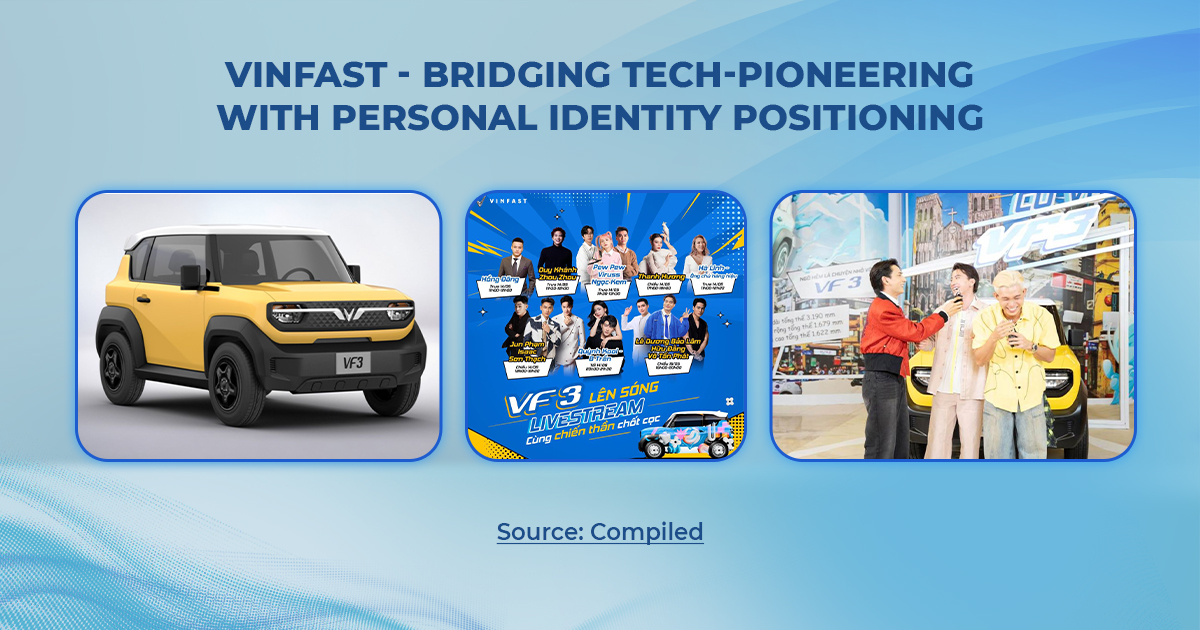
VinFast – Bridging Tech-Pioneering with Personal Identity Positioning
(Source: Novaon Digital)
IV. Expert Insights: Challenges and the Future
By 2030, experts project EVs will account for approximately 25% of global auto sales, offering growth opportunities alongside pressure on cost and technology. Moreover, brand differentiation will become more challenging as products reach parity. The future of the EV industry will be shaped by three factors: the central role of software in the experience, the need for educational communication to reduce psychological barriers and the development of a comprehensive mobility ecosystem.
In this context, Marketing is no longer a sales support activity but a process of designing experience throughout the customer lifecycle. To maintain a competitive edge, businesses must simultaneously adapt to technology and understand consumer behavior to create long-term value in the digital era.
Explore the full report here