The 2026 year-end holiday season creates a continuous stream of consumer needs, from preparation and gifting to gatherings and post-holiday replenishment, while consumers are becoming more deliberate in assessing product value. To turn interest into purchase decisions, FMCG brands need to connect content, engagement, and points of purchase around each specific need. Based on Novaon Digital’s Strategy – Creative – Technology (SCT) model, this article structures a five-step framework for designing and delivering experiences that help brands capture growth opportunities throughout the holiday season.
1. Holiday Season 2026: From a Shopping Peak to the Challenge of Winning Consumer Choice
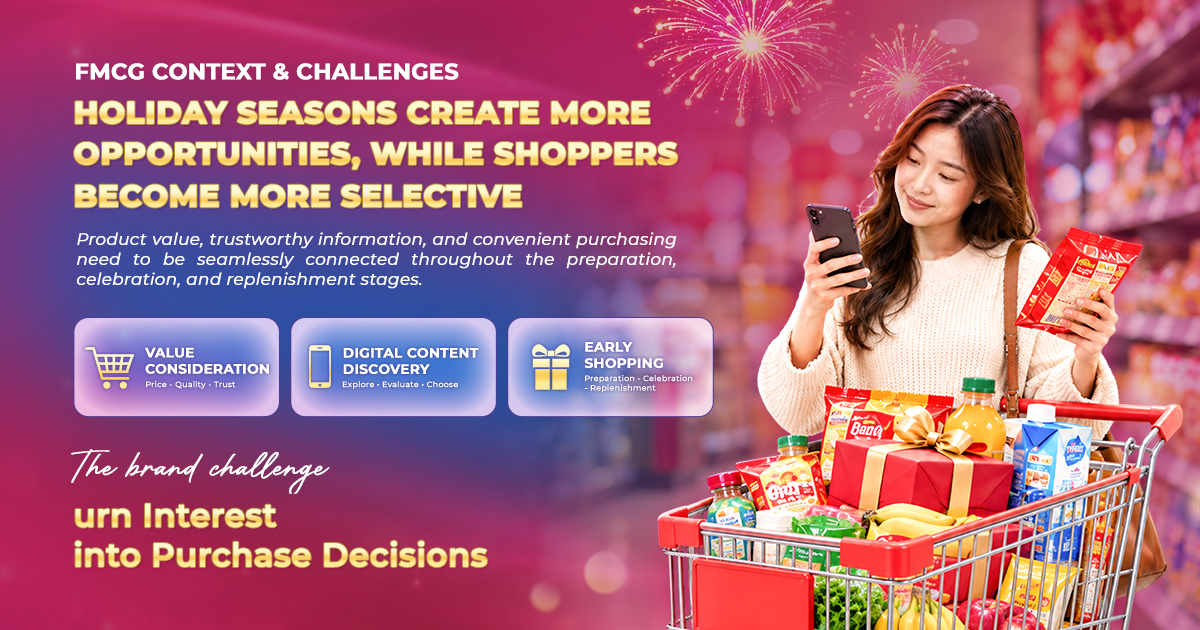
The FMCG holiday challenge: Clarifying product value, building trust, and supporting purchase decisions
Source: Novaon Digital
The holiday season creates significant consumption opportunities for FMCG brands. However, to be chosen, products must meet increasingly specific expectations around value. According to the General Statistics Office of Vietnam, the average Consumer Price Index (CPI) in the first eight months of 2026 increased by 4.45% year over year. Worldpanel by Numerator also reported that rising food costs, along with concerns over product quality and counterfeits, are prompting consumers to evaluate brands more carefully. In this context, the emotional appeal of gifting or gathering must be supported by product relevance, appropriate pricing, and credible reasons to trust the brand.
At the same time, content and commerce are becoming increasingly interconnected across digital platforms. TikTok Shop reported that Vietnam’s Grocery category grew by 71% in gross merchandise value in 2025, highlighting the opportunity for consumer brands to expand both reach and sales. The platform also observed that users combine content discovery with active searches and review checking before making a purchase. For brands, every piece of content that captures attention should therefore be followed by clear product information and a straightforward path to purchase.
Seasonal opportunities also extend across a longer period. Decision Lab and Meta’s Unveiling Tet Consumer Trends 2025 report found that 68% of shoppers begin their Tet purchases at least 20 days before the holiday, while demand for food and grocery products rises again after the holiday period. This suggests that campaigns should be structured across multiple stages: consumers begin by seeking inspiration and preparing early, then select products for gifting or gatherings, and later make additional replenishment purchases. Each stage requires a different approach to content and experience.
These shifts create a clear challenge for FMCG brands: turning seasonal attention into purchase decisions at every stage of consumer demand. To do so, brands need to identify the right consumption occasions, clarify why their products should be chosen, and make points of purchase easy to access. Content that stimulates demand must be followed by information that supports evaluation and a consistent purchasing experience. The Holiday Experience Framework proposed by Novaon Digital introduces five steps that connect these responsibilities, helping brands capture growth opportunities throughout the holiday season.
2. Holiday Experience Framework: Five Steps to Connect Holiday Emotions with the Purchase Experience
As holiday needs evolve across different moments and purchasing channels, brands must determine how to turn consumer interest into product choice at each stage. This requires content that activates the right need, information that addresses consumer concerns, and a purchasing experience that delivers on the promises made through communication.
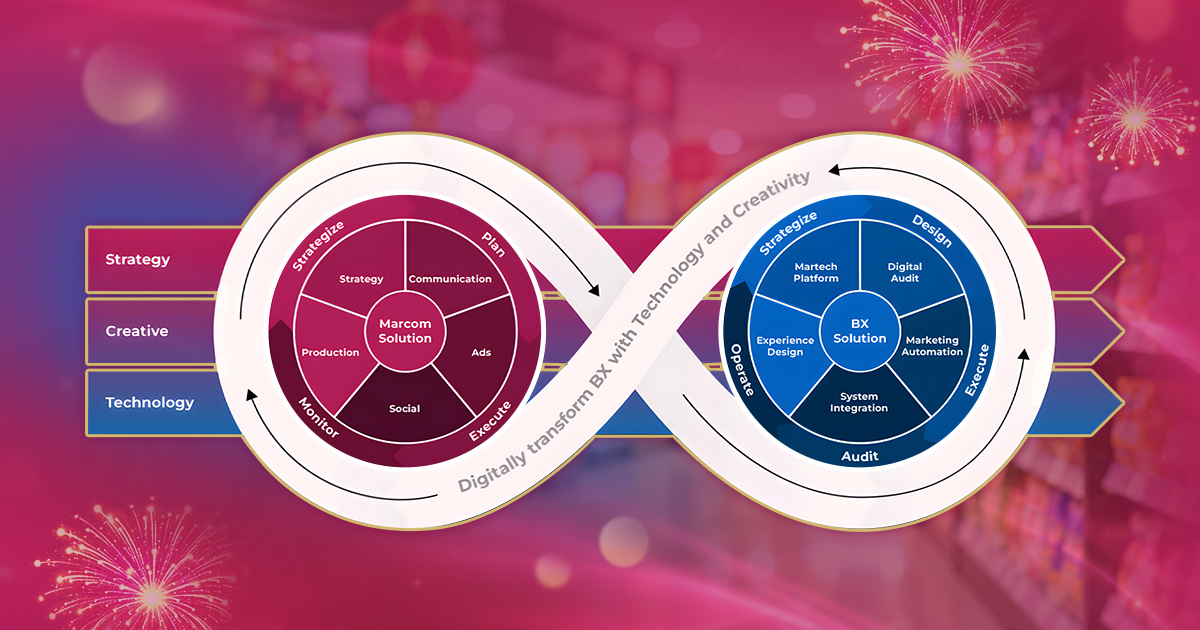
The SCT model combines Strategy, Creative, and Technology to connect communication with the brand experience
Source: Novaon Digital
Novaon Digital approaches Brand Experience through the Strategy – Creative – Technology (SCT) model. Strategy identifies the target consumer, their needs, and the role of the product; Creative develops the story and defines how consumers participate; and Technology helps connect interactions, purchase points, and data. Based on this model, the Holiday Experience Framework is structured into five steps, from identifying opportunities to execution and performance measurement.
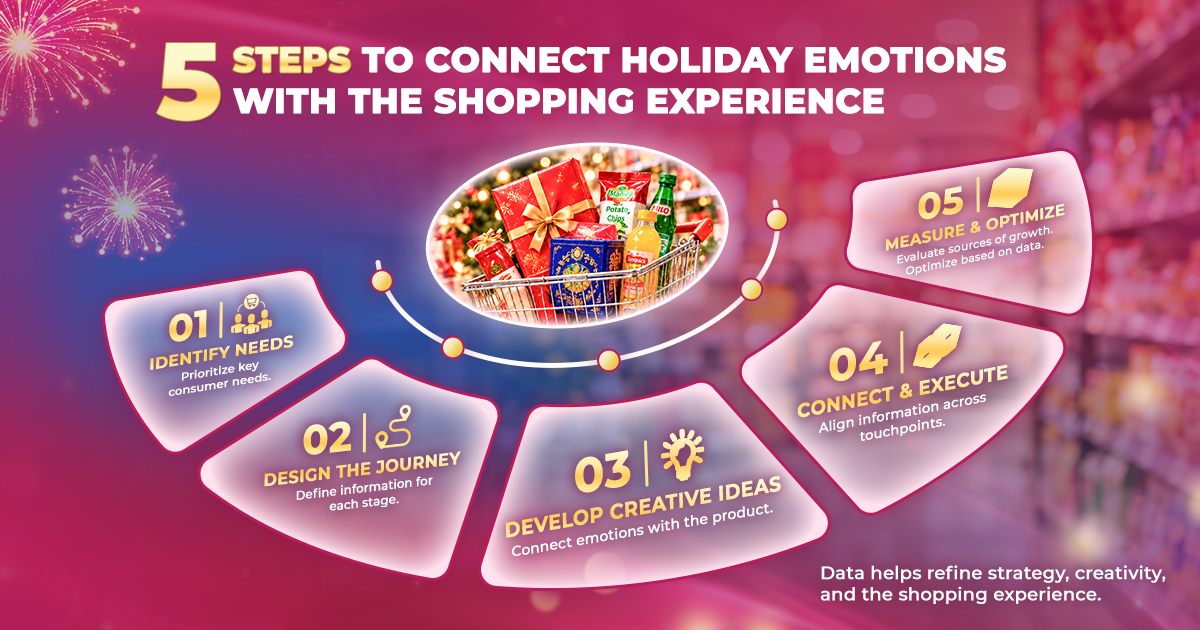
Five steps connecting holiday emotions with the purchase experience through Strategy – Creative – Technology
Source: Novaon Digital
Step 1. Identify the Priority Need and the Role of the Product
Before developing a message, brands need to identify consumer needs that are both relevant to the product and commercially promising. Purchasing for gifting, preparing for gatherings, or replenishing after the holiday can differ significantly in terms of budget, packaging format, quality expectations, and delivery timing. Strategy therefore needs to clarify who makes the purchase decision, who the product is for, in what context it will be used, and what concerns may still prevent the consumer from buying.
Consumer research, sales data, in-store feedback, and social media conversations can help identify motivations and barriers within each context. From there, brands can establish a clear reason for choice based on product attributes and benefits that can be substantiated. The prioritized consumer need then becomes the foundation for defining the message, selecting the right product offering, and allocating campaign resources.
Step 2. Design a Journey That Supports Purchase Decisions
Once the priority need has been identified, brands need to determine what information consumers require at each stage and how to guide them toward the next action. When looking for ideas, consumers need to recognize that the product is suitable for their intended purpose. During consideration, they need sufficient information to evaluate and compare options. When preparing to purchase, details such as price, availability, stock status, and delivery become essential. After use, satisfaction influences the likelihood of recommendation or repeat purchase.
The journey map should clearly define the role of each touchpoint. Social media content generates interest; experiential content and reviews clarify product value; while product pages, consultation services, and physical stores support evaluation and selection. These touchpoints need to be designed so consumers can continue exploring or purchasing even when moving from online channels to physical stores. This helps brands identify where information is missing or where unnecessary steps may create friction in the buying process.
Step 3. Develop Creative Ideas Connected to the Product Experience
Once the need and journey are clear, creativity plays the role of embedding product value into a story that feels meaningful to consumers. The emotions associated with gifting, gathering, or sharing should be connected to a specific role the product plays in those moments. Product attributes and distinctive brand elements must remain consistently visible so that consumers understand the value proposition and remember the right brand.
Participation mechanisms should also contribute to the experience by helping consumers discover suitable options, experience the product, express personal messages, or share moments of use. The story told through content, in-store activities, and packaging should maintain a consistent spirit. This enables the creative idea to continue seamlessly from the moment consumers encounter the content to the moment they select and use the product.
Step 4. Connect Channels and Ensure the Experience Can Be Delivered
Once the journey and creative idea have been defined, technology must work together with operations to turn the experience design into reality. If Step 2 determines what information consumers need and how they should move forward, this step ensures that different channels can actually support that progression. Content needs to lead to the correct product; information about pricing, promotions, and availability must remain consistent; and consultation should help consumers continue the selection process based on the needs they have already expressed.
Technology can support product discovery, consultation, ordering, and data collection according to the capabilities of each channel. At the same time, communication, sales, customer service, and operations teams need to align on commitments and execution responsibilities. The purchasing journey should be tested before a campaign is scaled, particularly at channel transitions, payment stages, and delivery points. Convenience only creates value when the actual product and service experience meet the expectations established by the communication.
Step 5. Measure Sources of Growth and Optimize Through Data
The measurement plan should be defined from the beginning, with a clear understanding of the intended source of growth: acquiring more buyers, increasing average order value, or generating additional repeat purchases. This objective determines the metrics, data sources, and benchmarks required to evaluate how each activity contributes to business outcomes.
Measurement should follow the entire consumer journey. Views and engagement indicate initial interest; product exploration and consultation requests reflect consideration; while conversion rates, completed orders, average order value, and revenue indicate purchase outcomes. Post-use feedback and repeat purchase rates within an appropriate timeframe help assess the brand’s ability to maintain the relationship. Where possible, online data should also be compared with point-of-sale data to avoid evaluating each channel in isolation.
From these insights, brands can identify where additional content is needed, where processes should be improved, or where operational commitments require adjustment. Performance should be compared with campaign targets or equivalent holiday periods, while accounting for changes in pricing, promotions, media budgets, and distribution coverage. Where conditions allow, testing with comparison groups can provide a clearer understanding of the contribution made by specific changes to the experience. With customer consent and appropriate data, brands can also continue recommending products that address the consumer’s next need.
Together, these five steps connect Strategy, Creative, and Technology around the consumer journey. Data generated through execution feeds back into the framework, helping brands continuously refine priority needs, content, and experiences to capture growth opportunities throughout the holiday season.
3. Bringing the Framework into campaign execution: One direction across every channel
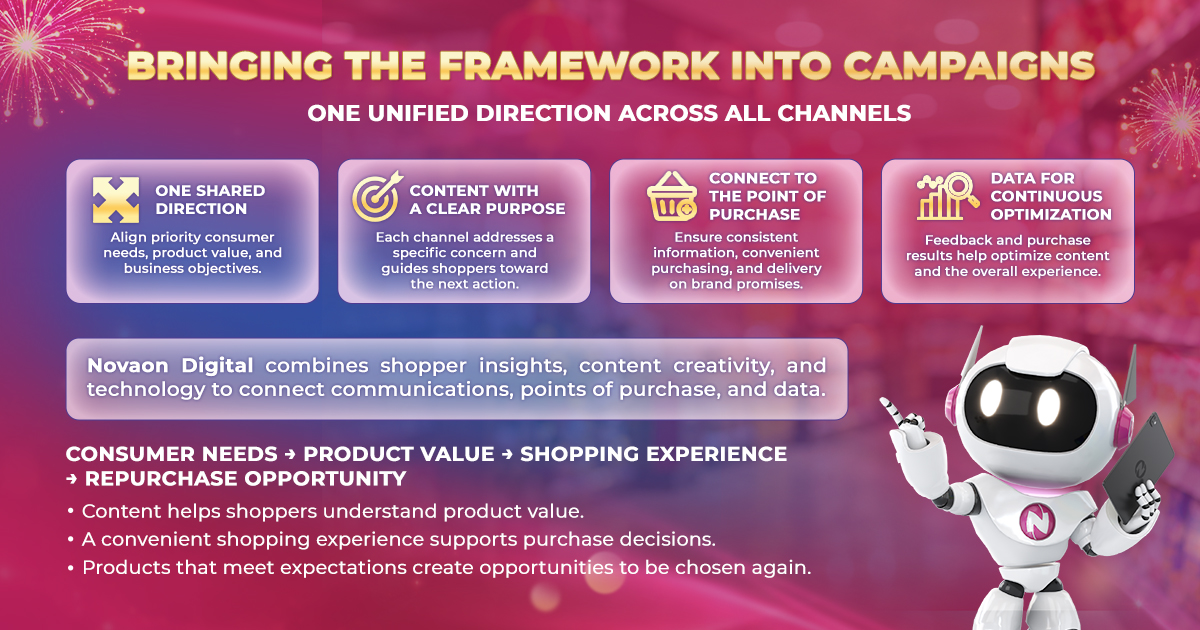
Connecting content, points of purchase, and data to turn holiday demand into purchase decisions
Source: Novaon Digital
For the five steps to work as one consistent campaign, brands need to connect the priority consumer need, product value, and business objectives. For occasions such as Vietnamese Women’s Day on October 20 or Teachers’ Day on November 20, the focus may be on helping consumers choose a gift that suits both the recipient and their budget. During Christmas or Tet, demand expands further into preparing for gatherings, entertaining guests, and replenishing household products. Consumer research and strategic planning should clarify this priority before decisions are made regarding messaging, content, and channel execution.
From this shared direction, every piece of content should serve a specific role in the decision-making process. Content that evokes the emotion of gifting should be followed by clear information about the product, packaging options, and price points. Content built around gatherings should explain product usage, pack sizes, and suitability for different group sizes. Creative services, content production, creator partnerships, and product sampling experiences should therefore be selected according to the consumer questions they need to address. Continuity between different pieces of content helps consumers move from feeling that a product is relevant to having sufficient reasons to choose it.
Once consumers show interest, the campaign needs to guide them toward a convenient purchase point. Storefront optimization, product pages, store information, and consultation services should be developed alongside communication activities. For gifting occasions, delivery deadlines and gift-wrapping services can directly influence purchase decisions. During peak Tet periods, inventory availability and delivery schedules need to be communicated clearly. Technology and operations play a critical role in ensuring that information remains consistent and that the promises created through content can actually be fulfilled.
Purchase data and post-use feedback then provide further opportunities to optimize the campaign. If consumers show interest but do not select a product, brands need to review whether information and reasons to buy are sufficiently clear. If consumers abandon the checkout process, friction related to user experience, costs, or delivery capabilities should be investigated. Measurement, data analytics, and post-purchase care should identify areas for improvement while also revealing opportunities associated with the consumer’s next need. During Tet, analyzing performance across different stages can also help brands distinguish the effectiveness of early preparation purchases, gifting purchases, and post-holiday replenishment.
4. Conclusion
For FMCG brands, capturing holiday opportunities begins with identifying a consumer need that the product can clearly address. The Holiday Experience Framework helps brands move from selecting the right need to designing content, organizing interactions, supporting purchases, and evaluating results. The value of these five steps lies in their ability to align every communication decision around one shared objective: helping consumers understand, choose, and experience the right product.
Built on Novaon Digital’s Strategy – Creative – Technology foundation, consumer research guides content development, while technology connects interactions, points of purchase, and feedback data. When consumer interest is followed by sufficiently clear information and a convenient buying process, campaigns have a stronger foundation for converting attention into sales. When the product ultimately delivers on expectations, the brand creates a greater opportunity to be chosen again in the future.