As financial services become increasingly convenient and accessible, the differences between banks are no longer defined solely by interest rates, incentives, or product features. Today, customers are looking for more than just a place to conduct transactions: they expect trustworthy experiences, understanding, and practical value in their daily lives. This presents a new challenge for banking communications: How can brands not only gain recognition but also become loved, trusted, and chosen by customers?
Against this backdrop, Novaon Digital introduces the “Banking & Finance BrandCom Trends 2026-2027” report, which focuses on analyzing the shift from product-centric to human-centric communications. Through an overview of the market landscape, prominent BrandCom trends, and case studies from Vietnam and international markets, the report offers perspectives on how banks leverage Emotional Storytelling, brand experiences, and technology to build long-term connections with customers.
1. Banking & Finance Market 2026-2027: When Competition Expands from Products to Experiences and Brands
Bank & Finance market 2026 -2027
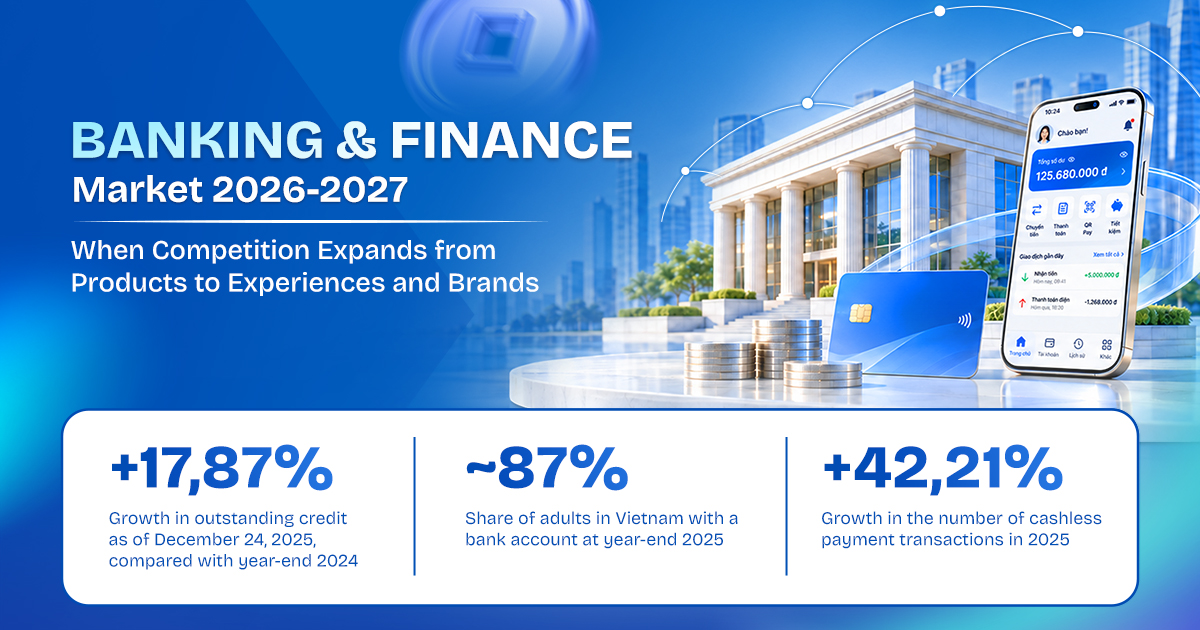
Vietnam’s banking and financial market is experiencing strong growth in both service accessibility and the pace of digitalization. According to data from the State Bank of Vietnam compiled in the report, by the end of 2025, approximately 87% of Vietnamese adults had bank accounts, while the number of cashless payment transactions increased by 42.21% in 2025.
In addition, as of September 2025, Vietnam had 53 licensed payment intermediary service providers, including 49 e-wallet service providers. The emergence of numerous digital financial platforms is expanding customer choices while creating competitive pressure beyond traditional banks.
As money transfers, payments, and financial management become increasingly simplified, convenience is gradually becoming a common expectation rather than an absolute competitive advantage. Banks not only need to provide efficient services but also create reasons for customers to continue trusting and staying loyal to them.
However, digital transformation does not necessarily mean that consumers’ financial concerns have been resolved. A Visa study published in January 2026 found that 52% of surveyed Vietnamese consumers were concerned about fraud, scams, and transferring money to the wrong recipients, while 34% faced challenges related to tracking transactions or understanding refund procedures.
2. BrandCom Trends 2026-2027: From Product Communications to Stories That Connect Emotionally
In the traditional approach, banking communications often focused on institutional credibility, financial strength, interest rates, incentives, and service features. However, as customer needs evolve, messages centered solely on financial benefits are no longer sufficient to create distinctive connections.
The “Banking & Finance BrandCom Trends 2026-2027” report highlights the shift from Traditional BankCom to Modern BrandCom: banks are no longer positioned merely as financial service providers (Brand as an Institution), but are increasingly moving toward becoming partners that accompany customers in achieving their life goals (Brand as a Life Enabler).
Accordingly, brand communications need to shift from explaining what banks offer to demonstrating the value that financial products can bring to people’s lives. A savings account is not just about interest rates but also about peace of mind for the future; a payment solution not only provides convenience but also enables customers to take greater control of their daily lives and business activities.
Banking Goes Cultural – When Banks Enter Popular Culture
Banking Goes Cultural – Case study Maya
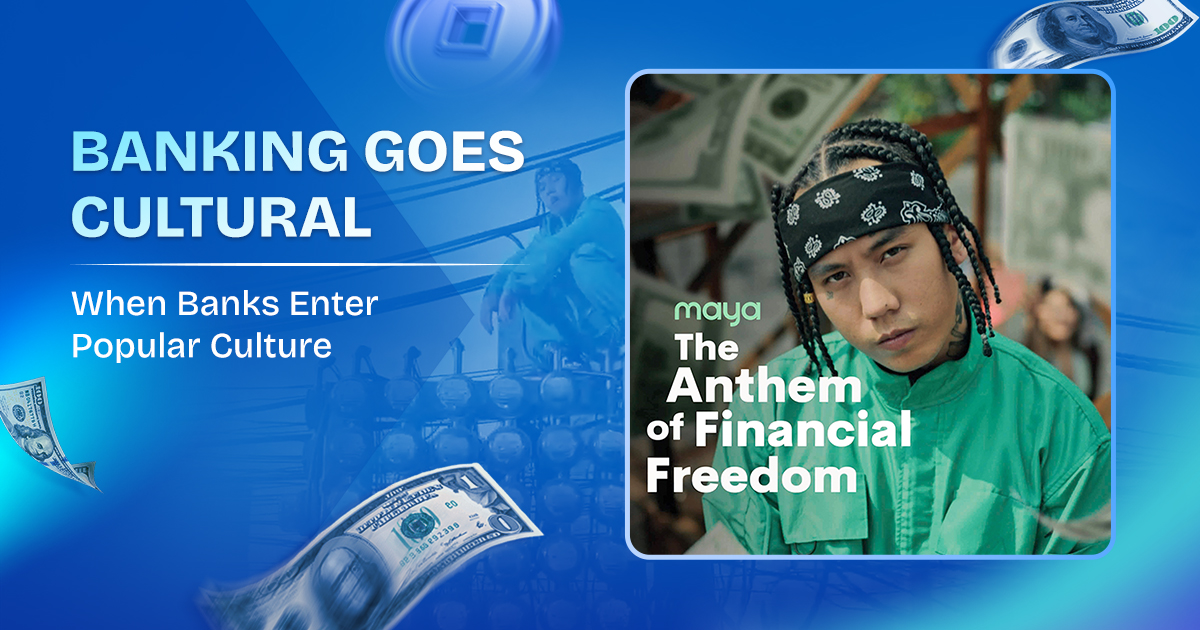
Music, entertainment, sports, and communities are becoming spaces where banking brands can connect with customers beyond traditional transactional contexts.
Rather than appearing solely as sponsors, banks can become more deeply involved in cultural experiences through creative content, exclusive fan privileges, and interactive activities linked to financial products.
VIB’s partnership with Anh Trai “Say Hi” is one example analyzed in the report. By combining sponsorship of a music program with card products, exclusive concert ticket privileges, and activities for fan communities, the brand created touchpoints between entertainment experiences and banking services.
From Banking to Lifestyle – When Banks Become Part of Customers’ Lifestyles

From Banking to lifestyle – Case study US Bank
Beyond cultural activities, banks are expanding their brand roles into areas associated with health, sports, travel, personal development, and customers’ life goals.
According to a 2025 UOB study cited in the report, 80% of surveyed Vietnamese consumers considered spending on experiences essential, higher than the ASEAN regional average of 71%. This indicates that experiences are playing an increasingly significant role in consumer spending priorities.
In Vietnam, Techcombank’s “Vượt trội hơn mỗi ngày” (Better Every Day) brand platform is a prominent example. Through marathon events, sports activities, arts initiatives, and community inspiration programs, the brand connects its image with the spirit of personal development and continuously pushing beyond limits.
Humanizing Finance – When Emotional Storytelling Makes Finance More Relatable

HHumanizingFinance – Case study Chime
According to UOB (2025), 50% of surveyed Vietnamese consumers were concerned about rising household living costs, while 43% worried about long-term financial obligations. Behind these figures are everyday pressures related to saving, caring for family, buying a home, or preparing for the future.
Rather than relying solely on technical financial language, banks can draw on everyday stories to demonstrate understanding and their role as supportive partners.
Monzo’s “Money Never Felt Like Monzo” campaign in the UK is an example of how the experience of managing money can be transformed from a source of stress into a sense of control and positivity. Through TVCs, OOH, digital, social media, and podcasts, Monzo explored familiar emotions associated with finance to build a relatable and distinctive brand image.
Similarly, Chime’s “The $1 Million Bet” campaign explored stories of financial pressure and kindness through a social experiment, placing the human element at the center of the brand narrative.
What these approaches have in common is that they go beyond communicating financial products to telling stories about people and the values that finance can support in their lives.
In addition to these representative trends, the report also compiles case studies from VietinBank, MB Bank, DBS, Nubank, and Mastercard, offering broader perspectives on how brands combine strategy, creativity, technology, and experiences to implement BrandCom across multiple touchpoints.
3. Closing Remarks
The 2026-2027 period presents new opportunities for the Banking & Finance industry to build brands beyond products and transactions. As customers have more choices, competitive advantage comes not only from the services banks provide but also from how brands establish their presence, understand customers, and create value in their lives.
However, building emotional connections does not simply mean investing in large-scale entertainment campaigns or inspirational stories. Brands need to identify a territory that aligns with their identity, develop consistent messaging, and ensure that their communication promises are supported by actual service experiences.